Baby babbling: when it starts and how to respond
Guide to babbling: early sounds, vocal play, bababa, links with hearing and language, voice games and when to talk with the pediatrician.
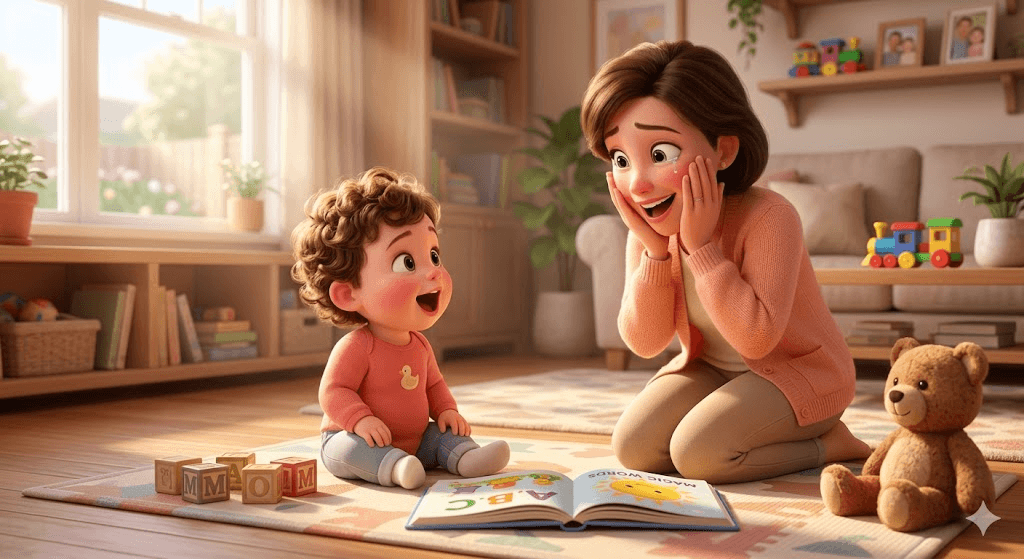
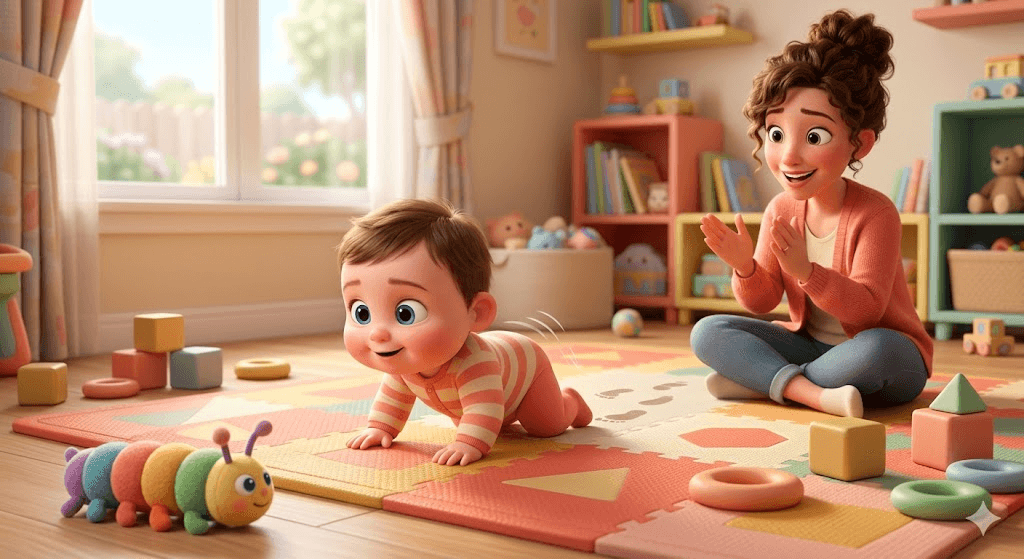
Babbling is the stage when your baby experiments with sounds, syllables and rhythm: vocal play, little laughs, "ba", "ma", "da", repeated chains and voice games. These are not stable words yet, but they are an important communication step.
This guide complements newborn hearing, first words, play 6-12 months and reading and language.
Before babbling
Before repeated syllables, babies listen and try:
- different cries;
- small throat sounds;
- vocal sounds;
- responses to voice;
- smiles and turns;
- laughter and pleasure sounds.
These signs prepare dialogue. If your baby responds to voice, looks, smiles and makes sounds other than crying, communication is already developing.
When it appears
Many babies begin with richer vocal sounds around 4-6 months and more recognizable babbling in the following months. Between 6 and 12 months, repeated syllables and sounds used to get attention may appear.
Timing varies. Prematurity, hearing, medical history and communication context can affect timing. Do not use one date as a diagnosis.
How to respond
The adult response matters more than the number of toys.
Try:
- repeat your baby's sound;
- add a small variation;
- wait;
- look at their face;
- name the object they are looking at;
- alternate voice and pause.
Example: your baby says "ba". You can answer "ba-ba, ball!" and then wait. This creates turn-taking, meaning and relationship.
Babbling and hearing
Hearing supports sound development. If your baby does not react to noise, does not orient to voice or does not make sounds other than crying around expected checkups, talk with the pediatrician.
If hearing screening was not done, is unclear or needed follow-up, retrieve that information.
Useful voice games
You can use:
- peekaboo with pauses;
- repeated songs;
- animal sounds;
- rhythmic syllables;
- picture reading;
- imitation of everyday sounds.
Avoid videos and background audio as substitutes for interaction. Babies learn best with a real voice, eye contact and response.
When to ask for advice
Talk with the pediatrician if:
- your baby does not react to sounds;
- makes no sounds other than crying;
- loses vocal sounds already present;
- does not seek exchanges with face or voice;
- seems very unresponsive;
- there are concerns about hearing, development or prematurity.
For broader signs, also read when to worry about language.
Key takeaway
Babbling is not trained with exercises. It is welcomed: sounds, turns, pauses, real words and plenty of response.
Useful links
Sources and further reading
- Hearing & Making Sounds: Your Baby's Milestones - HealthyChildren.org - American Academy of Pediatrics
- Language Development: 4 to 7 Months - HealthyChildren.org - American Academy of Pediatrics
- Communication Milestones: Birth to 1 Year - American Speech-Language-Hearing Association
- Milestones by 6 Months - Centers for Disease Control and Prevention
- CDC's Developmental Milestones - Centers for Disease Control and Prevention
Sources are used to support general informational content and do not replace advice from a pediatrician or healthcare professional.