Water during weaning: when to start and how much to offer
How to introduce water from around 6 months: small sips with meals, milk still central, drinks to avoid and signs to watch.
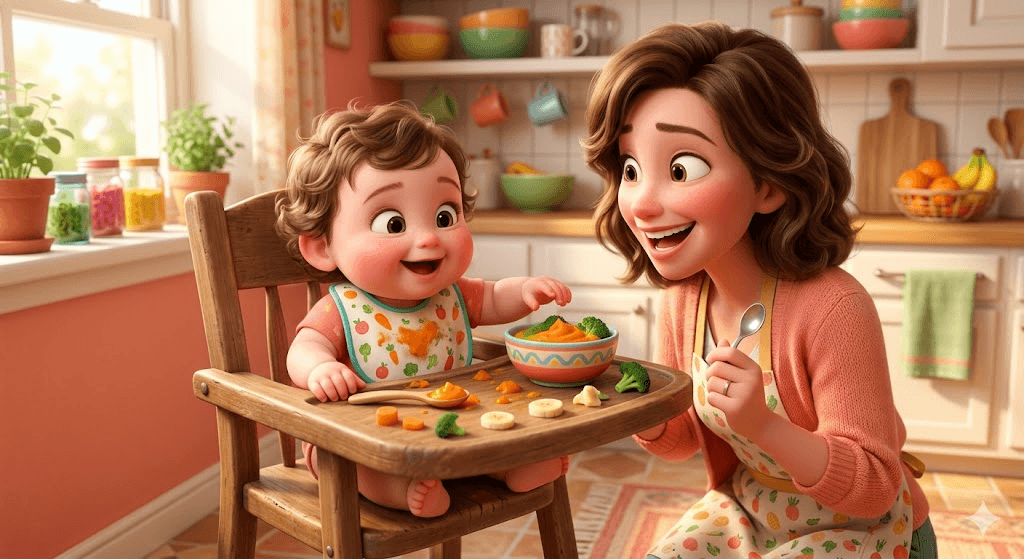
When weaning begins, you can offer small sips of water with meals. Water does not replace milk and should not fill the stomach instead of feeds and foods.
This guide connects with starting solids, foods to avoid in the first year and the weaning menu checklist.
When to start
For many babies, water starts around 6 months, alongside complementary foods. Before then, breast milk or formula usually covers fluids and nutrition unless the pediatrician gives specific advice.
At the beginning, the goal is learning to drink from a cup, not reaching a precise amount.
How to offer it
You can use:
- an open cup with a little water;
- a simple spout cup if helpful;
- a straw cup when your baby is ready;
- room-temperature water.
Offer water during the meal, then remove the cup. Continuous drinking away from meals can reduce appetite and milk intake.
Water and milk have different roles
In the first year, breast milk or formula remains an important source of energy, protein, fat and micronutrients. Water accompanies meals and helps your baby learn a new habit.
If your baby drinks a lot of water but feeds and eats little, reduce the offer and speak with your pediatrician, especially with poor weight gain, diarrhea, vomiting or intense heat.
Drinks to avoid
In the first year, avoid:
- fruit juice;
- sweetened or unnecessary herbal drinks;
- plant-based drinks as a milk replacement;
- fizzy drinks;
- water with sugar or honey;
- cow's milk as the main drink under 12 months.
These drinks can fill without nourishing, build a preference for sweet tastes or be unsuitable for an infant's needs.
Water safety
Use water that is safe for family drinking. When travelling, in areas without safe tap water or where local guidance differs, use suitable bottled water or follow local health advice.
Do not leave your baby alone with a cup during meals. Drinking also needs upright posture and supervision, just like food.
Key takeaway
Water during weaning is an accompaniment: small sips, with meals, without pressure. Milk, iron-rich foods, protein and healthy fats still do the main nutritional work.
Useful links
Sources and further reading
- Foods and Drinks to Encourage - Centers for Disease Control and Prevention
- Complementary feeding - World Health Organization
- Foods to avoid giving babies and young children - NHS
- Infant and young child feeding - World Health Organization
- Weaning - NHS
Sources are used to support general informational content and do not replace advice from a pediatrician or healthcare professional.