Foods to avoid in the first year: safe weaning guide
What not to give your baby during weaning: honey, salt, sugar, cow's milk as a drink, hard foods and choking risks.
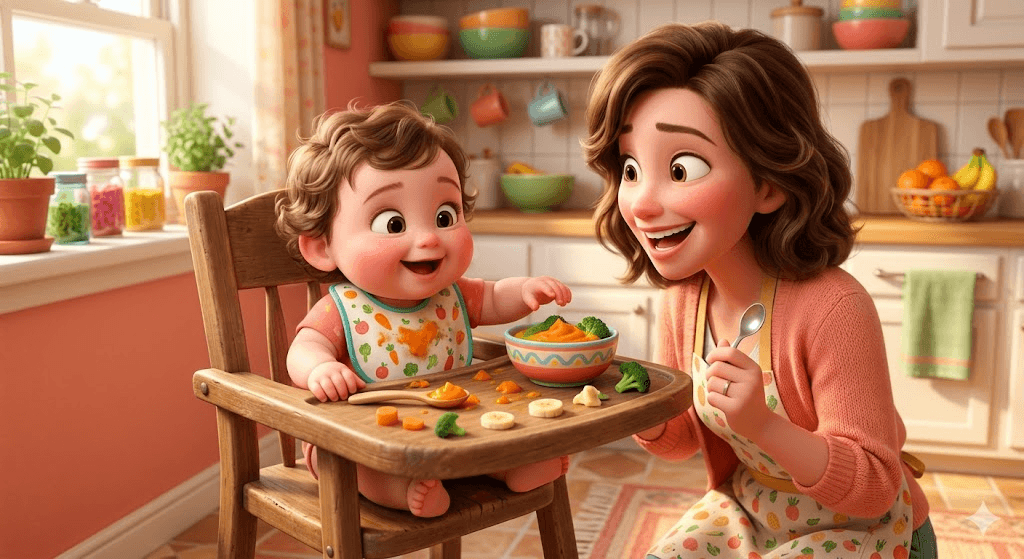
During weaning, your baby can try many family foods, but not everything is suitable in the first year. The goal is not to make feeding stressful. It is to know what to avoid, what to modify and when to ask your pediatrician.
This guide completes the path on starting solids and works alongside the first tastes, first baby food recipes and introducing allergenic foods.
Honey until 12 months
Honey should be avoided until your baby turns 12 months, even if it is cooked, mixed into food, added to milk or put on a pacifier. The concern is not only sugar: honey can contain spores linked to infant botulism, which is rare but serious.
After the first birthday, honey is still a free sugar, so use it sparingly.
Salt and salty foods
Do not add salt to baby food in the first year, and avoid stock cubes, ready-made broths and salty sauces. Babies' kidneys are still immature, and salty foods can shape taste preferences early.
Watch family foods too:
- cured meats, hot dogs, sausages and processed meats;
- very salty cheeses;
- crackers, breadsticks, chips and salty snacks;
- ready meals, packaged sauces and takeaway food;
- olives, pickles and foods in brine.
If you cook for everyone, set aside your baby's portion before adding salt.
Sugar, juices and sweets
Babies do not need added sugar. Avoiding sweets, sugary biscuits, juices, sweet drinks and sweetened fruit yogurts helps protect teeth, appetite and long-term eating habits.
For a sweeter snack, use ripe mashed or cooked fruit without making every meal taste sweet.
Cow's milk as the main drink
Before 12 months, cow's milk should not replace breast milk or formula as the main drink. Small amounts can be used as an ingredient in cooked recipes or simple preparations, if tolerated and in line with your pediatrician's guidance.
Plant drinks, rice milk, almond milk and similar drinks are not nutritionally equivalent alternatives to breast milk or formula in the first year.
Hard, round or sticky foods
Many choking incidents depend on shape and texture, not just the food itself. Avoid or modify:
- whole grapes, cherries, large blueberries and whole cherry tomatoes: cut them lengthwise into quarters;
- olives and fruit with pits: remove pits and cut safely;
- raw carrot, raw apple pieces and hard vegetables: cook them or grate very finely;
- whole nuts, whole seeds and popcorn: these are not suitable;
- large chunks of meat, cheese or chewy bread;
- spoonfuls of peanut butter or nut butters: dilute them or spread a thin layer.
If you want to offer soft finger foods, check the safe cuts in the Baby Led Weaning guide.
Raw, undercooked and unpasteurized foods
In the first year, avoid foods with higher microbiological risk:
- raw or undercooked eggs: egg and egg white should be well cooked;
- raw or undercooked meat;
- raw fish, sushi, carpaccio and raw shellfish;
- raw milk and cheeses made from unpasteurized milk;
- mold-ripened or blue-veined soft cheeses unless cooked thoroughly;
- raw sprouts.
Cooked fish can be part of weaning, choosing suitable species and checking carefully for bones. Avoid large predatory fish with high mercury levels, such as swordfish and shark.
Allergens are not foods everyone must avoid
Egg, peanut, tree nuts, milk, fish, wheat, soy and sesame should not be excluded only because they are allergenic. Once solids have started, they can be introduced in tiny amounts and safe forms.
The difference is preparation:
- peanuts and tree nuts are never offered whole, but as diluted butter, flour or a very thin spread;
- egg is well cooked;
- fish is well cooked and boneless;
- plain full-fat yogurt has no added sugar, if tolerated.
If your baby has moderate-to-severe eczema, known allergies or has already reacted to a food, speak with your pediatrician or allergist first. For a practical plan, read introducing allergenic foods.
Quick checklist before serving
Before putting food on the tray, ask:
- is it soft enough to mash between tongue and palate or between two fingers?
- is it cut so it is not round and slippery?
- is it free from salt, sugar and honey?
- is it well cooked if it contains egg, meat, fish or higher-risk ingredients?
- is your baby sitting, awake and supervised?
To prepare the eating space, use the first baby meal checklist. To orient yourself around meals and milk, you can use the feeding calculator.
When to ask for help
Seek medical help if a food is followed by widespread hives, swelling of lips, eyes or tongue, repeated vomiting, breathing difficulty, sudden paleness or unusual sleepiness. If your baby cannot breathe well or cannot cough or cry, call your local emergency number immediately.
For less urgent concerns, bring your pediatrician a list of foods introduced, amounts, timing and reactions observed. It makes the discussion much more useful.
Sources and further reading
- Foods to avoid giving babies and young children - NHS
- Foods and Drinks to Avoid or Limit - Centers for Disease Control and Prevention
- Choking Hazards - Centers for Disease Control and Prevention
- Complementary feeding - World Health Organization
- Infant and young child feeding - World Health Organization
Sources are used to support general informational content and do not replace advice from a pediatrician or healthcare professional.