Weaning: the first tastes
A practical guide to introducing solids: how to tell when your baby is ready and how to proceed safely.

Complementary feeding, commonly called weaning, is an important milestone in your baby's development. It is not about "stopping breastfeeding," but about adding new flavors and textures alongside breast milk or formula.
If you want the full path, start from starting solids. To prepare the first meal, use the first baby meal checklist; when you need orientation around meals and milk, use the feeding calculator.
When to start?
Most babies start around 6 months. Exceptions, especially before 6 months, should be discussed with your pediatrician based on growth, development, prematurity, reflux, allergies or other conditions.
Signs of readiness
Your baby is probably ready when they:
- can sit with minimal support and good head control;
- have lost the tongue-thrust reflex, so they no longer automatically push everything out with the tongue;
- show interest in the food adults are eating;
- can bring objects to their mouth in a coordinated way;
- are alert, engaged and calm when brought to the table.
Night waking, increased appetite or wanting to chew objects are not enough on their own. They can have many causes and do not necessarily mean your baby needs solids.
Which foods to introduce first?
There is no mandatory order. Tradition has long favored vegetable broth and cereals, but today you can start with simple, well-cooked foods with no added salt:
- vegetables such as zucchini, carrot, potato, squash or broccoli;
- grains such as corn, rice, oats, semolina or suitable tiny pasta;
- well-cooked meat and fish in small amounts;
- hulled or well-mashed legumes;
- soft or cooked fruit such as apple, pear, banana or avocado;
- well-cooked egg and plain full-fat yogurt with no added sugar, if tolerated.
For ready ideas, go to the first baby food recipes. If you prefer offering soft finger foods, read the Baby Led Weaning guide first.
How to proceed
- Offer food at a calm time, with your baby sitting and awake.
- Start with small amounts: 1-2 teaspoons or one soft, safely prepared piece.
- Introduce one new food at a time when you want to watch tolerance or possible reactions.
- For allergens, choose morning or lunch and do not add more than one new allergen on the same day.
- Do not force it: if your baby refuses, try again over the following days.
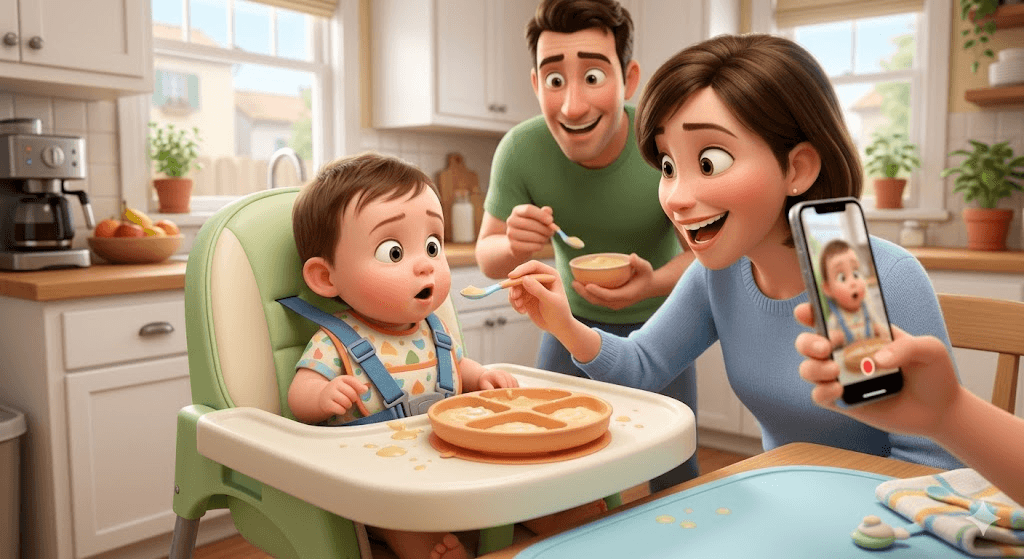
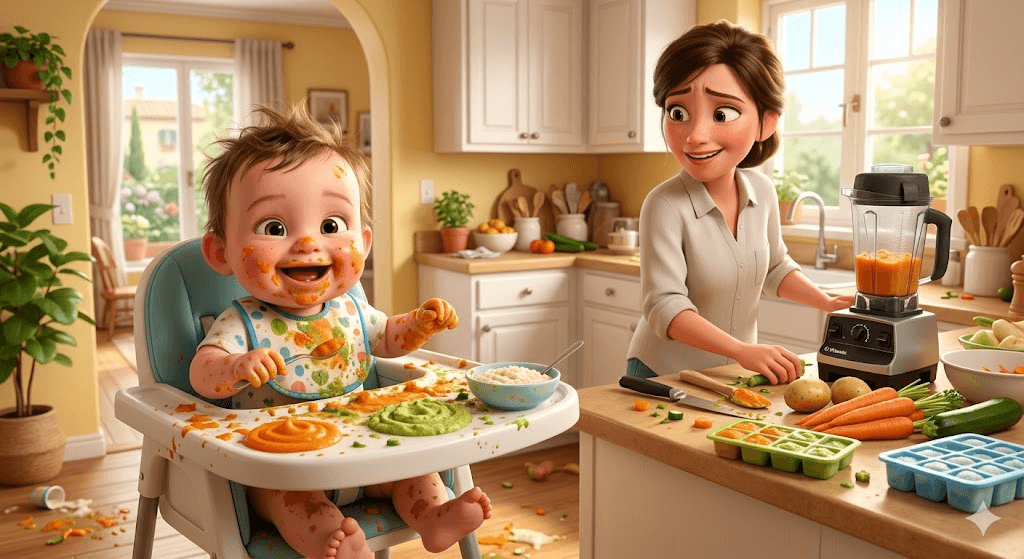
At the beginning, a meal may last only a few minutes and a lot of food may end up on the bib. That is normal: coordinating hands, mouth, tongue and swallowing takes practice.
Foods to avoid in the first year
The main rules:
- no honey until 12 months;
- no added salt, stock cubes, ready-made broths or very salty foods;
- no added sugar, juices or sweets as a habit;
- no cow's milk as the main drink before 12 months;
- no whole nuts, popcorn, whole grapes, whole cherry tomatoes, raw carrot, raw apple pieces or other hard, round or slippery foods;
- no raw or undercooked egg, meat, fish or shellfish.
The detailed list is in foods to avoid in the first year.
Mealtime safety
Every taste should happen with your baby sitting upright, stable and supervised. Avoid offering food while your baby is crawling, playing, traveling in the car or watching a screen.
Learn the difference:
- gagging: your baby coughs, makes noise, turns red and tries to push food forward;
- choking: your baby is silent, cannot cough or cry, and may turn pale or bluish.
An infant choking first aid course is useful preparation for every parent, whichever weaning method you choose.
When to call your pediatrician
Ask for support if your baby struggles to swallow, coughs often during meals, vomits repeatedly, refuses almost all solids for weeks, is not gaining well or develops allergic symptoms after a food.
Weaning works best when it stays gradual: small tastes, simple foods, constant safety and attention to your baby's cues.
Sources and further reading
- Complementary feeding - World Health Organization
- Weaning - NHS
- Infant and young child feeding - World Health Organization
Sources are used to support general informational content and do not replace advice from a pediatrician or healthcare professional.