Stranger anxiety: what happens between 6 and 18 months
Why babies cry around new people, how to tell stranger anxiety from separation anxiety, and how to help without forcing contact.
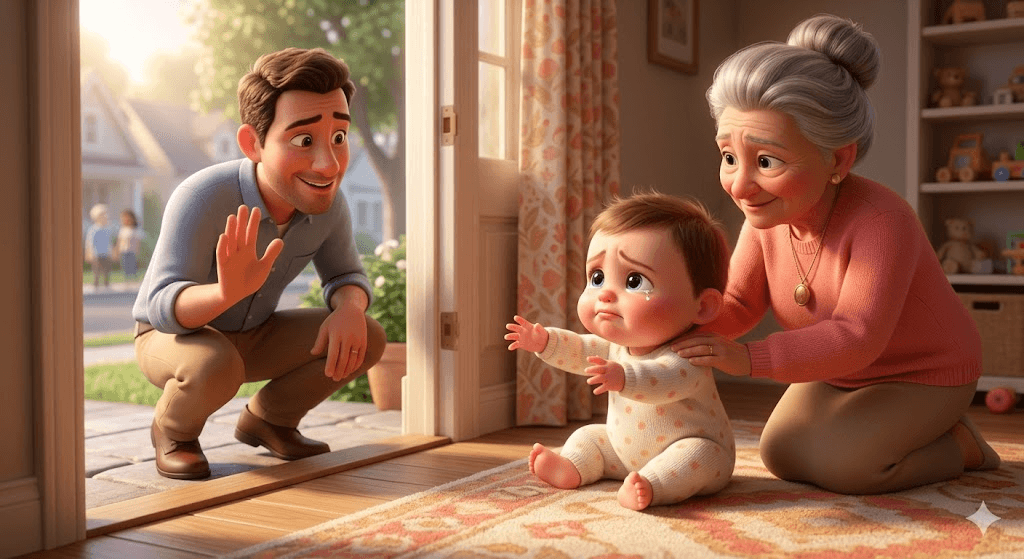
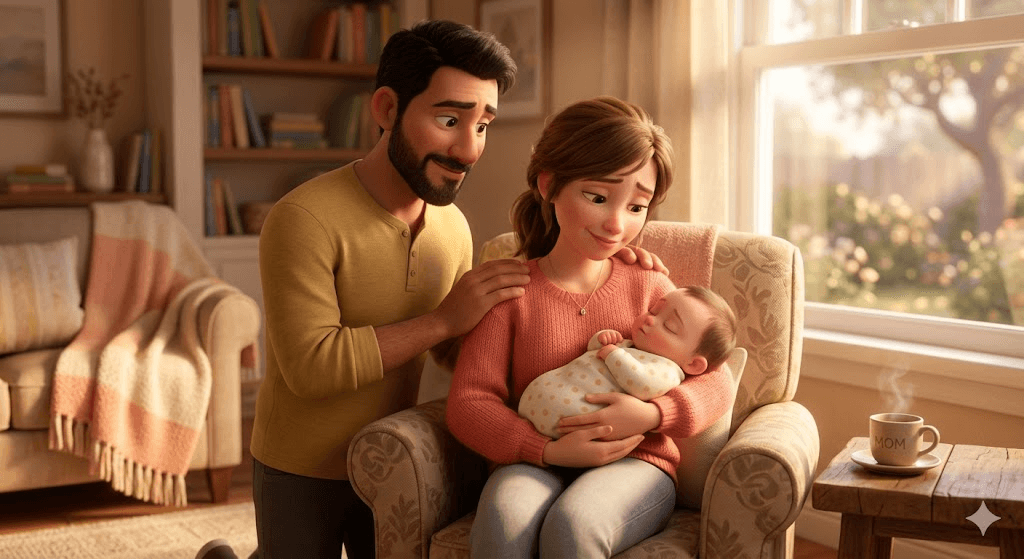
A baby who used to smile at everyone may start clinging to a parent, crying at new faces or refusing unfamiliar arms. In the second half of the first year, this is often a normal phase: babies recognize their trusted people more clearly and notice who is unfamiliar.
This guide complements separation anxiety, play 6-12 months, tantrums and crying spells and family routine.
Strangers or separation?
They are related, but not identical.
- Stranger anxiety: your baby becomes upset, stiff or wary around people they do not know well.
- Separation anxiety: your baby becomes distressed when the caregiver leaves.
- Difficult transitions: the hardest moment is the handover from one adult or place to another.
They can appear together. For your baby, the parent is the secure base for exploring.
What to do in the moment
When a new person arrives:
- hold your baby or keep them close;
- greet calmly without pushing immediate contact;
- let your baby watch the other adult's face and voice;
- ask the adult to approach slowly;
- avoid comments like "do not be shy" or "go on, let them hold you".
Security comes from gradual steps, not from a bravery test.
How to introduce someone new
A useful sequence:
- the adult talks with you first;
- your baby watches from close by;
- the adult offers a toy without expecting a response;
- you stay visible;
- contact increases only if your baby accepts it.
With grandparents, babysitters or educators, repeated short meetings usually help more than one long sudden meeting.
Goodbyes and separations
If you need to leave:
- prepare your child with simple words;
- use the same goodbye phrase;
- do not sneak away;
- keep the goodbye brief;
- leave a familiar object if it helps;
- return when you said you would, to build trust.
For more complex transitions, see separation anxiety.
What to avoid
Try not to:
- pass your baby from arm to arm while they are crying;
- laugh at the fear;
- force kisses, hugs or physical greetings;
- show strong anxiety yourself;
- turn every encounter into a performance.
Your baby also learns from how adults manage the encounter.
When to ask for help
Talk with the pediatrician if the fear is very intense, lasts a long time without easing, appears with significant regression, affects sleep or feeding, or if your baby seems uninterested in people even in familiar settings.
Key takeaway
Stranger anxiety is not bad manners. It is a phase in which your baby is organizing safety, attachment and trust. Presence, gradual steps and routines help more than pressure.
Useful links
Sources and further reading
- Emotional and Social Development: 8 to 12 Months - HealthyChildren.org - American Academy of Pediatrics
- How to manage your child's separation anxiety - UNICEF Parenting
- Your toddler's developmental milestones at 18 months - UNICEF Parenting
- CDC's Developmental Milestones - Centers for Disease Control and Prevention
- Early childhood development - UNICEF
Sources are used to support general informational content and do not replace advice from a pediatrician or healthcare professional.