Social smile: when it appears and what it means
Guide to a baby's social smile: how it differs from early reflex smiles, timing, interaction, signs to watch and when to ask for help.
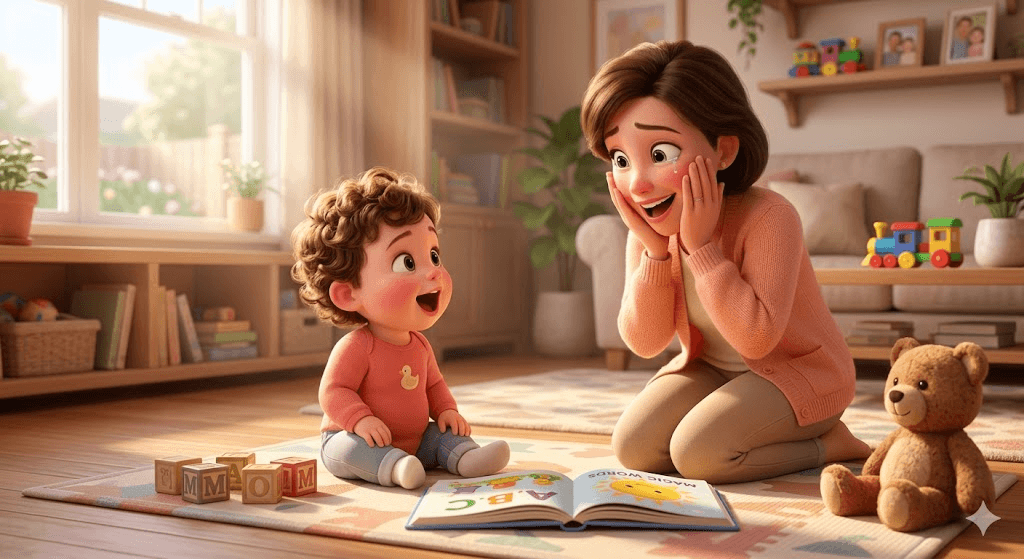
The social smile is one of the first visible signs of relationship: your baby is not only making a face, but beginning to respond to the adult's face, voice and presence.
This guide complements newborn vision, newborn hearing, shared play and 0-3 month development.
Reflex smiles and social smile
In the first days, you may see grimaces or small smiles during sleep, digestion or relaxed moments. These are normal, but they are not always an intentional response.
The social smile usually appears around the end of the second month: the baby looks at the face, listens to the voice and responds with a more stable smile, often with movement, sounds or increased attention.
Timing is only a guide. The whole picture matters: gaze, voice, calm, interest and response.
How to support it
You do not need to "teach" your baby to smile. You can create good conditions:
- choose a moment when they are awake and calm;
- bring your face close without crowding them;
- speak slowly;
- smile and wait;
- repeat simple sounds;
- stop if they look away.
Babies need pauses. Looking away does not mean rejection: it is often a way to regulate stimulation.
What to watch
Between 1 and 3 months you may notice:
- looking at faces;
- seeming happy when you approach;
- calming when held or spoken to;
- smiling when you smile or talk;
- making small sounds;
- alternating attention and pause.
You do not need to measure everything. If your baby was premature, hospitalized or had problems at birth, the pediatrician can help interpret timing in light of their story.
If your baby is not smiling yet
A delayed smile is not a diagnosis. First look at the context: sleep, hunger, reflux, illness, too much stimulation and very tiring days.
Talk with the pediatrician if:
- your baby never looks at faces;
- does not react to voices;
- does not seem to calm with contact or voice;
- social signs do not appear around expected checkups;
- they lose abilities they had already shown;
- they are very unresponsive or feeding poorly.
One extra assessment is better than waiting too long with a persistent concern.
Smile and relationship
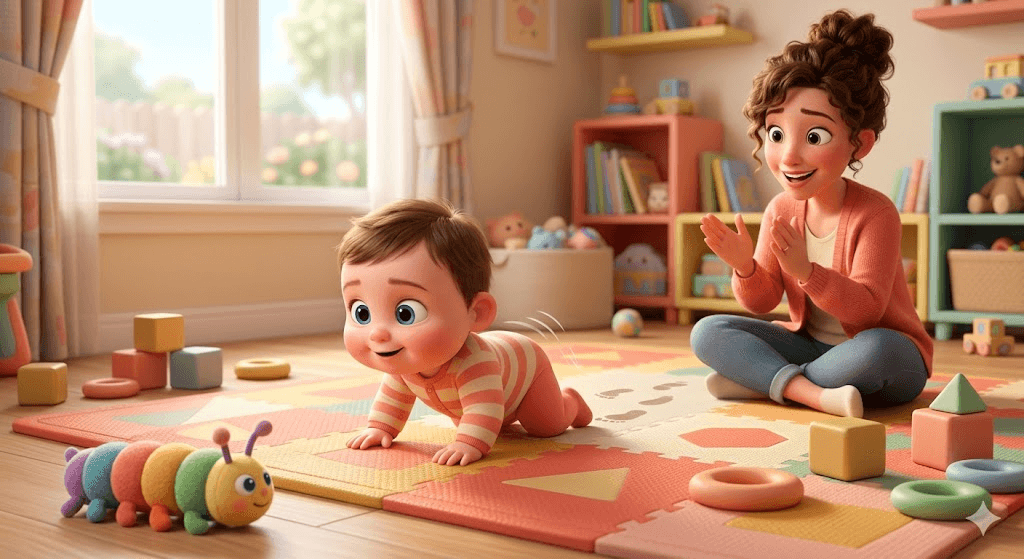
The social smile is not only a "milestone": it is the beginning of exchanges. You make a face, your baby looks. You talk, your baby moves their mouth or eyes. You wait, they try to respond.
These micro-exchanges support language, attention and security. They are part of the foundation for first words and cognitive development, even though words will come much later.
Key takeaway
The social smile grows in relationship, not intense stimulation. Close face, calm voice, pauses and repetition are enough. If interaction is persistently absent, ask the pediatrician.
Useful links
Sources and further reading
- When do babies first smile? - HealthyChildren.org - American Academy of Pediatrics
- Emotional & Social Development in Babies: Birth Through 3 Months - HealthyChildren.org - American Academy of Pediatrics
- Milestones by 2 Months - Centers for Disease Control and Prevention
- Your baby's developmental milestones at 2 months - UNICEF Parenting
- CDC's Developmental Milestones - Centers for Disease Control and Prevention
Sources are used to support general informational content and do not replace advice from a pediatrician or healthcare professional.