Newborn vision: what babies see in the first months
How newborn vision develops in the first months: distance, faces, contrast, movement, simple play and signs to discuss with the pediatrician.
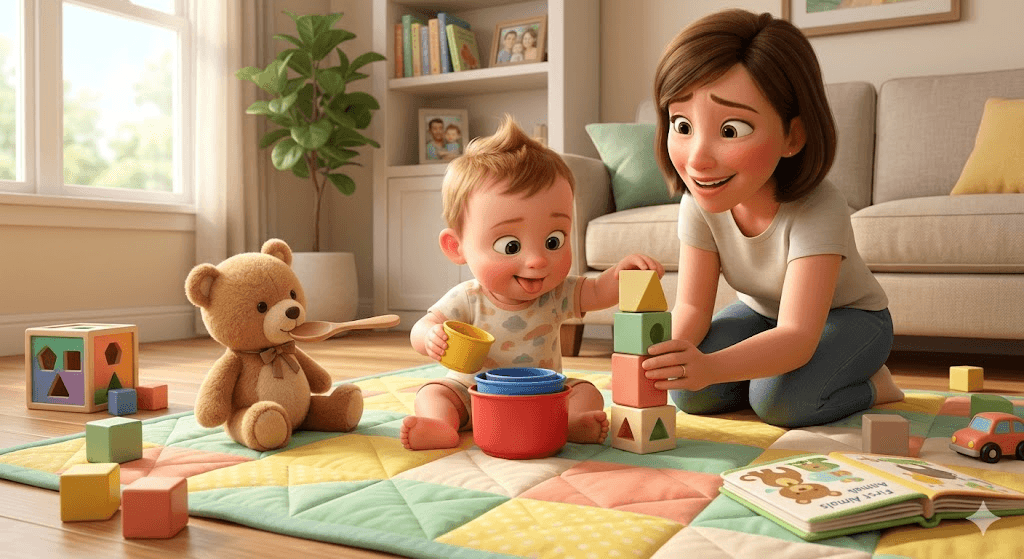
Newborn vision is already active, but still immature. In the first months, babies see best up close, prefer faces and simple contrast, and gradually learn to coordinate both eyes.
This guide complements 0-3 month development, shared play, social smile and skin-to-skin contact.
What babies see at birth
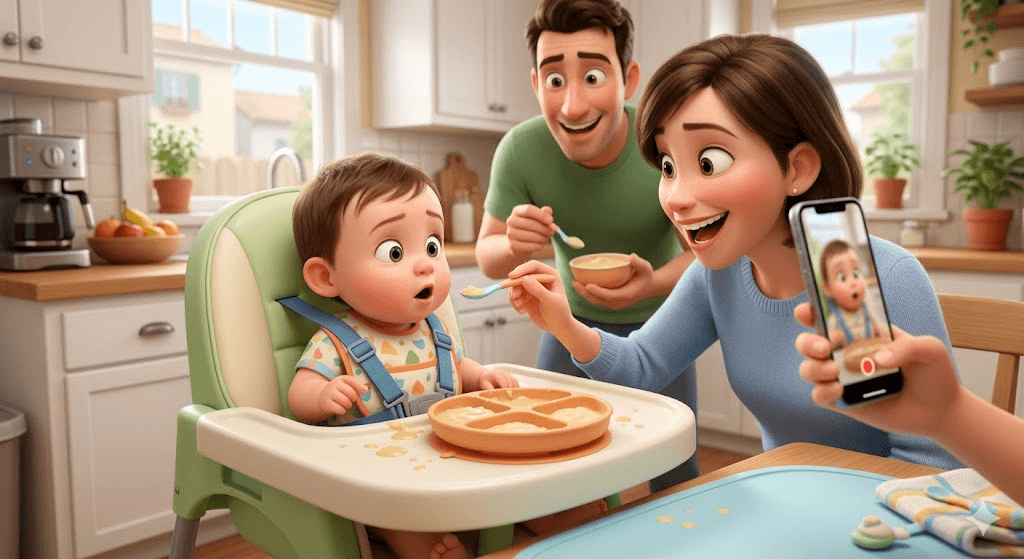
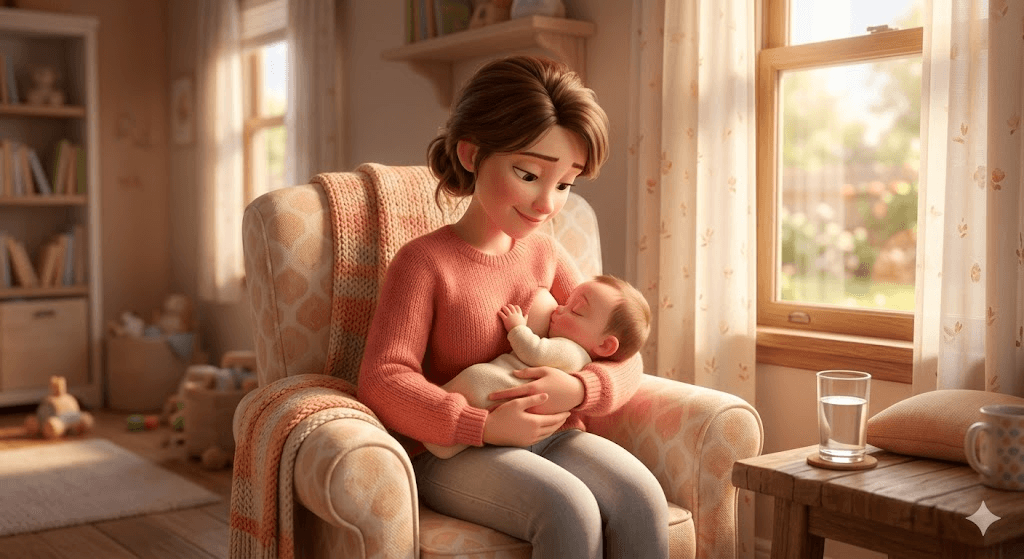
In the first weeks, a newborn can detect light, shapes, movement and faces, but distance vision is blurry. The most useful distance is the parent's face during feeding, diaper changes or cuddles: about 20-30 cm.
That is why the best stimulation is not a room full of objects, but:
- a close face;
- calm voice;
- non-glaring light;
- pauses;
- a few stimuli at a time.
Your baby does not need cards or exercises. They need simple, repeated and safe experiences.
Eyes that seem crossed
In the earliest months, the eyes may sometimes appear crossed or not perfectly coordinated. This can be part of normal early maturation.
Talk with the pediatrician if:
- one eye often or always turns;
- the turning does not improve over time;
- you notice a white pupil in photos or light;
- your baby does not seem to fix on faces;
- one eye is always closed, red or watery;
- you have concerns because of family history or known conditions.
Early assessment helps avoid missing problems that are easier to treat when found in time.
What to watch from 1 to 3 months
Every baby has their own pace, but in this stage you may notice:
- looking at the parent's face;
- staying interested in a close object for a few seconds;
- slowly following a face or object in motion;
- reacting to light and shadow;
- seeking eye contact when awake and calm.
You do not need to check everything every day. It is more useful to notice general changes and discuss them at checkups.
Simple vision play
Choose moments when your baby is awake, fed and not overstimulated.
You can try:
- bringing your face close and waiting for them to look;
- speaking slowly while moving your head slightly;
- using one high-contrast object at close range;
- moving the object slowly side to side;
- alternating play and pause.
If your baby turns away, cries, stiffens or seems tired, stop. Rest is part of development.
Environment and safety
Light should allow your baby to open their eyes without discomfort. Avoid close flash, light pointed directly at the face and screens used as entertainment.
During tummy time or floor play, stay nearby and use a safe surface. For sleep, follow safe baby sleep: clear crib and no soft objects.
When to ask promptly
Contact the pediatrician without waiting for the next scheduled visit if you notice:
- persistent lack of response to light;
- white pupil or unusual reflection;
- very red, swollen eyes or significant discharge;
- very unusual eye movements;
- loss of a skill already shown;
- baby is very sleepy, less responsive or feeding much less.
These signs do not automatically mean a serious problem, but they deserve assessment.
Key takeaway
Newborn vision develops through relationship: close face, voice, pauses and routine. You do not need to stimulate a lot; you need to observe calmly and ask for help when something does not fit.
Useful links
Sources and further reading
- Infant Vision Development: What Can Babies See? - HealthyChildren.org - American Academy of Pediatrics
- Vision Screenings for Babies & Children - HealthyChildren.org - American Academy of Pediatrics
- Milestones by 2 Months - Centers for Disease Control and Prevention
- CDC's Developmental Milestones - Centers for Disease Control and Prevention
- Early childhood development - UNICEF
Sources are used to support general informational content and do not replace advice from a pediatrician or healthcare professional.