Newborn acne: tiny bumps on your baby's face
How to recognize newborn acne, what not to do on facial skin and when a rash should be assessed.
Newborn acne can appear in the first weeks as tiny bumps or pimples on the face, especially cheeks, forehead and chin. It is often temporary and does not need aggressive treatment.
Newborn skin is delicate: the most common risk is doing too much and irritating something that would have improved on its own.
What it may look like
It may show as:
- small red dots;
- superficial pimples;
- location on cheeks, forehead or chin;
- skin that does not seem very painful;
- a baby who feeds and seems well.
If there are blisters, yellow crusts, pus, fever or your baby seems unwell, do not assume it is acne.
What to do
- Wash the face with warm water or a gentle cleanser if advised.
- Pat dry.
- Avoid unnecessary heavy creams.
- Keep bibs and fabrics touching the face clean.
- Reduce rubbing from saliva, milk or rough fabrics.
- Watch the pattern without picking.
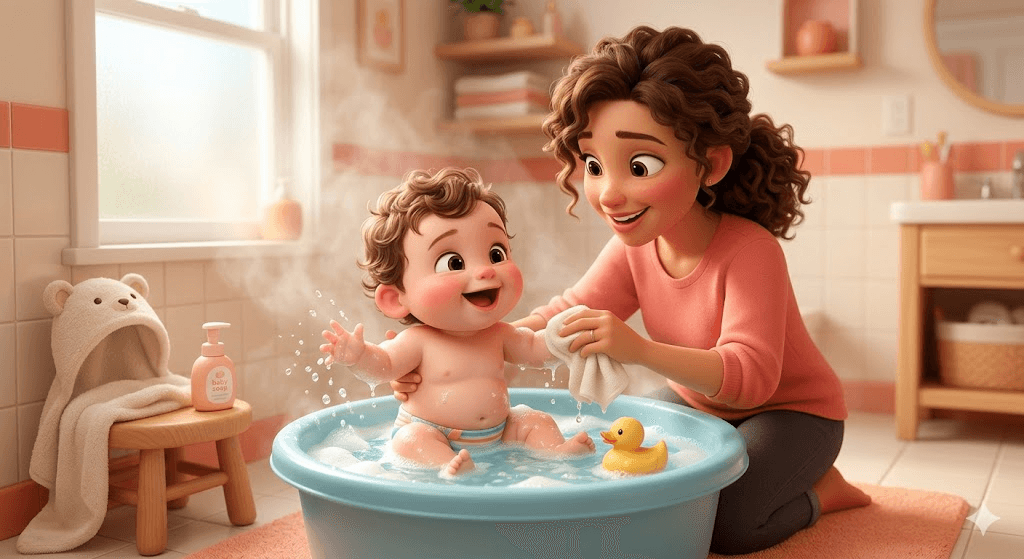
For basic care, see baby's first bath.
What to avoid
- Do not squeeze bumps.
- Do not use harsh cleansers.
- Do not apply acne creams, acids or adult products.
- Do not use essential oils.
- Do not cover the area with many products.
- Do not change feeding without guidance.
When to call the pediatrician
Call if:
- the rash worsens quickly;
- it spreads widely;
- fever appears;
- pus, crusts, blisters or swelling appear;
- skin looks very dry, cracked or painful;
- your baby is low-energy or feeding less;
- you are not sure it is acne.
For other common rashes, read cradle cap and heat rash in newborns.
Useful links
Sources and further reading
- Newborn Rashes and Birthmarks - HealthyChildren.org - American Academy of Pediatrics
- Your baby's skin - Canadian Paediatric Society
- Rashes in babies and children - NHS
- Child growth standards - World Health Organization
- Fever and Your Baby - HealthyChildren.org - American Academy of Pediatrics
Sources are used to support general informational content and do not replace advice from a pediatrician or healthcare professional.