Cradle cap: what to do without irritating the scalp
How to recognize cradle cap, which gentle care steps to try and when to ask the pediatrician.
Cradle cap is a common form of infant seborrheic dermatitis. It usually appears as yellowish, greasy or dry scales on the scalp. It can look unpleasant, but often does not bother the baby and tends to improve with time.
The key word is gentleness: do not scratch, do not force scales off and do not use harsh products.
How to recognize it
It may show as:
- yellow or whitish scales;
- greasy or crusty appearance;
- location on the scalp;
- possible spread to eyebrows, behind ears or folds;
- little or no itching.
If the skin is very red, swollen, oozing, bleeding or your baby seems uncomfortable, do not manage it alone.
Gentle care
You can try:
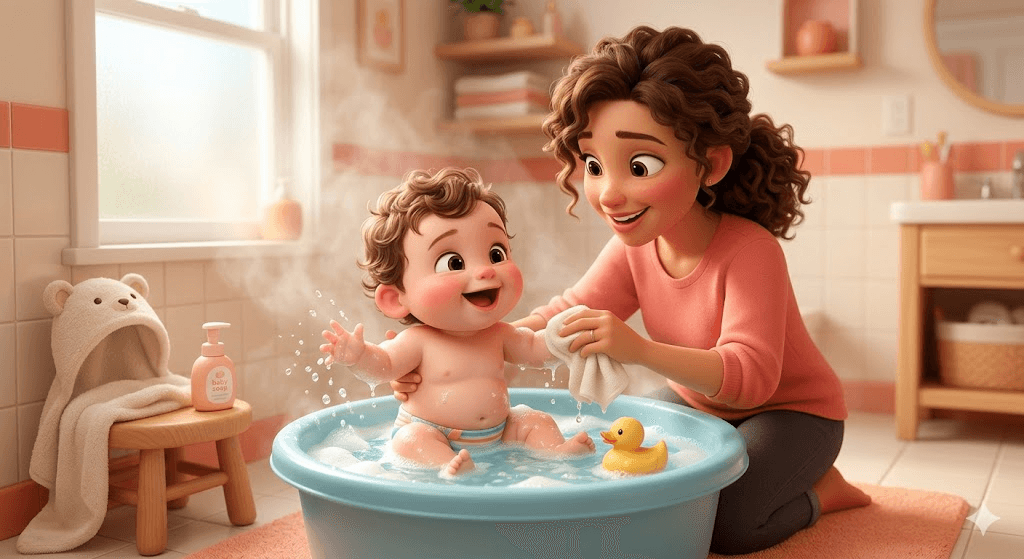
- washing with a gentle cleanser suitable for babies;
- light scalp massage;
- very soft brush after scales are softened;
- careful rinsing;
- drying without rubbing.
If you use oils or specific products, ask your pediatrician or pharmacist and remove them well: leaving greasy products for a long time can irritate some babies.
What to avoid
- Do not scratch with nails or hard combs.
- Do not pull off resistant crusts.
- Do not use adult anti-dandruff shampoo without guidance.
- Do not apply steroid or antifungal treatments unless prescribed.
- Do not wash aggressively several times a day.
For general hygiene, see baby's first bath.
When to call the pediatrician
Call if:
- it spreads far beyond the scalp;
- the skin is very red or swollen;
- there is oozing, bad smell or wet crusts;
- your baby scratches or seems uncomfortable;
- it does not improve over time;
- you are unsure whether it is cradle cap or another rash.
The guides newborn acne and heat rash in newborns help separate other common patterns, without replacing direct assessment.
Useful links
Sources and further reading
- Your baby's skin - Canadian Paediatric Society
- Newborn Rashes and Birthmarks - HealthyChildren.org - American Academy of Pediatrics
- Rashes in babies and children - NHS
- Child growth standards - World Health Organization
- Fever and Your Baby - HealthyChildren.org - American Academy of Pediatrics
Sources are used to support general informational content and do not replace advice from a pediatrician or healthcare professional.