Safe sleep for newborns: rules for every sleep
Back sleeping, a flat empty sleep surface, room sharing, temperature, swaddling and practical steps to reduce sleep-related risks.
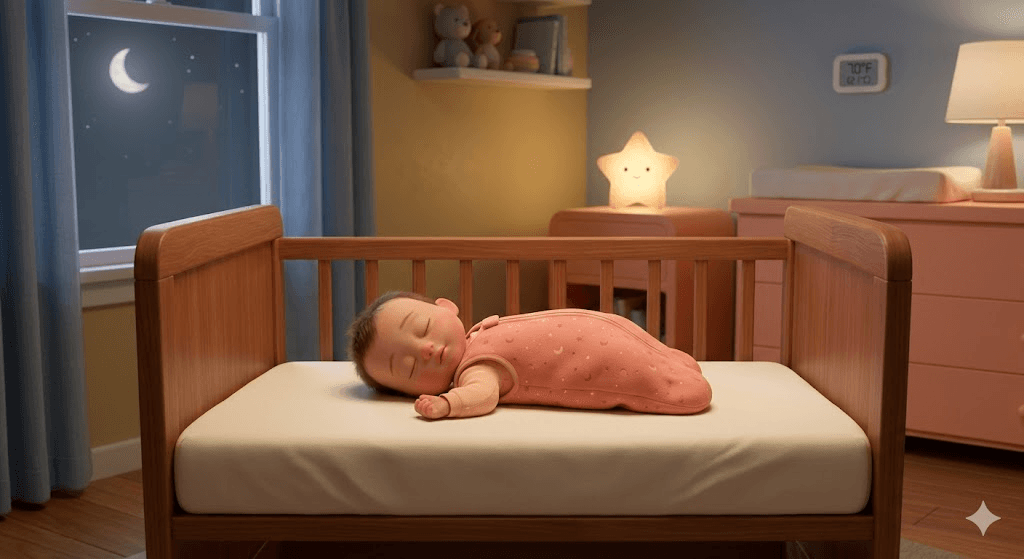
A consistent environment for every sleep reduces the risk of suffocation, entrapment and sleep-related infant death. The same rules apply at night, during naps and when grandparents, babysitters or other caregivers put the baby down.
Back for every sleep
Place your baby on their back at the beginning of every sleep. Side sleeping is unstable and stomach sleeping increases risk. This recommendation also applies to babies with spit-up or reflux unless a physician gives different instructions for a rare medical condition.
Once your baby can roll independently in both directions, continue placing them on their back but you do not need to turn them over repeatedly during the night. Keep the crib empty and make sure the baby is no longer swaddled.
Supervised tummy time remains important, but only while the baby is awake and watched by an adult. Start with short age-appropriate periods and stop if your baby falls asleep.
A firm, flat sleep surface
Use a bassinet, crib or portable play yard that meets applicable safety standards, with a mattress fitted closely to the frame and a fitted sheet. Keep the surface horizontal. Raising the mattress does not treat reflux and can let a baby slide into a dangerous position.
The sleep space does not need:
- pillows, quilts, duvets or loose blankets;
- crib bumpers, nests, pods or positioners;
- stuffed animals, toys or decorative braids;
- “anti-reflux” or “anti-suffocation” pillows;
- weighted products, including weighted sleep sacks or swaddles.
A correctly sized wearable blanket can replace loose bedding. The neck opening must prevent the baby from slipping inside, and warmth should match the room without excessive extra layers.
Same room, separate surface
Room sharing means your baby sleeps in the parents' room in their own crib or bassinet. It makes feeds and checks easier and is recommended for at least the first 6 months. Bed sharing means using the adult mattress together and introduces hazards that a separate infant surface avoids.
If you use a bedside sleeper, choose a product designed for that purpose, assemble it exactly as instructed and leave no gap between surfaces. Do not improvise by removing or lowering the side of a standard crib. Read more in the guide to room sharing and shared sleep.
Sofas, armchairs and sitting devices
Never fall asleep with a baby on a sofa or armchair, where the baby can become trapped between an adult body and cushions. If you feel drowsy during a feed, move away from these locations and have a plan for returning the baby to the crib.
Car seats, strollers, bouncers, swings and carriers are not routine sleep surfaces. If a baby falls asleep during transport, monitor their position and breathing and move them to a flat approved surface as soon as it is practical and safe. In a moving car, the car seat remains essential.
Temperature and clothing
Avoid overheating and head covering. Use light layers appropriate for the room and check the chest or back of the neck. Sweating, a very hot chest and flushed cheeks may indicate too much warmth. Cool hands and feet alone do not mean another blanket is needed.
Do not use hats for indoor sleep. Keep the crib away from radiators, heaters, curtains, cords and direct sunlight.
Swaddling more safely
If you choose to swaddle:
- always place the baby on their back;
- leave room for the hips and legs to move;
- avoid a tight chest wrap and all weighted products;
- stop at the first signs of trying to roll rather than waiting until rolling is established;
- do not swaddle during bed sharing.
A loose swaddle can become free fabric in the crib. If it will not stay secure, use suitable sleep clothing instead.
Pacifiers, breastfeeding and smoke
Breastfeeding is associated with a lower SIDS risk. Once breastfeeding is established, you can offer a pacifier for naps and nighttime. If it falls out, it does not need to be replaced, and it should not be attached to cords, clips, toys or ribbons during sleep. Do not force it if your baby refuses.
Avoid tobacco smoke and nicotine during pregnancy and after birth. Keep the home and car free from smoke and e-cigarette aerosol. Never let an adult who has used alcohol, recreational drugs or sedating medication sleep with the baby.
Products and monitors
Be cautious of products claiming to prevent SIDS. Consumer heart-rate and oxygen monitors for healthy babies do not replace a safe sleep environment and have not been shown to prevent SIDS. If monitoring is prescribed for a medical condition, follow the specialist's plan.
Check recalls and instructions for the crib, bassinet and sleep sack. Words such as “breathable,” “ergonomic” and “anti-suffocation” are marketing descriptions, not proof that an item is suitable for infant sleep.
Bedtime checklist
- Baby placed on the back.
- Firm, flat, closely fitted mattress.
- Fitted sheet only; no objects in the sleep space.
- Head uncovered and room temperature comfortable.
- Infant sleep space in the caregiver's room on a separate surface.
- Swaddling stopped when attempts to roll begin.
- No smoke and no impaired or excessively drowsy adult beside the baby.
Key points
You do not need many accessories. The safer sleep setup is simple and repeatable: back sleeping, an empty crib, a flat separate surface in the same room, and no smoke for every sleep.
Sources and further reading
- How to Keep Your Sleeping Baby Safe - HealthyChildren.org - American Academy of Pediatrics
- Safe Sleep Environment - Safe to Sleep - Eunice Kennedy Shriver NICHD
- Baby sleep - UNICEF Parenting
Sources are used to support general informational content and do not replace advice from a pediatrician or healthcare professional.