Play 6-12 months: exploring, hiding, banging and imitating
Play ideas for 6-12 months: peekaboo, containers, banging objects, books, imitation, safe movement, no walkers and signs to watch.
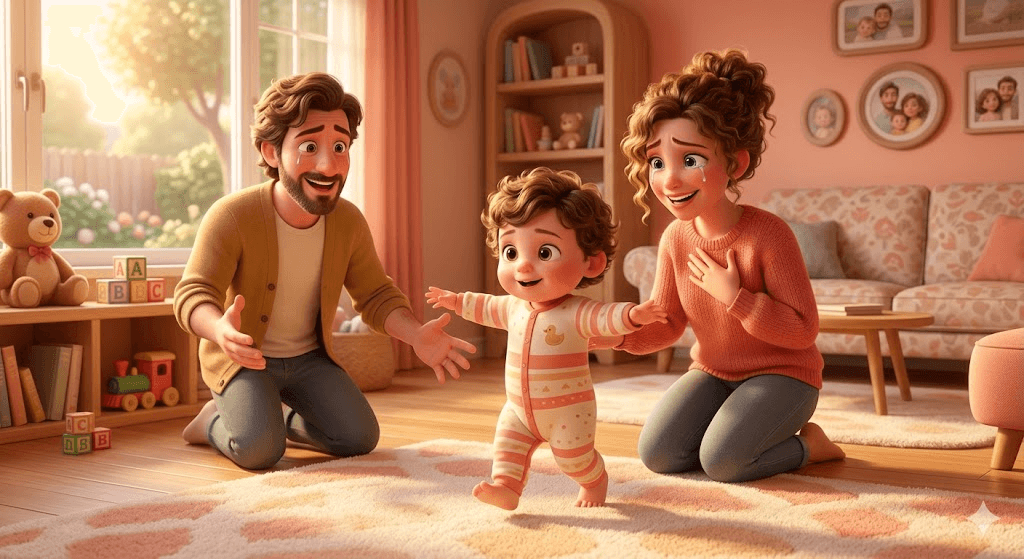
Between 6 and 12 months, play becomes more exploratory: babies search for objects, move them, bang them, imitate sounds, try to move and check adult reactions.
This guide complements crawling and motor development, first steps, books in the first months and first words.
What changes
In this age range, you may see:
- sitting with more control;
- moving objects from hand to hand;
- looking for a dropped or hidden object;
- banging two objects;
- imitating sounds or gestures;
- responding to their name;
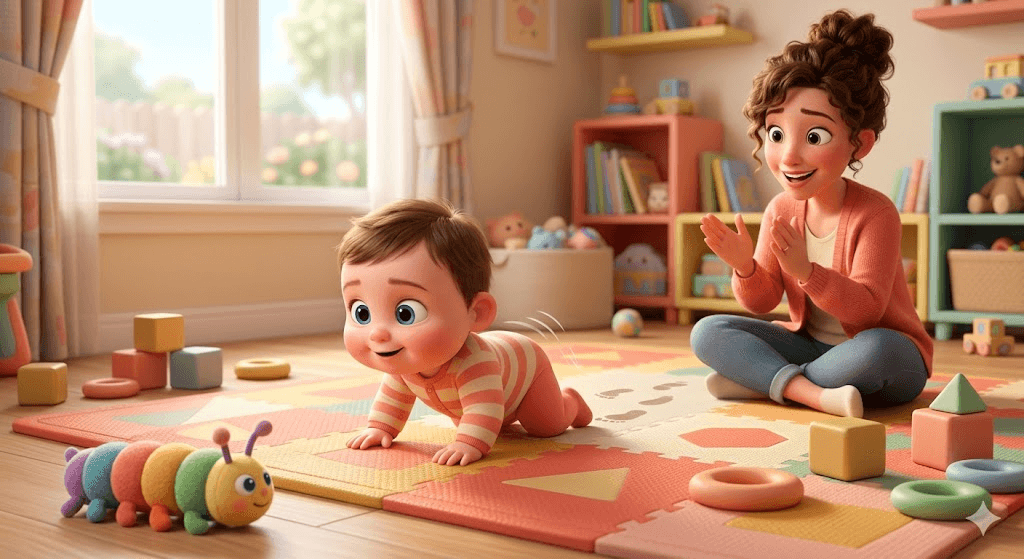
- moving on the floor;
- pulling up or cruising toward the end of the year.
These milestones vary. Play offers opportunities; it does not force the calendar.
Cause-and-effect play
Babies love discovering that an action creates a result.
Simple ideas:
- bang two large spoons;
- put objects in and out of a box;
- roll a soft ball;
- press a simple toy;
- drop an object and name it;
- open and close safe containers.
Expect repetition. Repetition is learning.
Hiding and finding
Peekaboo and hidden-object play become valuable:
- hide a toy under a light cloth;
- show where it went;
- wait for your baby to search;
- take turns;
- celebrate the attempt.
These games support attention, memory and relationship.
Imitation and words
Imitate your baby's sounds and gestures. Then add a little:
- "ba" becomes "ba-ba";
- a gesture becomes "bye";
- an object becomes "ball";
- an animal sound becomes "woof";
- a book becomes a small routine.
Do not correct continuously. Respond, expand and wait.
Safe movement
Prepare the home:
- floor space;
- stable furniture;
- protected stairs;
- fragile objects out of reach;
- no baby walker;
- supervision during pulling up and attempts.
For movement and shoes, see first-year motor activities and first walking shoes.
When to ask for advice
Talk with the pediatrician if your baby:
- does not interact with adults or toys;
- loses skills already acquired;
- uses one side much less;
- does not react to name or sounds;
- does not mouth or explore objects;
- shows stiffness, floppiness or little contact.
Key takeaway
6-12 months is the time for safe exploration. Offer simple objects, space, words and presence: your baby will do the rest through repetition and curiosity.
Useful links
Sources and further reading
- How Active is Your Baby? Tips to Get Infants Learning, Moving & Thriving - HealthyChildren.org - American Academy of Pediatrics
- Milestones by 9 Months - Centers for Disease Control and Prevention
- Milestones by 1 Year - Centers for Disease Control and Prevention
- How babies learn through play - UNICEF Parenting
- CDC's Developmental Milestones - Centers for Disease Control and Prevention
Sources are used to support general informational content and do not replace advice from a pediatrician or healthcare professional.