First walking shoes: when babies really need them
When to buy first shoes, how to choose them, why barefoot is often better indoors, what to avoid and when to ask for advice.
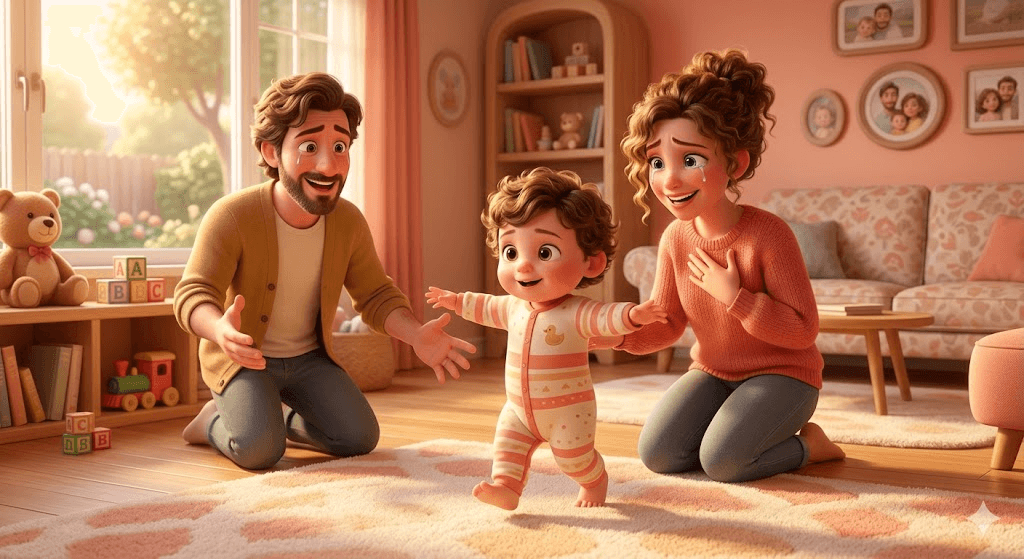
First walking shoes mainly protect the foot outdoors. Indoors, when the environment is safe, barefoot or non-slip socks help babies feel the floor and adjust balance.
This guide complements first steps, crawling and motor development, when baby sits and first-year motor activities.
When to buy them
Rigid shoes are not needed when a baby is not walking yet. NHS sources indicate proper shoes are needed when a child is walking independently, especially outdoors.
Before then, for warmth or protection, soft options that do not compress toes and feet are enough.
How to choose them
For first outdoor steps, look for shoes that are:
- light;
- flexible;
- closed-toe;
- non-slip;
- roomy enough for toes;
- easy to put on but stable;
- the right size.
Avoid heavy, rigid, tight shoes, compressed toe boxes or very thick soles. Your baby needs to feel, bend and correct.
What is not needed
For a child without specific clinical guidance, you do not need:
- insoles;
- special arches;
- rigid supports;
- high shoes to "support" the ankle;
- corrective models;
- expensive shoes sold as essential.
If a professional recommends support for a specific reason, follow that pathway; do not buy corrective devices for generic prevention.
Indoors
At home, prefer:
- barefoot if the floor is safe;
- non-slip socks if it is cold;
- stable rugs;
- clear space;
- no tripping objects;
- adult nearby.
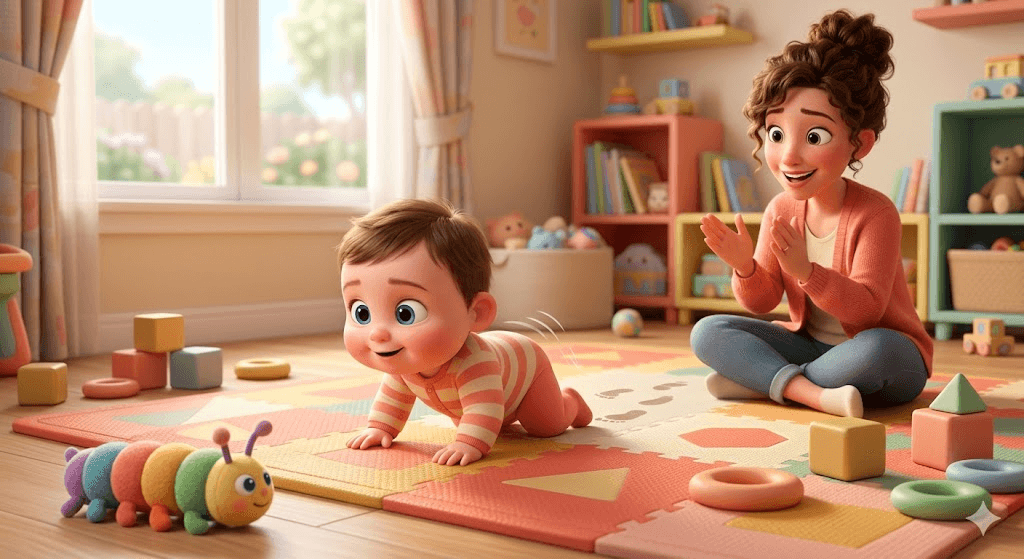
Your baby will fall often: this is part of learning. The environment should reduce consequences, not block every attempt.
Walkers and supports
Baby walkers do not help babies learn to walk and can increase injury risk. AAP sources discourage them because of falls, burns, access to hazards and possible walking delay.
Better options:
- free movement on the floor;
- stable furniture for pulling up;
- heavy, non-tipping push toys if used with supervision;
- an adult hand without pulling the arms;
- time and patience.
When to ask for advice
Talk with the pediatrician if:
- your baby always uses one side much more;
- drags one leg;
- has pain, stiffness or limp;
- never bears weight on the foot;
- loses a motor skill;
- feet look very rigid or deformed;
- there are known conditions or prematurity.
You do not need to medicalize every fall or wide gait: early balance and direction are unstable.
Key takeaway
First shoes protect; they do not teach walking. Learning needs free feet, a safe environment, movement and time.
Useful links
Sources and further reading
- Movement Milestones in Babies 8 to 12 Months Old - HealthyChildren.org - American Academy of Pediatrics
- Leg and foot problems in children - NHS
- Baby Walkers: A Dangerous Choice - HealthyChildren.org - American Academy of Pediatrics
- How to keep your baby or toddler active - NHS
- CDC's Developmental Milestones - Centers for Disease Control and Prevention
Sources are used to support general informational content and do not replace advice from a pediatrician or healthcare professional.