Books in the first months: how to read to a newborn
How to use books and shared reading in the first months: voice, routine, pictures, soft books, when to stop and how reading supports language.
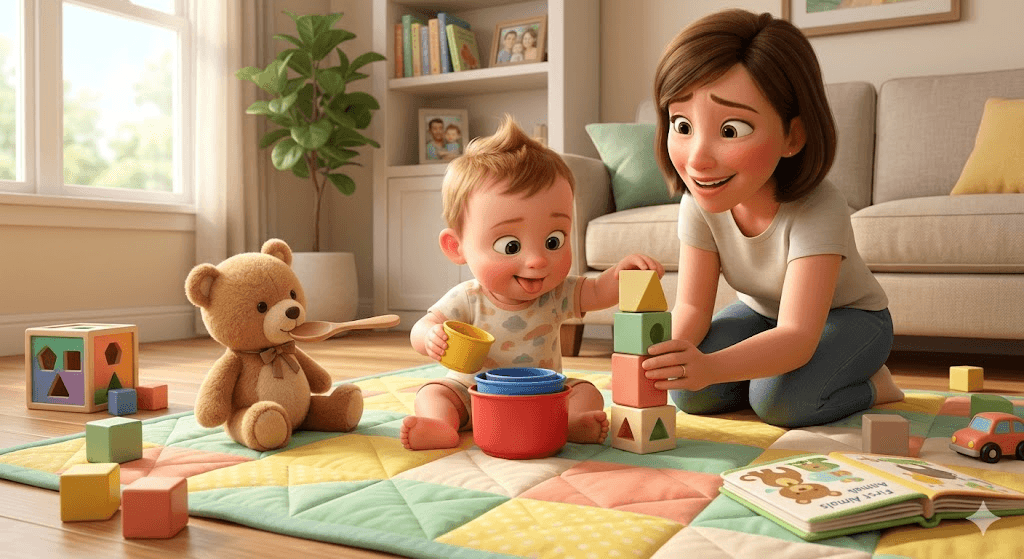
Reading to a newborn does not mean teaching letters or words. It means sharing voice, rhythm, contact, pictures and routine. Reading is one of the simplest ways to build relationship and language.
This guide complements shared play, first words, play 0-3 months and first-year games.
When to start
AAP sources encourage shared reading from birth. In the first months, though, the book is mainly a reason for voice and closeness.
You can start with:
- a few minutes;
- one page;
- high-contrast pictures;
- slow rhythm;
- soft voice;
- pausing as soon as your baby shows tiredness.
You do not need to finish the book. You need to end the moment well.
What books to choose
In the first months, useful options include:
- sturdy board books;
- washable soft books;
- large pictures;
- strong contrast;
- few images per page;
- books you can hold with one hand.
Avoid books with small parts, exposed batteries, very loud sounds or detachable pieces.
How to read
You do not need to read every word. You can:
- name the picture;
- pause;
- change tone;
- point slowly;
- repeat one phrase;
- connect the book with a routine.
Example: "Here is the moon. Moon. Good night moon." Then pause. Babies hear rhythm and intention before meaning.
Reading and routine
Reading can fit:
- before a nap;
- after a diaper change;
- in your arms after a feed;
- before bedtime;
- during a calm morning moment.
If sleep routines are delicate, also read sleep routine and safe baby sleep.
Pause cues
Stop if your baby:
- turns their head;
- arches their back;
- cries;
- loses attention;
- stiffens;
- shows hunger or sleepiness.
Reading should not become a performance. If today it lasts 20 seconds, that is fine.
Link with language
Shared reading supports later words because it offers:
- repeated voice;
- turn-taking;
- shared attention;
- names for objects;
- rhythm;
- positive relationship.
To continue, connect this habit with newborn hearing, social smile and first words.
When to ask for advice
Talk with the pediatrician if you notice loss of social interest, regression of skills, no response to voice or sounds, clear visual concerns or persistent developmental worries.
Key takeaway
In the first months, reading is being together. Voice, a simple book and respect for the baby's cues are enough.
Useful links
Sources and further reading
- How to Share Books With Your Baby - HealthyChildren.org - American Academy of Pediatrics
- Developmental Milestones of Early Literacy - HealthyChildren.org - American Academy of Pediatrics
- Shared Reading Starting at Birth Offers Lifelong Benefits - HealthyChildren.org - American Academy of Pediatrics
- How babies learn through play - UNICEF Parenting
- CDC's Developmental Milestones - Centers for Disease Control and Prevention
Sources are used to support general informational content and do not replace advice from a pediatrician or healthcare professional.