Play 0-3 months: what to do without overstimulation
Play ideas for babies 0-3 months: face, voice, contact, contrast, short tummy time, simple reading and pause cues.
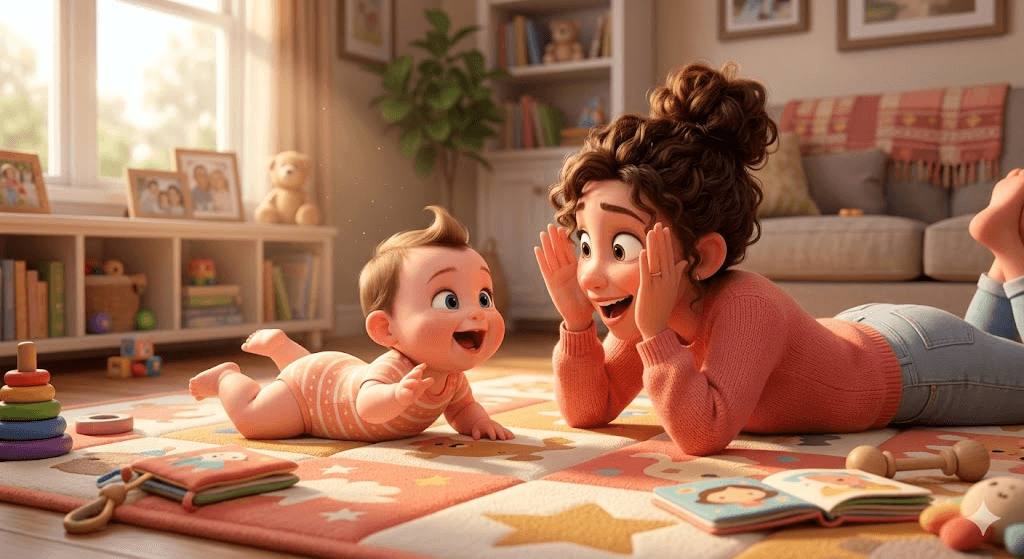
In the first 3 months, play is not constant entertainment: it is brief, repeated relationship that respects newborn cues. Face, voice, contact and pauses are already enough.
This guide complements 0-3 month development, newborn vision, newborn hearing and shared play.
Goal of play
Play from 0 to 3 months helps:
- build familiarity;
- support looking and listening;
- alternate presence and pause;
- help the baby feel safe;
- observe how they respond to stimuli.
You do not need to "teach" skills. Your baby learns through simple exchanges: you talk, they look; you wait, they move eyes, hands or mouth.
Face and voice play
Choose a moment when your baby is awake and calm.
Try:
- face at 20-30 cm;
- slow smile;
- calm voice;
- small pauses;
- imitating sounds or expressions;
- singing a short phrase.
If your baby looks away, stiffens or cries, stop. The pause is part of play.
Contact play
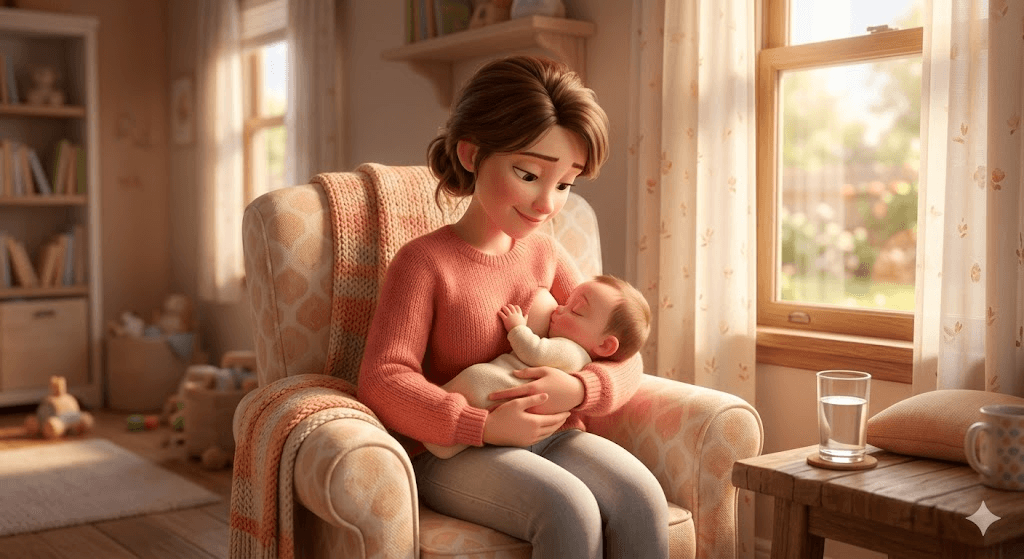
Skin-to-skin, gentle massage if enjoyed, a calm diaper change and voice during feeding are relational play moments.
You can use:
- warm hands on chest or legs;
- slow strokes;
- voice describing what you are doing;
- short eye contact;
- lullaby or rhyme.
Do not force contact if your baby shows discomfort. Some parts of the day work better than others.
Vision and contrast
In the first months, babies see best up close. Use few stimuli:
- a face;
- a high-contrast book;
- one simple object;
- natural non-direct light;
- slow movement.
Avoid intense light-up toys, loud sounds and too many objects together.
Short movement
Movement is play when it is safe:
- tummy time on the chest of an awake adult;
- a few minutes belly-down on a mat;
- legs free to kick;
- changing position between arms, mat and contact;
- frequent pauses.
Read more in tummy time and first-year motor activities.
When to ask for advice
Talk with the pediatrician if your baby:
- never reacts to face, voice or contact;
- is very unresponsive;
- loses signs they had already shown;
- appears very stiff or floppy;
- feeds much less;
- you have persistent developmental concerns.
Play does not replace checkups, but it helps you observe.
Key takeaway
0-3 months means little, close and with pauses. Your face and voice are the main toy.
Useful links
Sources and further reading
- Developmental Milestones: 1-4 Months Old - HealthyChildren.org - American Academy of Pediatrics
- Milestones by 2 Months - Centers for Disease Control and Prevention
- How babies learn through play - UNICEF Parenting
- Early childhood development - UNICEF
- CDC's Developmental Milestones - Centers for Disease Control and Prevention
Sources are used to support general informational content and do not replace advice from a pediatrician or healthcare professional.