Drinking from a cup: moving from bottle to cup
When to offer a cup, which cup to choose, how to reduce bottles and how to manage water, milk, spills and refusal.
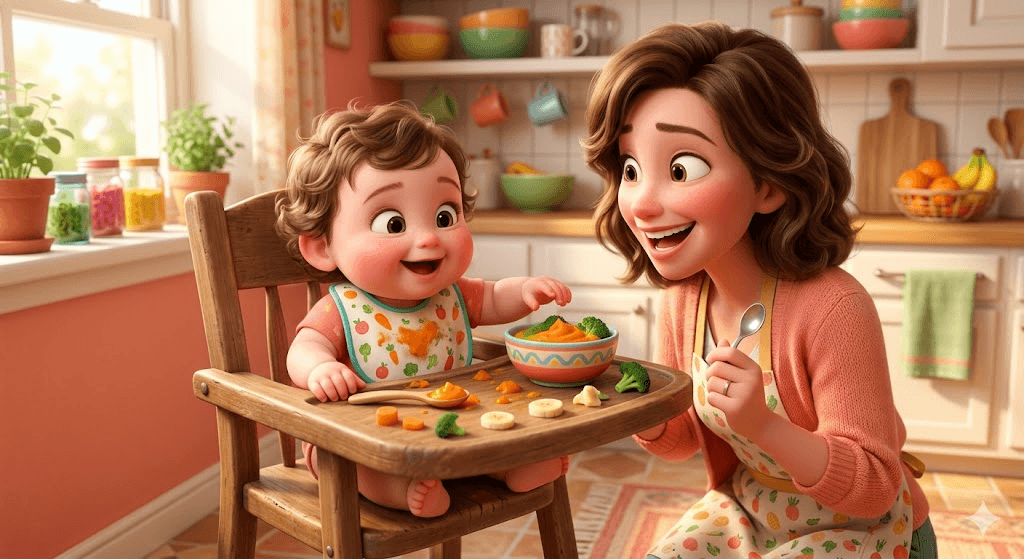
Drinking from a cup is a new skill: it needs posture, coordination, lips, tongue, hands and plenty of tolerance for spills. You do not need to remove the bottle overnight. You need regular, predictable chances to practice.
This guide complements water during weaning, first tastes, child routines and first-years independence.
When to start
You can offer a cup when solid foods begin, around 6 months, with small sips during meals. At first, the goal is not drinking a lot. The goal is learning the movement.
During the second half of the first year and into the second year, your child becomes more able. Moving from bottle to cup can be gradual, especially for bottles linked with sleep or comfort.
Which cup to choose
Keep it simple:
- a small light cup;
- a two-handled cup;
- an open cup with very little water;
- a straw cup if your child can manage it;
- a free-flow spout if a middle step helps.
Try not to rely on rigid no-spill valves that require strong sucking: the goal is learning to sip, not replacing a bottle with another bottle.
How to offer it
During meals:
- seat your child steadily;
- bring the cup slowly to the mouth;
- tilt it only a little;
- wait for lips to close;
- comment on the attempt, not only the result.
You can drink from a similar cup yourself. Children learn a lot by watching.
Reducing bottles
If bottles are still present:
- start with the least important bottle;
- keep meals and snacks at the table;
- offer water in a cup during meals;
- avoid carrying a bottle around all day;
- replace comfort with cuddles, a book, a song or a safe object;
- keep the routine predictable.
The nighttime bottle is often the hardest. It may need more gradual steps.
What to put in the cup
For daily practice, water at meals is the simplest choice. Milk and other drinks should fit into the feeding routine, without keeping the cup available all day.
Avoid frequent sugary drinks and juices: they can increase cavity risk and build a preference for sweet tastes.
Common mistakes
Try not to:
- turn every sip into a test;
- fill the cup too much;
- scold spills;
- offer the cup only when your child is very thirsty;
- use the bottle to solve every protest;
- leave sweet drinks in a bottle or cup.
Spills are part of learning.
When to ask for advice
Talk with the pediatrician if your child often coughs with liquids, seems to struggle coordinating swallowing and breathing, refuses almost all fluids, has poor weight gain, signs of dehydration or a medical condition that makes the transition more complex.
Key takeaway
The cup is not an independence race. It is a routine: little liquid, adult presence, repeated tries and no pressure.
Useful links
Sources and further reading
- From Bottle to Cup: Helping Your Child Make a Healthy Transition - HealthyChildren.org - American Academy of Pediatrics
- Fingers, Spoons, Forks, and Cups - Centers for Disease Control and Prevention
- Drinks and cups for babies and young children - NHS
- Your toddler's developmental milestones at 1 year - UNICEF Parenting
- CDC's Developmental Milestones - Centers for Disease Control and Prevention
Sources are used to support general informational content and do not replace advice from a pediatrician or healthcare professional.