First toothbrush: when to start and how to use it
A practical guide to your child's first toothbrush: when to buy it, what to look for and how to brush first teeth without stress.
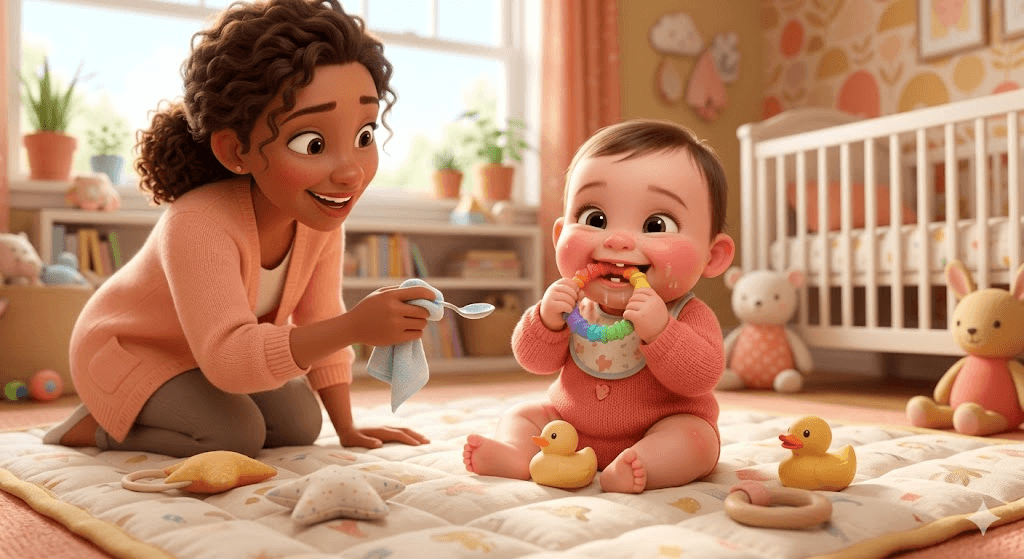
The first toothbrush is needed as soon as the first tooth appears. You do not need to wait for several teeth: even one baby tooth can hold residue and sugars, so it should be cleaned every day.
If your baby still has no teeth, start with the guide to newborn gums. If a tooth is already visible, you can introduce brushing gradually.
When to buy it
It is reasonable to have one ready around 4-6 months, because teething varies widely. Some babies get a first tooth early; others after their first birthday. The exact month matters less than starting once the tooth breaks through the gum.
Choose a toothbrush with:
- a small head;
- very soft bristles;
- an age range that fits your child;
- a handle that is easy for the adult to hold;
- no small parts that can detach easily.
An electric toothbrush is not necessary in the first months. It may help later if advised by a dentist and tolerated by your child, but at the beginning the priority is a gentle, steady routine.
How to brush first teeth
Use a tiny amount of fluoride toothpaste, about the size of a grain of rice. Place your baby on your lap with the head supported, or sit behind them if they can sit well. Lift the lip gently and brush with small movements.
Perfection is not the goal. In the first days, a few seconds can be enough if the habit repeats. You are building a routine that should become as normal as diaper changes or bath time.
How often
Pediatric sources recommend brushing at least twice a day, always including bedtime. A second cleaning can happen after breakfast or at another stable moment.
To keep it manageable:
- use the same sequence each time;
- let your child hold a "practice" toothbrush;
- sing a short song;
- avoid chasing your child around the room;
- end with a predictable step, such as rinsing the toothbrush together.
If your child resists
Resistance is common. The mouth is sensitive, and erupting teeth can make brushing uncomfortable. Shorten the session, change position and try when your child is not overtired or hungry.
It can help to let your child watch you brush. Children imitate more than they follow explanations. You can also take turns: first "your turn" with the toothbrush in your child's hand, then "my turn" for the actual cleaning.
When to replace it
Replace the toothbrush when the bristles spread out, after a significant infection or every 2-3 months. A worn toothbrush cleans poorly and may irritate the gums.
If your child bites the toothbrush a lot, separate the cleaning toothbrush from teething toys. For teething discomfort, use a safe chilled teether as described in teething and first teeth.
Toothpaste and fluoride
The toothbrush does not work alone: fluoride toothpaste is an important part of cavity prevention. The amount should be small and controlled by an adult. For dose, age and safety details, read fluoride toothpaste for children.
Key takeaway
The first toothbrush does not need to create a perfect brushing session. It needs to make tooth care normal. Brief, gentle and consistent is the combination that works best.
Useful links
Sources and further reading
- Looking after your baby's teeth - NHS
- Good Oral Health Starts Early: AAP Policy Explained - HealthyChildren.org - American Academy of Pediatrics
- FAQ - American Academy of Pediatric Dentistry
- Child growth standards - World Health Organization
- Fever and Your Baby - HealthyChildren.org - American Academy of Pediatrics
Sources are used to support general informational content and do not replace advice from a pediatrician or healthcare professional.