Fluoride toothpaste for children: how much to use and when to start
How to use fluoride toothpaste in the early years: amount, frequency, safety and common questions for babies and toddlers.
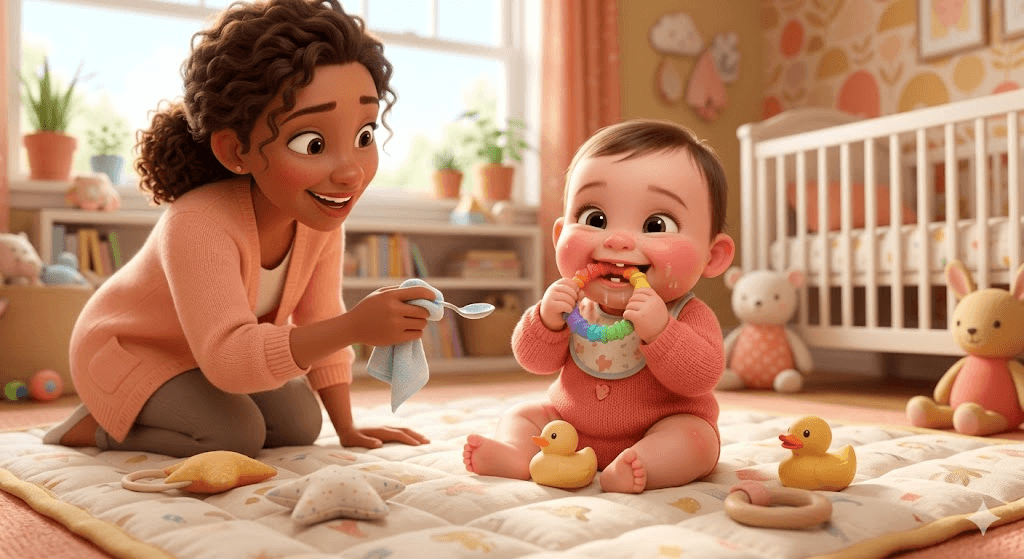
Fluoride is one of the most important tools for preventing tooth decay. In young children it should be used carefully: a small amount, chosen appropriately and always controlled by an adult.
This guide answers a common practical question: "Is it too early for fluoride toothpaste?" According to major pediatric sources, it can start when the first tooth appears, using a tiny amount.
When to start
Start when the first baby tooth comes in. Before teeth, a damp gauze pad or soft cloth is enough for gums, as explained in newborn gums.
From the first tooth onward, use a small soft toothbrush with fluoride toothpaste about the size of a grain of rice. This very small dose is intended to limit swallowing.
How much toothpaste
Amount matters more than foam. More toothpaste does not clean better and increases the chance that your child will swallow it.
Practical guide:
- under age 3: a smear, about the size of a grain of rice;
- ages 3 to 6: about a pea-sized amount, when your child can spit better;
- always: the adult puts toothpaste on the brush;
- always: store the tube out of reach after use.
What concentration to choose
Recommendations can vary slightly by country and product. In general, choose an age-appropriate fluoride toothpaste, read the label and follow the advice of your dentist or pediatrician.
If your child has a higher risk of cavities because of family history, early spots, frequent bedtime bottles or a sugar-heavy diet, ask for personalized advice.
Fluoride helps, but do not improvise
Fluoride strengthens enamel and helps reduce cavities, but supplements, drops or tablets should not be started without professional advice. They depend on diet, water, individual risk and clinical assessment.
If you use formula mixed with tap water, or you live in an area with very high or low fluoride levels, ask your pediatrician or dentist. Avoid stacking multiple fluoride products without guidance.
Early tooth decay: habits that matter
Toothpaste helps, but it cannot fully offset unfavorable habits. Early cavities are encouraged by frequent and prolonged contact between teeth and sugars, especially during sleep.
Watch out for:
- bottles with juice, sweet tea or sugary drinks;
- pacifiers dipped in sugar, honey or syrups;
- frequent sweet snacks during the day;
- sugary teething biscuits;
- sleep after the last feed without cleaning once teeth are present.
For foods that are not appropriate in the first year, revisit foods to avoid.
When to ask the dentist
Bring fluoride questions to the first dental visit. The dentist can assess enamel, diet, nighttime habits, family history and whether fluoride varnish is useful.
An early visit is not just for treatment. It is mainly for prevention, correcting small mistakes and giving the family a realistic routine.
Key takeaway
Fluoride toothpaste for young children is not about using a lot or avoiding it completely. It is about the right dose, adult control and a steady routine. A tiny smear twice a day from the first tooth is often the simplest effective habit.
Useful links
Sources and further reading
- Fluoride for Children: Parent FAQs - HealthyChildren.org - American Academy of Pediatrics
- Good Oral Health Starts Early: AAP Policy Explained - HealthyChildren.org - American Academy of Pediatrics
- Children's teeth - NHS
- Child growth standards - World Health Organization
- Fever and Your Baby - HealthyChildren.org - American Academy of Pediatrics
Sources are used to support general informational content and do not replace advice from a pediatrician or healthcare professional.