Using a spoon: helping your child eat independently
How to offer spoons and small forks, which foods to choose, and how to manage mess, throwing, refusal and mealtime independence.
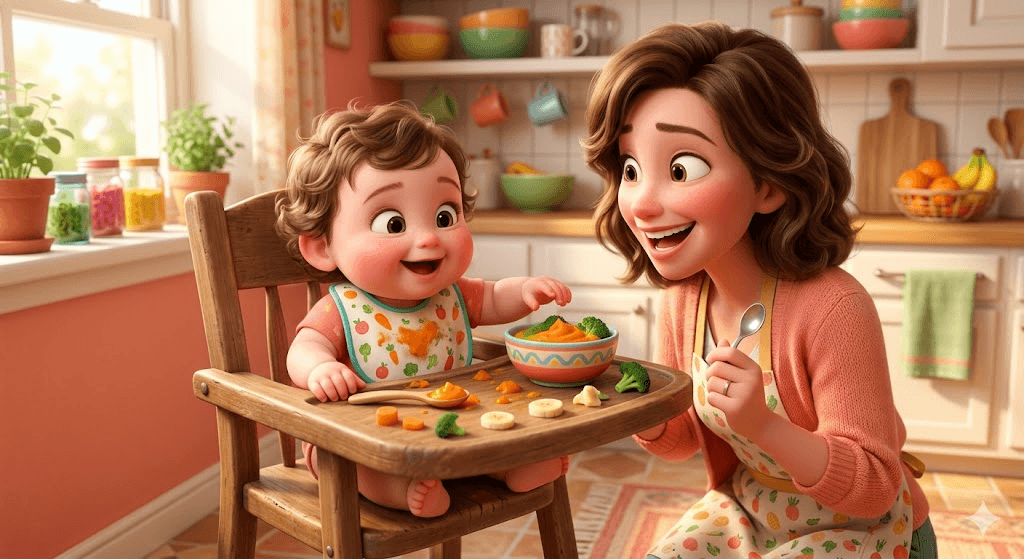
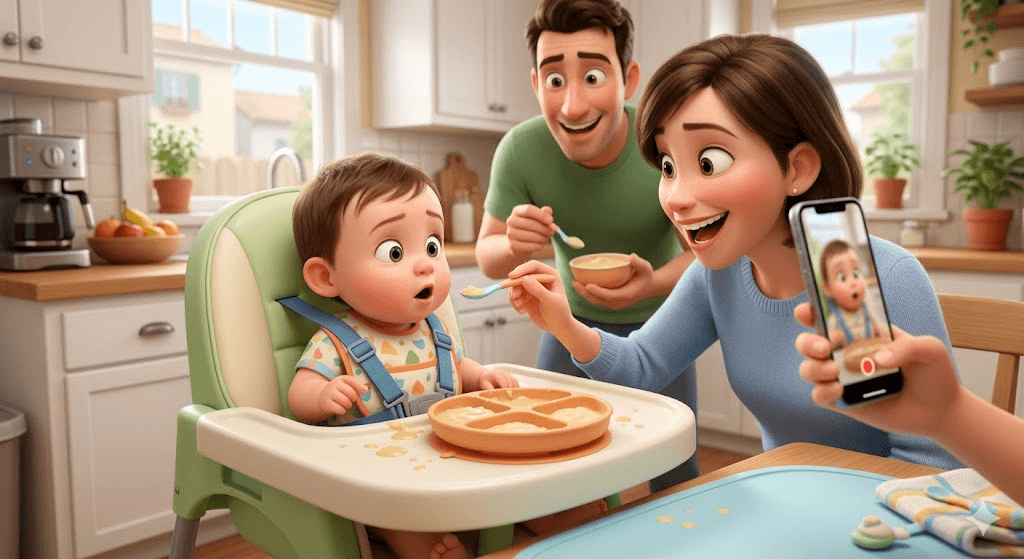
The spoon is one of the first tools for independence. First your child looks at it, then grabs it, turns it, bangs it and brings it to the mouth upside down. It looks chaotic, but coordination is being built.
This guide complements weaning textures, safe food cuts, child routines and first-years independence.
When to expect it
Many children start trying a spoon toward the end of the first year. After 12 months they often improve quickly, but precision varies: one day they eat alone, the next day they want hands or help.
This is not automatically a regression. It is often tiredness, hunger, a wish for connection or simply a wish to play.
How to start
Set up an easy context:
- child seated steadily;
- non-slip plate or bowl;
- short light spoon;
- small amount of food at a time;
- washable mat or cloth;
- calm adult nearby.
At first you can offer two spoons: one for your child and one for you to help.
Foods that help
For learning, foods that stay on the spoon work best:
- thick yogurt;
- puree;
- porridge;
- ricotta-style cheese;
- mashed legumes;
- mashed soft vegetables.
Thin liquids and broths are harder. Do not start with the most difficult challenge.
Mess and throwing
Mess is normal. Throwing everything on the floor should not become the main game.
You can say:
- "Food stays on the table";
- "If you throw it, I put it away for a moment";
- "You can put it here";
- "I can help you get another bite".
If throwing continues, remove the item briefly and try again later. The limit should be predictable, not angry.
Independence without pressure
Try not to judge the meal only by how much goes into the mouth. Early learning also includes:
- grasping;
- bringing to the middle;
- imitating;
- waiting;
- asking for help;
- stopping when full.
For amounts and appetite, keep watching hunger and fullness cues.
Safety at the table
During meals:
- stay present;
- keep your child seated;
- avoid running or playing with food in the mouth;
- offer suitable cuts and textures;
- limit distractions such as screens;
- use unbreakable dishes without sharp edges.
For cuts and textures, return to safe food cuts.
When to ask for advice
Talk with the pediatrician if your child seems unable to coordinate mouth and hands, often coughs, loses skills they had, refuses almost all textures, is not growing as expected or mealtimes become very stressful for the whole family.
Key takeaway
The spoon is practice, not training for perfection. Offer easy foods, time, calm limits and chances to try.
Useful links
Sources and further reading
- Self-Feeding - HealthyChildren.org - American Academy of Pediatrics
- Fingers, Spoons, Forks, and Cups - Centers for Disease Control and Prevention
- Tips for Mealtime Routines - Centers for Disease Control and Prevention
- Your toddler's developmental milestones at 1 year - UNICEF Parenting
- CDC's Developmental Milestones - Centers for Disease Control and Prevention
Sources are used to support general informational content and do not replace advice from a pediatrician or healthcare professional.