Textures during weaning: how to progress
How to move from purees and soft foods to more varied textures during weaning while respecting readiness, safety and autonomy.
Weaning is not a race from purees to chunks. It is a process where your baby learns taste, texture, tongue movement, chewing and self-regulation.
Progress should respect readiness and safety.
Where to start
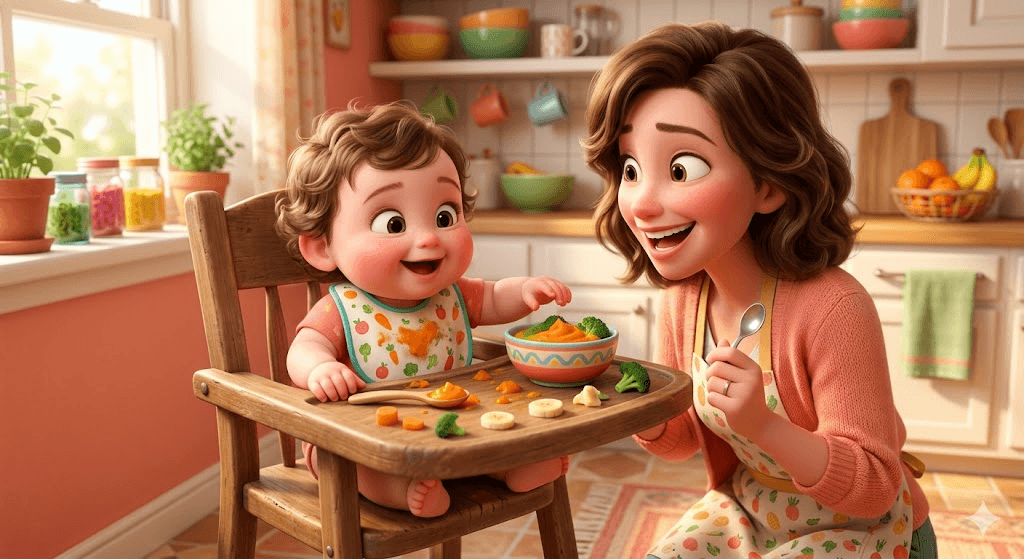
Around 6 months, if your baby shows readiness signs, you can offer soft textures: purees, mashed foods, thick creams or very soft pieces that are easy to grasp.
Milk remains the main nutrition while solids increase gradually. For the overview, read baby weaning.
Soft does not mean watery
An appropriate texture should be manageable. Too runny can slide quickly; too hard can break into difficult pieces. Look for foods that are soft, moist and easy to squash.
Examples:
- well-cooked mashed vegetables;
- ripe soft fruit;
- mashed legumes;
- well-cooked cereals;
- very tender shredded meat;
- plain yogurt if appropriate for age and context.
Increasing variety
When your baby manages soft foods well, you can gradually increase:
- thickness of purees;
- soft lumps;
- graspable strips;
- very tender pieces;
- modified family foods.
Avoid sudden jumps to hard, smooth, round or rubbery foods. Read safe cuts first.
Signs to slow down
Slow down if:
- your baby coughs often with the same texture;
- food is stored in the mouth;
- your baby becomes scared and refuses;
- your baby is very tired at meals;
- vomiting or discomfort repeats;
- the pediatrician gave specific advice.
You can combine spoon feeding and finger foods. There is not one correct method for every family.
Key takeaway
The right texture is one your baby can explore safely while seated, supervised and offered suitable foods. Gradual progress is more useful than rushing milestones.
Useful links
Sources and further reading
- When, What, and How to Introduce Solid Foods - Centers for Disease Control and Prevention
- Preparing food safely for babies - NHS
- Choking Hazards - Centers for Disease Control and Prevention
- Infant and young child feeding - World Health Organization
- Complementary feeding - World Health Organization
Sources are used to support general informational content and do not replace advice from a pediatrician or healthcare professional.