Supporting your child's language: what to do every day
How to support child language with voice, reading, turns, play, routines and listening without forcing words or relying on screens.
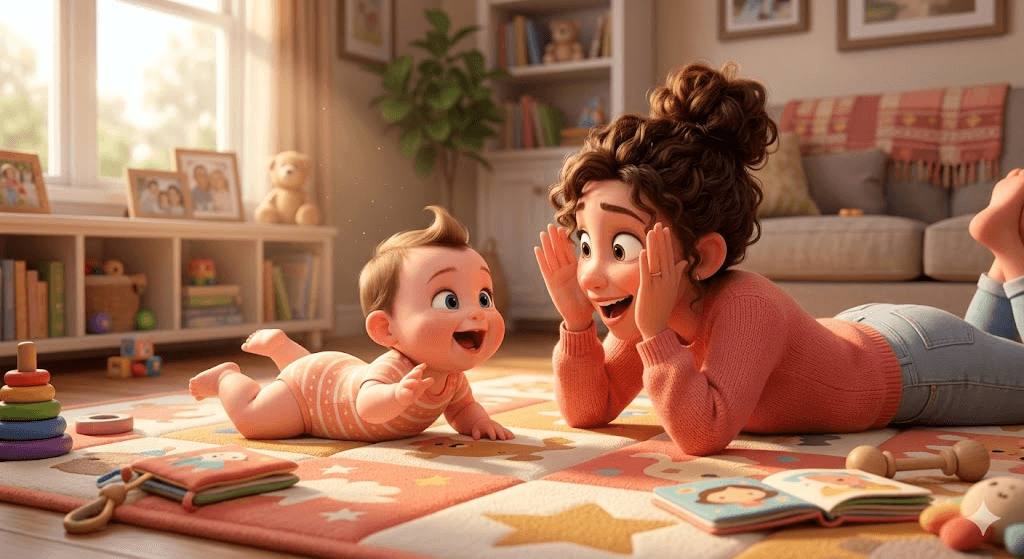
Supporting language does not mean giving lessons. It means creating daily chances for your child to hear real words, try to communicate and receive a response.
This guide complements first words, books in the first months, shared play and reading and language.
Talk inside routines
Routines are the best place:
- diaper changes;
- bath;
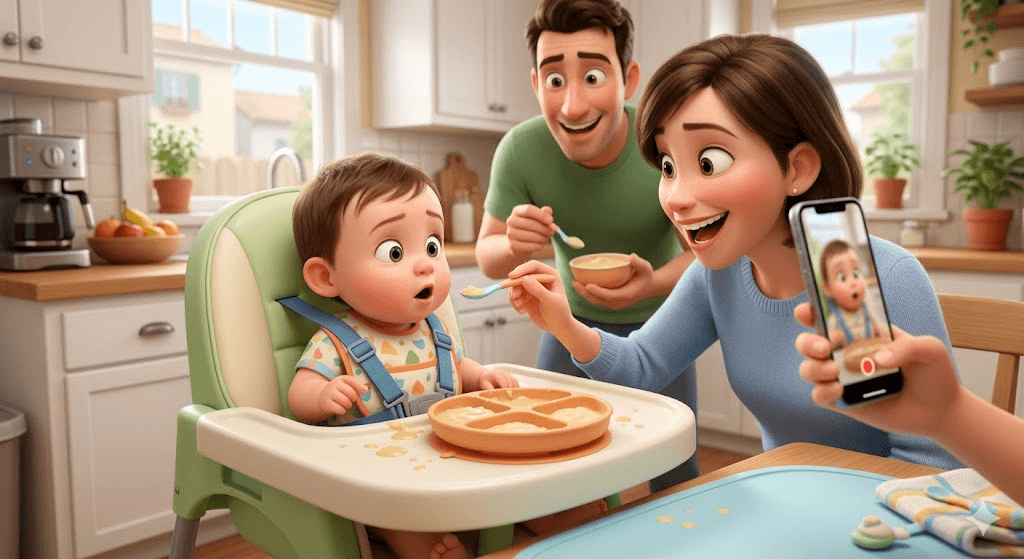
- meals;
- going out;
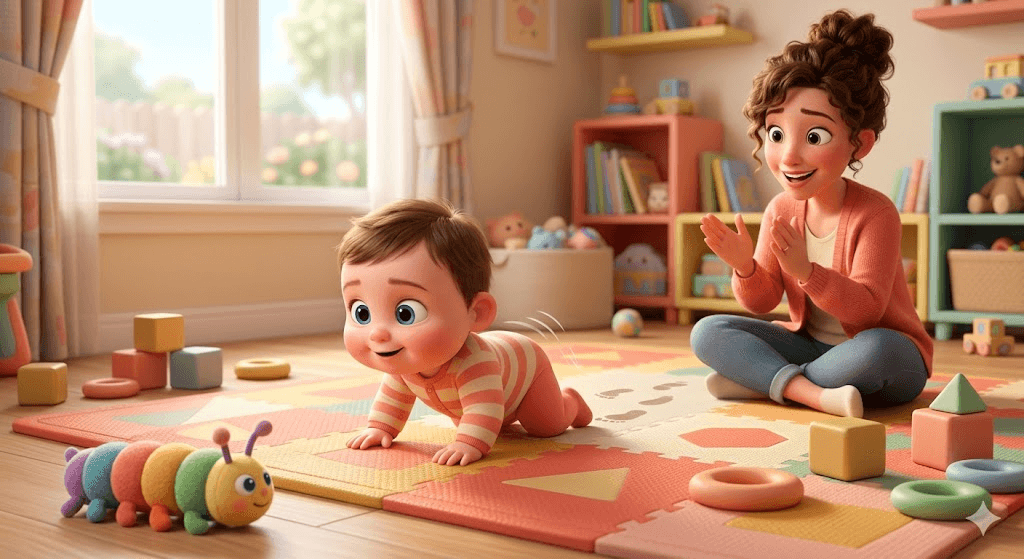
- floor play;
- sleep.
Use short phrases: "Sock on", "Open the water", "Here is the spoon." You do not need to talk without stopping. You need intentional words and pauses.
Follow the interest
If your child looks at a ball, talk about the ball. If they point to a light, name the light. If they bring a book, start there.
Following interest increases attention and motivation. Always directing play can reduce spontaneous exchanges.
Use short turns
Language grows in turns:
- the child looks, points, vocalizes or offers;
- you respond;
- you wait;
- they try another signal.
A gesture is communication too. Instead of asking "Can you say it?" all the time, model: "You want water. Here is water."
Read every day, even briefly
Shared reading offers words, rhythm and attention. You do not need to read everything:
- name pictures;
- make sounds;
- repeat phrases;
- let them turn pages;
- connect the book with real life.
To start or restart, use books in the first months.
Screens and background noise
Videos, songs and apps do not replace conversation and play. If television is always on, your child may have less space to hear real turns and try sounds.
Short present moments are better: face, voice, object, pause.
What to avoid
Avoid:
- correcting every word;
- turning play into quizzes;
- anticipating every need;
- using only questions;
- speaking too fast;
- making every game an exercise.
Your child needs to feel effective, not evaluated.
When to ask for help
Ask the pediatrician if you notice regression, hearing concerns, no gestures, no vocal sounds, few social responses or several milestones missing around checkups. If concern remains, ask about speech-language or audiology assessment.
Key takeaway
Language grows in relationship: real words, turns, reading, play and responses. The best support is daily, simple and not forced.
Useful links
Sources and further reading
- How babies learn through play - UNICEF Parenting
- How to Share Books With Your Baby - HealthyChildren.org - American Academy of Pediatrics
- Communication Milestones: Age Ranges - American Speech-Language-Hearing Association
- Language Development: 8 to 12 Months - HealthyChildren.org - American Academy of Pediatrics
- CDC's Developmental Milestones - Centers for Disease Control and Prevention
Sources are used to support general informational content and do not replace advice from a pediatrician or healthcare professional.