Bilingual children: using two languages without fear
Guide to bilingual children: myths, words across two languages, code-switching, reading, family language and when to assess a true delay.
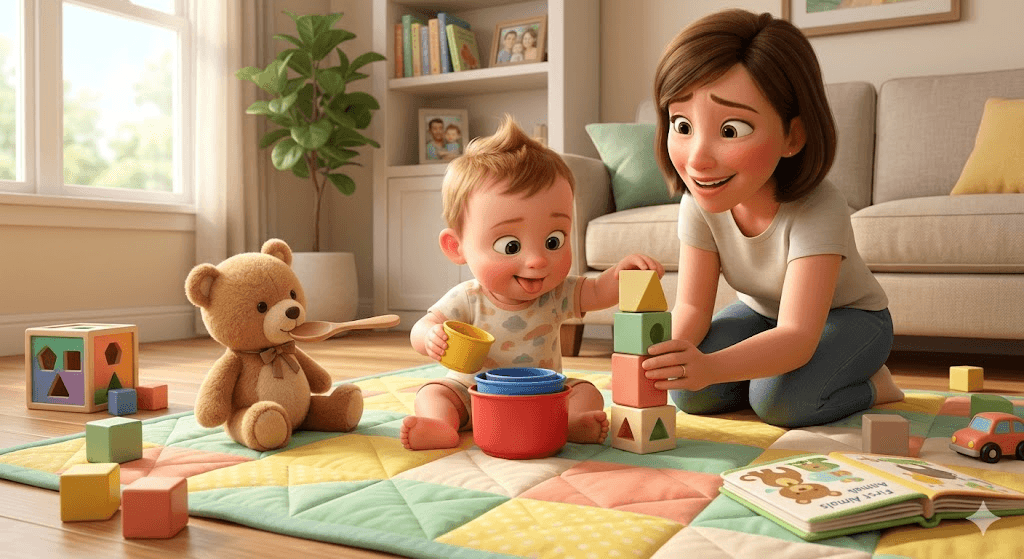
Many children grow up with more than one language. Using two languages does not confuse children and does not by itself cause language delay. But it is important to look at the child's overall communication, not one language in isolation.
This guide complements first words, supporting language, when to worry about language and reading and language.
Two languages are not a problem
ASHA sources state that using more than one language does not cause language disorders. A bilingual child may:
- understand more than they say;
- use one language more than another;
- mix words;
- have different words in different contexts;
- change preference over time.
This is not automatically a negative sign.
Count total vocabulary
If your child says "acqua" in Italian and "dog" in English, both are communicative words. For bilingual children, it is useful to consider total words across the languages they use, not only one language.
Talk with the pediatrician if total vocabulary remains very limited, does not grow or appears together with other signs such as limited understanding, few gestures or regression.
Which language to speak
Use the language in which you are most natural and rich. A parent using real words, affection, stories and routines in the language they know best offers high-quality input.
You can organize this in many ways:
- one language per parent;
- one language at home and one outside;
- both languages in routines;
- books and songs in more than one language.
You do not need a perfect rule. You need enough consistency and a lot of interaction.
Mixing languages
Mixing words or structures can be normal. Children use what they have available. Bilingual adults also switch languages depending on person, context and topic.
Do not correct constantly. You can recast:
- child: "more acqua";
- adult: "Vuoi ancora acqua";
- or: "You want more water."
Bilingual reading
Reading in both languages supports relationship and vocabulary. You can:
- read the same book in different languages;
- tell pictures in the home language;
- use family songs;
- involve grandparents or caregivers;
- name objects in both languages if it feels natural.
When to ask for assessment
Bilingualism should not be used as an excuse to ignore real signs. Ask for advice if:
- your child loses words or gestures;
- does not communicate in any language;
- does not seem to understand simple directions;
- does not react to sounds;
- does not use gestures;
- total vocabulary does not grow;
- there are concerns in several developmental areas.
If possible, look for professionals experienced in bilingual development or assessment with a qualified interpreter.
Key takeaway
Bilingualism is a resource. Observe your child across all languages, count total words and gestures, and ask for help if signs of difficulty are present across contexts.
Useful links
Sources and further reading
- Learning More Than One Language - American Speech-Language-Hearing Association
- Communication Milestones: Age Ranges - American Speech-Language-Hearing Association
- Language Development: 1 Year Olds - HealthyChildren.org - American Academy of Pediatrics
- Early childhood development - UNICEF
- CDC's Developmental Milestones - Centers for Disease Control and Prevention
Sources are used to support general informational content and do not replace advice from a pediatrician or healthcare professional.