Transitional object: blanket, stuffed toy and safety
What a transitional object does, when to offer one, how to use it for sleep and separations, and which safety rules matter.
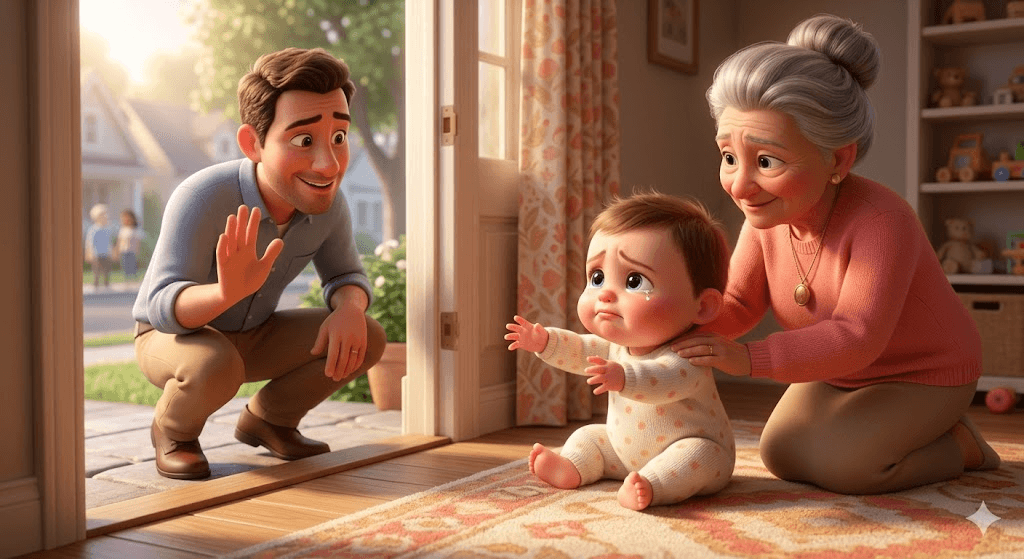
A blanket, stuffed toy or small familiar object can become a bridge between the parent and the outside world. It is not a bad habit: for many children it is a comfort tool, especially when they are tired, scared or away from their caregiver.
This guide complements separation anxiety, stranger anxiety, child routines and first-years independence.
What it does
A transitional object helps a child:
- calm during a separation;
- recognize a routine;
- fall asleep with a familiar cue;
- face new places;
- move from full dependence toward small steps of independence.
It does not replace the adult. It represents the adult when the adult is not available.
When it appears
Many children choose an object between 8 and 12 months, others later, and some never do. It should not be forced: you can offer one, but your child decides whether it has meaning.
If your child does not choose anything, that is not a problem. Some children use voice, routine, a parent's hand or other ways to feel reassured.
How to introduce it
You can:
- keep it nearby during reading or cuddles;
- use it in the sleep routine;
- bring it to short separations;
- name it with a simple phrase;
- avoid changing it constantly.
At first the object gains meaning because it is present during calm moments, not only when your child is desperate.
Sleep safety
Before 12 months, keep soft objects, blankets, stuffed toys and pillows out of the sleep space. You can use them in the awake routine and remove them before sleep.
After the first birthday, still choose small intact objects with no detachable parts, cords, buttons that pull off easily or stuffing coming out.
Separations and daycare
For separations, daycare or babysitters:
- tell the caregiver what the object means;
- keep a short goodbye routine;
- do not use it as a threat or reward;
- leave it available during hard moments;
- collect it before leaving if it stays at daycare.
The object helps more when adults respect it.
When to limit it
You do not need to remove the object as soon as your child grows. You can create boundaries:
- it stays at home or in the bag;
- it is used for sleep and hard moments;
- it does not go to the bathroom or table if hygiene becomes a problem;
- it is washed with a predictable routine;
- a substitute is used where it may get lost.
When to ask for advice
Talk with the pediatrician if the object becomes the only way your child can calm down, if every absence triggers unmanageable distress, if significant regressions appear or if your child can never separate even with gradual steps and familiar adults.
Key takeaway
A transitional object does not make a child less independent. Often, it lets them explore because they carry a signal of safety with them.
Useful links
Sources and further reading
- Transitional Objects: Security Blankets & Beyond - HealthyChildren.org - American Academy of Pediatrics
- How to manage your child's separation anxiety - UNICEF Parenting
- How to Keep Your Sleeping Baby Safe - HealthyChildren.org - American Academy of Pediatrics
- Emotional and Social Development: 8 to 12 Months - HealthyChildren.org - American Academy of Pediatrics
- Your toddler's developmental milestones at 1 year - UNICEF Parenting
Sources are used to support general informational content and do not replace advice from a pediatrician or healthcare professional.