Dressing a newborn in winter: warmth without excess
How to dress a newborn in winter: layers, hat, stroller, car, night, safe sleep and signs of cold or overheating.
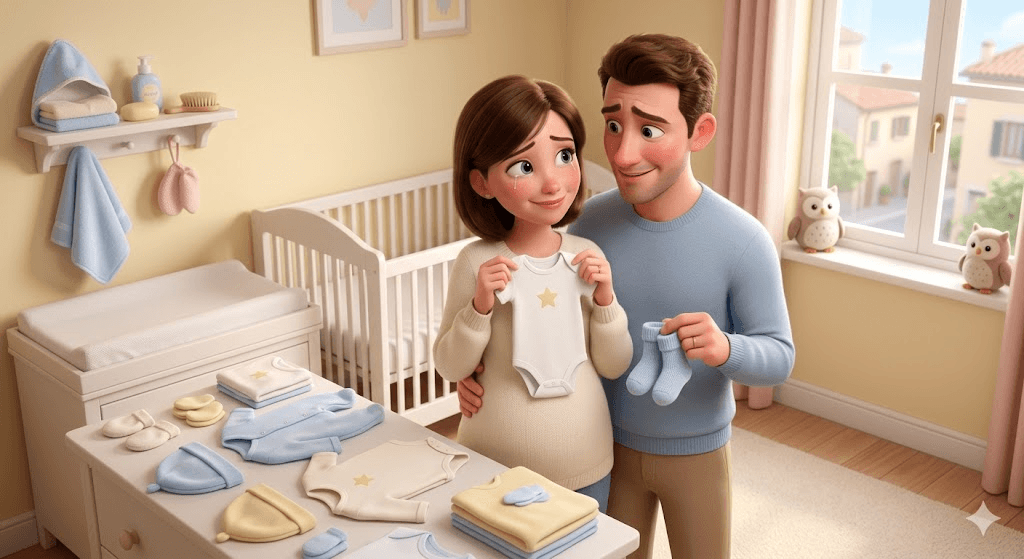
In winter, the goal is not to bundle a newborn as much as possible, but to keep them stable: warm enough, not overheated and without compromising sleep or car seat safety.
This guide complements baby cold, safe baby sleep and the seasonal wardrobe checklist.
Adjustable layers
Several light layers are better than one very heavy item. You can use:
- bodysuit;
- sleepsuit;
- cardigan or light sweatshirt;
- socks or covered feet;
- hat only outside or in cold spaces;
- blanket only when supervised and not during crib sleep.
Check neck and chest. If they are sweaty or very warm, remove a layer.
In the car
Avoid bulky coats or thick snowsuits under car seat straps: they can stop the harness fitting correctly. Use thin layers, tighten the harness properly and add a blanket over the straps if needed.
For practical details, read traveling by car with a baby.
Night
At night, use clothing suited to the room and, if needed, a safe sleep sack in the correct size. The crib should stay clear of pillows, toys and heavy blankets.
When to reassess
Contact the pediatrician if your baby's chest is very cold, skin is pale or mottled, they are less responsive, feed poorly, breathe abnormally or have fever. For premature or very young babies, ask for more personalized guidance.
Key takeaway
Winter means adjustable layers. The useful check is not adding more blankets, but watching chest, neck, behavior, feeds and the environment.
Useful links
Sources and further reading
- Tips for Dressing Your Baby - HealthyChildren.org - American Academy of Pediatrics
- How to dress a newborn - NHS
- Thermal protection of the newborn: a practical guide - World Health Organization
- How to Keep Your Sleeping Baby Safe - HealthyChildren.org - American Academy of Pediatrics
- Child growth standards - World Health Organization
Sources are used to support general informational content and do not replace advice from a pediatrician or healthcare professional.