Traveling by car with a newborn: car seat, breaks and safety
How to plan a car trip with a newborn: car seat setup, breaks, heat, cold, sleep, feeding and warning signs to take seriously.
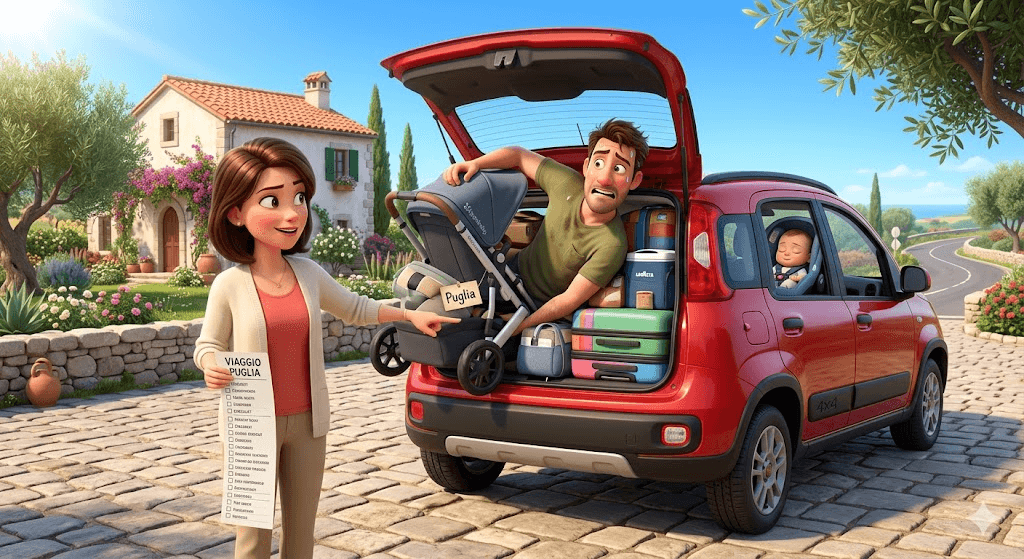
Traveling by car with a newborn can be convenient because it gives you more control over stops, luggage and timing. That flexibility does not replace safety: the right car seat, regular breaks, temperature control and an accessible bag are the priorities.
If you are planning the whole trip, go back to the hub guide on traveling with a newborn. To pack the essentials, use the newborn travel checklist.
Before you leave
Plan the route with more margin than you would for adults. Do not look only at distance: timing, heat, traffic, places to stop, feeding and your baby's sleep all matter.
Before a long drive, ask your pediatrician for advice if your baby:
- is under 3 months old;
- was born premature or with low birth weight;
- recently had fever, bronchiolitis or breathing problems;
- is struggling to feed or has fewer wet diapers than usual;
- will travel through very hot, cold, remote or medically isolated areas.
If the car trip is part of an international journey, also check documents, health coverage and vaccines. You can use the vaccination calendar as a reminder, but destination-specific advice should come from your pediatrician or a travel medicine clinic.
Car seat: the non-negotiable point
Your newborn must travel in an approved car seat that fits their weight and height, is installed according to the manufacturer's manual and complies with local rules. For newborns, rear-facing travel is generally the most protective option for as long as the seat allows it.
Before you leave, check:
- that the car seat fits your baby and is not just generally described as "for newborns";
- that the base, harness, Isofix or vehicle belt are secured as instructed;
- that the harness is snug against the body without bulky coats or thick layers underneath;
- that the head is not falling forward in a marked way;
- that any inserts are those supplied or approved by the manufacturer;
- that the car seat is not expired, damaged or previously involved in a crash.
Do not add pillows, strap covers, inserts or accessories that are not allowed by the manufacturer. They may look more comfortable, but they can change how the seat protects during sudden braking or a crash.
If you use the front passenger seat, check the vehicle manual, car seat manual and local rules carefully, especially regarding the airbag. In practice, the back seat is often the simplest and most cautious choice.
Breaks and timing
A newborn does not need to "push through" the trip. Plan frequent stops to:
- check position and temperature;
- change the diaper;
- feed your baby;
- take your baby out of the car seat for a short time;
- handle crying, spit-up or tiredness.
For a long daytime drive, a break every 2-3 hours is a cautious rule for many babies, but a very young newborn may need stops sooner. If your baby cries inconsolably, seems hot, vomits or seems different from usual, stop as soon as you can do so safely.
Avoid overly tight plans. If a route requires many hours without real breaks, consider splitting it, leaving at a cooler time of day or postponing.
Sleep in the car seat
It is normal for a newborn to fall asleep in the car. The car seat, however, is designed to protect during transport, not to become a usual sleep place outside the car.
When you arrive or take a longer break, move your baby to a safe sleep space: flat and stable surface, no pillows, no soft objects, no inclined surfaces. To review the basics, read the guide to safe sleep for newborns.
On longer trips, having an adult sit in the back can help, especially with very young newborns. A mirror can be useful, but it should not distract the driver.
Heat, cold and ventilation
Car temperature can change quickly. Never leave your baby alone in the car, even for a few minutes.
In warm weather:
- cool the car before putting the baby inside;
- use safe sun shades without blocking visibility;
- avoid covering the car seat with heavy cloths;
- check the back of the neck, sweating, color and irritability;
- keep feeding supplies and fluids available in case of delays.
In cold weather:
- avoid bulky coats under the harness;
- use thin layers and add a blanket over the harness if needed;
- check that your baby is not overdressed once the car warms up;
- keep a dry change of clothes within reach.
Feeding and diaper changes
Breastfeed or bottle-feed during stops, not while the car is moving. It is safer and lets you check position, spit-up and how much your baby takes.
Keep in the accessible bag:
- extra diapers;
- wipes and diaper cream;
- waterproof bag for dirty clothes;
- two full outfit changes;
- muslins or bibs;
- milk, bottles or breastfeeding essentials;
- water or a thermos if needed for formula;
- medicines agreed with your pediatrician;
- thermometer.
The suitcase can stay in the trunk. Essential items should stay reachable without unpacking the car at every stop.
When to stop or change the plan
Stop and consider calling your pediatrician or local healthcare service if your baby has:
- breathing difficulty;
- unusual color;
- fever, especially under 3 months;
- unusual sleepiness or difficulty waking;
- inconsolable crying that feels different from usual;
- repeated vomiting;
- fewer wet diapers than normal.
A car trip works when it stays flexible. If your baby is unwell, the best choice may be to interrupt the journey, find medical help or postpone departure.
Sources and further reading
- Bambini in auto - ACI
- Car Seats: Information for Families - HealthyChildren.org - American Academy of Pediatrics
- Traveling with Children - Centers for Disease Control and Prevention
- Child growth standards - World Health Organization
- Fever and Your Baby - HealthyChildren.org - American Academy of Pediatrics
Sources are used to support general informational content and do not replace advice from a pediatrician or healthcare professional.