Biting in toddlers: why it happens and how to respond
Practical guide to toddler biting: common causes, immediate response, prevention, what to say and when to ask for advice.
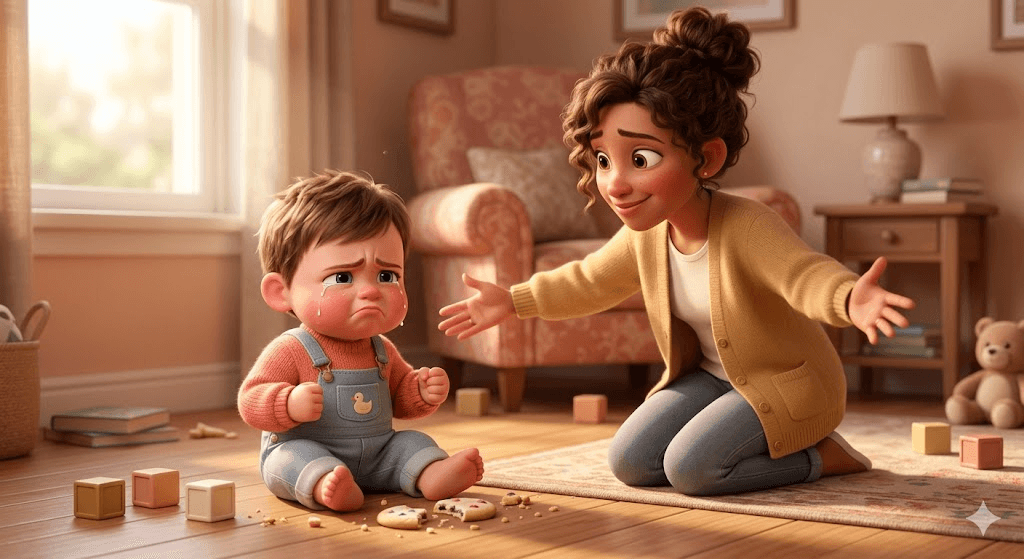
A bite is upsetting: it hurts, leaves a mark and often triggers shame or anger in adults. In toddlers, though, biting does not mean a child is "bad". It is often an immature way to communicate frustration, tiredness, excitement or a need for space.
This guide complements tantrums and crying spells, no and limits, child routines and family routine.
Why toddlers bite
Common causes include:
- they do not yet have enough words;
- they are tired, hungry or overstimulated;
- they want a toy or are protecting space;
- they are seeking a strong reaction;
- they are teething or exploring with their mouth;
- they cannot stop the impulse in time.
Understanding the cause does not excuse the bite. It helps you choose a more effective response.
What to do immediately
Respond briefly and firmly:
- block the bite or separate the children;
- check and comfort the child who was bitten first;
- use a few words: "No biting. Biting hurts.";
- move the child away from the situation for a moment;
- avoid long explanations during the upset.
Your tone should be calm but firm. A huge reaction can reinforce the behavior if the child was seeking attention.
What to say
Useful phrases:
- "Stop. No biting.";
- "You can say stop.";
- "You can come to me.";
- "If you want the toy, we ask for a turn.";
- "Mouths are for eating and talking, not hurting.";
With toddlers, repeated words and consistent actions work better than moral lectures.
Preventing biting
Notice when it happens:
- before meals;
- late in the day;
- when the space is crowded;
- during transitions;
- when a toy is disputed;
- when adults are distracted.
Then prepare the environment: regular snacks and sleep, less chaos, guided turns, duplicate objects when possible and close supervision during risky moments.
Teaching alternatives
Practice simple words and gestures:
- "mine";
- "stop";
- "help";
- "turn";
- an open hand to stop;
- bringing the toy to an adult.
When your child uses an alternative, notice it right away: "You said stop. Good, I will help."
What to avoid
Try not to:
- bite the child back "so they understand";
- shame them in front of others;
- label them as aggressive;
- focus only on the child who bit while ignoring the child who was hurt;
- leave children unsupervised after an episode.
Safety comes first, then learning.
When to ask for help
Talk with the pediatrician if biting is frequent, causes injuries, increases despite consistent responses, appears with other dangerous behaviors, or if the family or daycare can no longer keep everyone safe.
Key takeaway
Biting is a behavior to stop, not an identity to put on a child. Brief response, care for the child who was hurt, prevention and repeated alternatives are the most useful path.
Useful links
Sources and further reading
- 10 Tips to Prevent Aggressive Behavior in Young Children - HealthyChildren.org - American Academy of Pediatrics
- Top Tips for Surviving Tantrums - HealthyChildren.org - American Academy of Pediatrics
- What's the Best Way to Discipline My Child? - HealthyChildren.org - American Academy of Pediatrics
- How to Shape & Manage Your Young Child's Behavior - HealthyChildren.org - American Academy of Pediatrics
- CDC's Developmental Milestones - Centers for Disease Control and Prevention
Sources are used to support general informational content and do not replace advice from a pediatrician or healthcare professional.