Day-night difference in babies: how to help gradually
How to help a baby distinguish day and night: light, routine, calm feeds, evening environment and realistic expectations.

In the first weeks, many babies seem more awake at night than during the day. The day-night rhythm matures gradually: you can support it, but not force it.
This guide complements baby sleep, getting baby to sleep and the night routine checklist.
Why it happens
At birth, the circadian rhythm is not stable yet. Babies sleep and feed in short blocks without following an adult clock. Over weeks and months, light, feeding, interaction and routines help sleep become more organized.
What to do during the day
During the day:
- open curtains and use natural light;
- talk and interact during awake times;
- do not chase perfect silence for every nap;
- go outside when possible;
- keep feeding and diaper changes normal;
- still watch tired signs.
The goal is to make daytime feel brighter, more active and more social.
What to do at night
At night:
- low lights;
- soft voice;
- no play;
- keep the phone away from your baby's face;
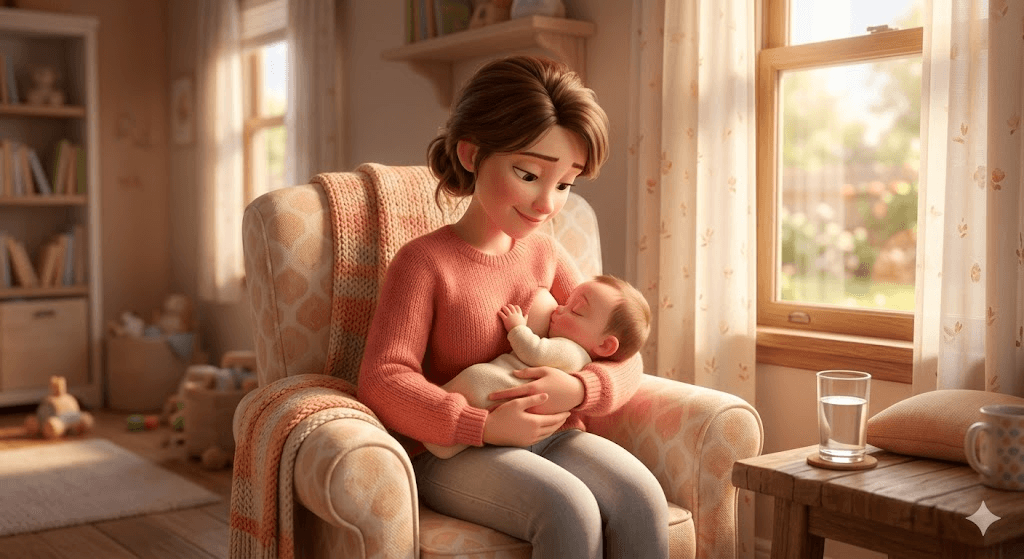
- calm breastfeed or bottle;
- diaper change only if needed;
- return to a safe sleep space.
How long it takes
Some babies show a day-night difference fairly early; others take longer. One or two chaotic weeks do not mean you are doing something wrong.
To see whether anything is changing, use the sleep diary tool for 7 days instead of judging one night.
What to avoid
Avoid:
- keeping a newborn awake too long during the day;
- skipping naps to make night sleep longer;
- turning on bright lights at every waking;
- making night a play time;
- using unsafe sleep surfaces because you are tired.
An overtired baby often sleeps worse, not better.
Key takeaway
Day-night difference is built with simple cues: light and activity by day, darkness and calm at night, always with safe sleep. To organize evenings, use the night routine checklist.
Useful links
Sources and further reading
- Helping your baby to sleep - NHS
- Getting Your Baby to Sleep - HealthyChildren.org - American Academy of Pediatrics
- Baby sleep - UNICEF Parenting
- How to Keep Your Sleeping Baby Safe - HealthyChildren.org - American Academy of Pediatrics
Sources are used to support general informational content and do not replace advice from a pediatrician or healthcare professional.