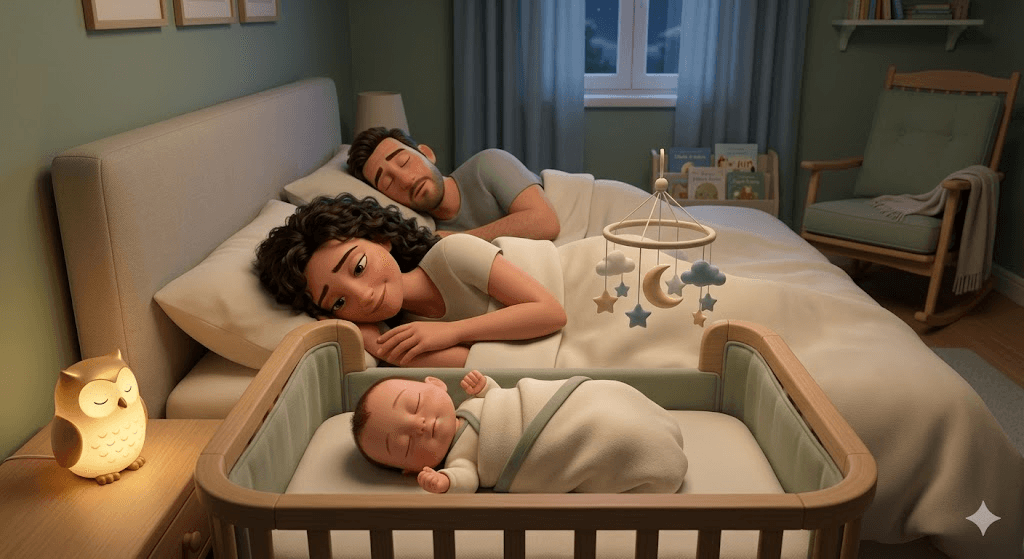
Daytime naps: how many and how long they should last
How many naps your child needs based on age, how long they should last, and how to manage the transition from 3 to 2 to 1 nap.
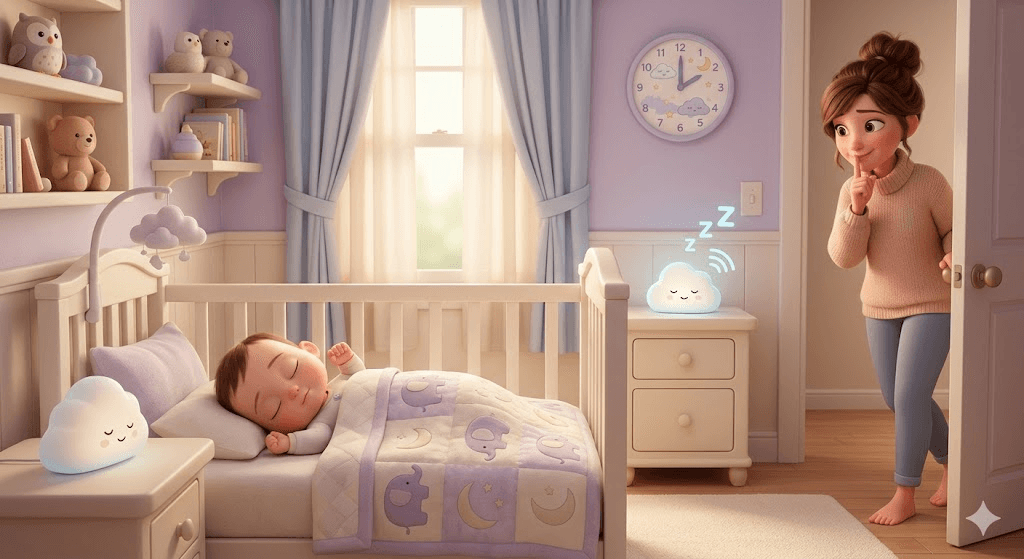
Daytime naps are not a reward, and they are not the enemy of night sleep. They are part of a baby's total sleep. When naps are missing, many babies reach bedtime overtired, cry more, struggle to fall asleep and may wake more often.
This guide focuses on naps. For the full picture of rhythms, wakings and safety, start with the newborn sleep hub. If you want to understand what is really happening across the day, also read the guide to the newborn sleep diary and use the sleep diary tool for 7-14 days.
First rule: naps must be safe too
Safe sleep rules apply to every sleep, not only at night: baby on their back, firm and flat surface, no pillows, stuffed animals, bumpers, soft positioners or heavy blankets.
Stroller naps, babywearing and car naps happen, but they should not routinely replace a safe sleep space. If your baby falls asleep in a car seat or bouncer, move them as soon as possible. During contact naps, the adult must stay awake: sofas and armchairs are risky.
How many naps by age
The ranges below are averages. What matters is the whole picture: total sleep over 24 hours, growth, feeding, mood, tired cues and whether the rhythm is sustainable for the family.
0-3 months: very flexible sleep
In the first months there is no real schedule. A newborn may sleep 14-17 hours over 24 hours, split into irregular naps and variable night stretches. The goal is not to "teach" a schedule, but to avoid overtiredness and keep sleep safe.
3-6 months: moving toward 3-4 naps
Many babies begin to tolerate longer wake windows and take 3 or 4 naps. Some have a longer middle nap and a short late nap. At this age, short naps can be normal.
6-9 months: from 3 to 2 naps
The third nap, often in the late afternoon, becomes harder. If dropping it makes the evening unmanageable, it may still be needed for a few weeks. The transition rarely happens in one day: many babies alternate between 2-nap and 3-nap days.
9-12 months: two steadier naps
Many babies have a morning nap and an after-lunch nap. Length varies: not every baby takes two long blocks. If your baby is growing, alert and nights are manageable, you do not need to chase a perfect chart.
12-18 months: from 2 naps to 1
The move to one nap usually happens between 12 and 18 months, often closer to 15-18 months. Dropping too early can lead to evening overtiredness, wakings and difficult afternoons. When one nap remains, it is usually after lunch.
2-3 years: one nap or quiet time
Some children stop early; others need a nap for longer. When a nap pushes bedtime very late, you can shorten it or replace it with quiet time.
Wake windows: compass, not stopwatch
A wake window is the time between waking and the next sleep. It can help you offer a nap before your baby is exhausted, but it must be adjusted to real cues.
As a rough guide:
- 0-3 months: often 45-90 minutes;
- 3-6 months: about 1.5-2.5 hours;
- 6-9 months: about 2.5-3.5 hours;
- 9-12 months: about 3-4 hours;
- after the first birthday: longer and very variable.
If your baby yawns, rubs eyes, loses interest, becomes irritable or suddenly hyperactive, they may already be tired. Evening hyperactivity is often overtiredness.
How long naps should last
A nap can last 30 minutes or 2 hours. In the early months, short naps are common because sleep cycles are still immature. After 6 months, many babies connect cycles more easily, but not all do.
It helps to look at the daily total. A short nap may be fine if your baby catches up later. Three short naps can be acceptable during a transition. Watch for constant tiredness, feeding struggles, frequent crying or agitated bedtimes.
Naps that are too late
The last nap can interfere with bedtime if it ends too close to evening, especially for older babies. But for younger babies, a late short nap may be necessary to avoid overtiredness.
If bedtime keeps drifting later, check:
- when the last nap ends;
- how long the final wake window is;
- whether the main nap is too short;
- whether the bedtime routine is too stimulating;
- whether the morning environment is very bright or noisy.
Do not change everything at once. Move or shorten one nap for a few days and observe.
When it is time to drop a nap
Your baby may be ready when, for at least 10-14 days:
- they refuse the same nap while otherwise well;
- the last nap pushes bedtime much later;
- they stay content when that nap is skipped;
- their age fits the transition;
- the remaining naps become longer or steadier.
Do not drop a nap during fever, intense teething, daycare transition, travel or other major changes. In those moments sleep may worsen because of context, not because your baby is ready.
How to manage transitions
Transitions work better when they are gradual. When moving from 3 to 2 naps, you can alternate for a while: on early-wake or short-nap days, keep the third nap; on more regular days, skip it and bring bedtime earlier.
When moving from 2 naps to 1, shift the main nap slowly toward after lunch. For a few weeks, bedtime may need to be earlier. Expect irritability, faster sleep onset or a few extra wakings: this does not automatically mean the change is wrong.
If your baby refuses naps
First check basic needs: hunger, diaper, temperature, blocked nose, pain, teething and overstimulation. Then make the path to sleep more predictable: calm room, lower light, the same short sequence and fewer toys.
If your child does not sleep but stays calm, offer quiet time: reading, soft music or calm cuddles. For older children, rest without sleep can still reduce tiredness.
When to speak with your pediatrician
Ask your pediatrician if nap problems come with poor weight gain, feeding difficulty, regular snoring, breathing pauses, frequent vomiting, fever, pain or unusual sleepiness. Avoid medicines, melatonin, herbal teas or supplements to "make the baby sleep" unless medically recommended.
For everything else, work with data. Track sleep, timing and mood in the diary for a week, then review the whole pattern. The best naps are safe, sustainable and regular enough to prevent overtired evenings.
Sources and further reading
- How to Keep Your Sleeping Baby Safe - HealthyChildren.org - American Academy of Pediatrics
- Baby sleep - UNICEF Parenting
Sources are used to support general informational content and do not replace advice from a pediatrician or healthcare professional.