Room sharing and bed sharing: sleeping near your newborn
The difference between sharing a room and sharing a bed, choosing a bedside crib, nighttime feeds and situations that make bed sharing especially risky.

Sleeping near a newborn can make feeds and waking easier, but “nearby” and “in the same bed” are not the same situation. Precise language helps a family prepare a realistic and safer setup.
Terms to distinguish
- Room sharing: the same room, with the baby in their own bassinet or crib.
- Bed sharing: an adult and baby on the same mattress.
- Co-sleeping: a broad term often used for either situation.
To prevent misunderstanding, always ask which surface will be used. Saying only “we co-sleep” does not explain whether the baby has a separate sleep space.
Why use the same room
A crib beside the bed lets you hear your baby, respond to feeding cues and return them to sleep with less movement. Safe sleep recommendations support room sharing without bed sharing for at least the first 6 months.
Set up the room before birth or before fatigue builds:
- keep the route between bed and crib clear;
- use a low light that is bright enough to see the baby;
- keep water and the parent's supplies nearby but outside the crib;
- prepare a stable changing area rather than changing the baby on the bed when you may fall asleep;
- agree which caregiver will return the newborn to the crib.
Bedside sleepers: what to check
A bedside bassinet can be practical when it is specifically designed for attachment or placement beside an adult bed. Follow all instructions for height, anchoring and mattress position. There must be no gap where the baby's head or body could become trapped.
Do not improvise by removing the side of a standard crib, and do not add pads, pillows or towels to fill height differences. Lock wheels and mechanisms as directed and check them regularly.
All safe sleep rules still apply: place the baby on their back, use a firm flat mattress and fitted sheet only, keep soft objects out and leave the head uncovered.
Why an adult bed is different
An adult mattress is not designed as a newborn sleep surface. It may be softer and include pillows, duvets, edges, a headboard or gaps. A sleeping adult cannot consciously control their position and bedding.
Bed sharing is especially dangerous when:
- a parent smokes or smoked during pregnancy;
- an adult has used alcohol, recreational drugs or sedating medication;
- the baby was premature or had a low birth weight;
- the baby is younger than 4 months;
- the adult is extremely tired or unwell;
- other children or pets are in the bed;
- the mattress is soft, water-filled, inclined or has gaps;
- pillows, duvets, heavy blankets or positioners are present.
A plan for nighttime feeds
Simply saying “do not fall asleep” is not an adequate plan when sleep deprivation is severe. Before the night begins:
- put the newborn's crib beside the feeding caregiver;
- avoid starting a feed on a sofa or armchair;
- keep phones, cords, hot drinks and pillows away from the baby;
- ask another caregiver to stay awake or check in during the hardest periods;
- return the baby to the crib on their back as soon as the feed is over.
If you think you may fall asleep during a feed in bed, remove pillows, loose sheets and duvets from the baby's area beforehand and keep the baby away from edges and gaps. This harm-reduction step does not make the adult bed equivalent to a crib. Move the baby to their own surface as soon as you wake.
Situations in which not to bed share
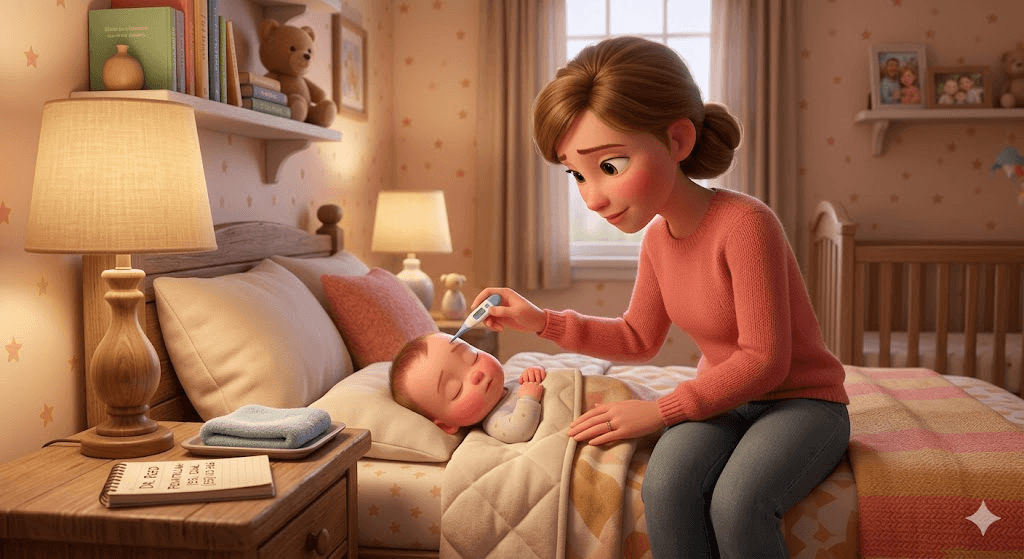
Do not bring the baby into bed if you or your partner smoke, have consumed alcohol, used drugs or taken medicine that causes drowsiness. Do not bed share with a premature or low-birth-weight baby. Do not share a bed when a newborn has a fever or is unwell without advice from the clinician caring for them.
Never leave a newborn alone on an adult bed, even when surrounded by pillows. Improvised bumpers and portable bed rails can create additional entrapment points.
If the baby falls asleep on a parent
Skin-to-skin contact and cuddling are valuable while an adult is awake. When drowsiness arrives, hand the baby to an alert adult or place them in the crib. The same applies after a feed: holding a baby upright may help comfort but does not make sleeping together in a chair safe.
Moving to the baby's own room
Recommendations support using the same room for at least the first 6 months. After that, timing depends on development, space and family sleep. A gradual transition can use a consistent routine and initial naps in the new room while preserving a flat surface and empty crib.
A baby monitor can help you hear your child but does not prevent SIDS or replace the safe environment. If the family is exhausted or struggling with waking, talk with the pediatrician. Safety should include a realistic rest plan for adults.
Key points
Closeness and safety can coexist. A properly assembled crib beside the bed offers quick contact without sharing the adult mattress. Planning for feeds and the most exhausting parts of the night is more effective than relying on willpower alone.
Sources and further reading
- How to Keep Your Sleeping Baby Safe - HealthyChildren.org - American Academy of Pediatrics
- Safe Sleep Environment - Safe to Sleep - Eunice Kennedy Shriver NICHD
- Baby sleep - UNICEF Parenting
Sources are used to support general informational content and do not replace advice from a pediatrician or healthcare professional.