Sterilizing bottles: when it matters and how to do it
How to wash and sterilize bottles, nipples and feeding parts in the first months: methods, drying, storage and mistakes to avoid.
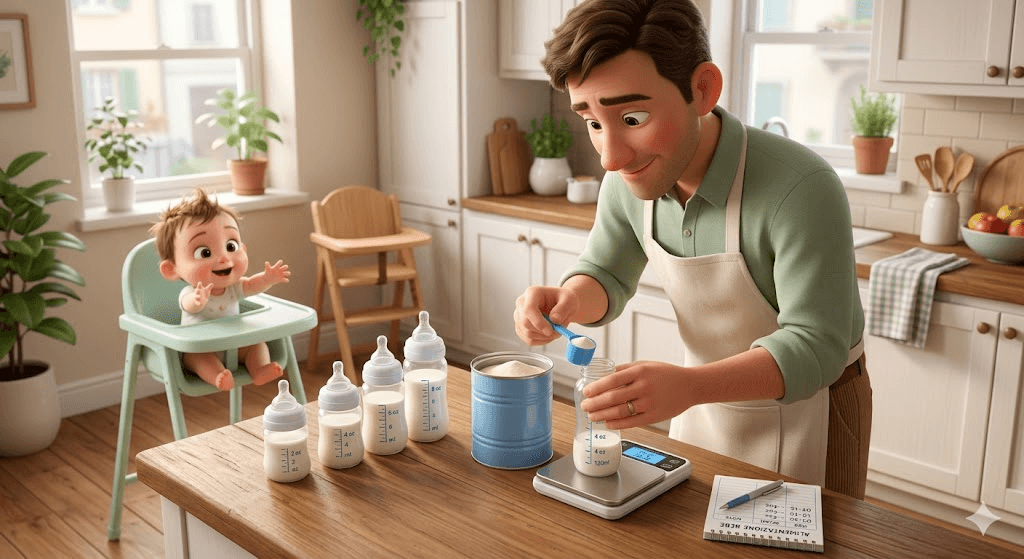
Bottles come into contact with milk, saliva and surfaces. Washing and sterilizing are therefore an important part of feeding, especially in the first months or when a baby is premature or medically fragile.
Sterilizing does not replace washing. First remove visible residue, then sterilize.
After each feed
As soon as possible:
- throw away leftover milk;
- take apart bottle, ring, nipple and cap;
- rinse to prevent dried residue;
- wash with hot soapy water or dishwasher if appropriate;
- use a clean dedicated bottle brush;
- rinse well;
- sterilize if recommended.
Sterilization methods
Always follow the manufacturer instructions for bottles and sterilizers. Common methods include:
- boiling;
- electric steam sterilizer;
- microwave sterilizer with a specific container;
- cold-water sterilizing solution.
Not all materials tolerate each method. Check that bottles and nipples fit the method you choose, and replace parts that are damaged, cloudy, cracked or sticky.
Drying and storage
After washing or sterilizing, let parts air-dry on a clean surface or in a dedicated space. Avoid used dish towels or surfaces where raw foods are prepared.
If you use cold-water sterilizing, follow instructions on timing, concentration and rinsing. If rinsing is required, use safe water according to the instructions rather than improvising with water that is not recommended.
When sterilizing is especially important
Ask your pediatrician or follow birth center instructions if:
- your baby is under 2 months old;
- your baby was born premature;
- your baby has a weakened immune system;
- there were hospital stays or specific instructions;
- safe water is a concern;
- there is vomiting or diarrhea at home.
For formula preparation, connect this routine with preparing infant formula.
Common mistakes
Avoid:
- sterilizing items that are still dirty;
- touching the inside of nipples or bottles with unwashed hands;
- closing damp parts in dirty containers;
- using old kitchen sponges;
- mixing broken or incompatible parts;
- enlarging the nipple hole yourself;
- leaving an assembled filled bottle at room temperature.
Cleaning away from home
For short outings, carry clean bottles in a closed container and manage water and powder according to safety rules. For longer trips, plan how to wash, dry and store parts without placing them on unclean surfaces.
The bottle-feeding kit checklist includes useful items to keep ready.
Key takeaway
A good routine is: empty, take apart, wash, rinse, sterilize when recommended, dry and store clean. The steps are simple, but skipping them increases contamination risk.
Useful links
Sources and further reading
- How to make up baby formula - NHS
- Infant Formula Preparation and Storage - Centers for Disease Control and Prevention
- Handling Infant Formula Safely: What You Need to Know - U.S. Food and Drug Administration
- Infant and young child feeding - World Health Organization
- Complementary feeding - World Health Organization
Sources are used to support general informational content and do not replace advice from a pediatrician or healthcare professional.