Preparing infant formula: safe steps
How to prepare a bottle of infant formula safely: hands, water, measures, temperature, cooling and mistakes to avoid.
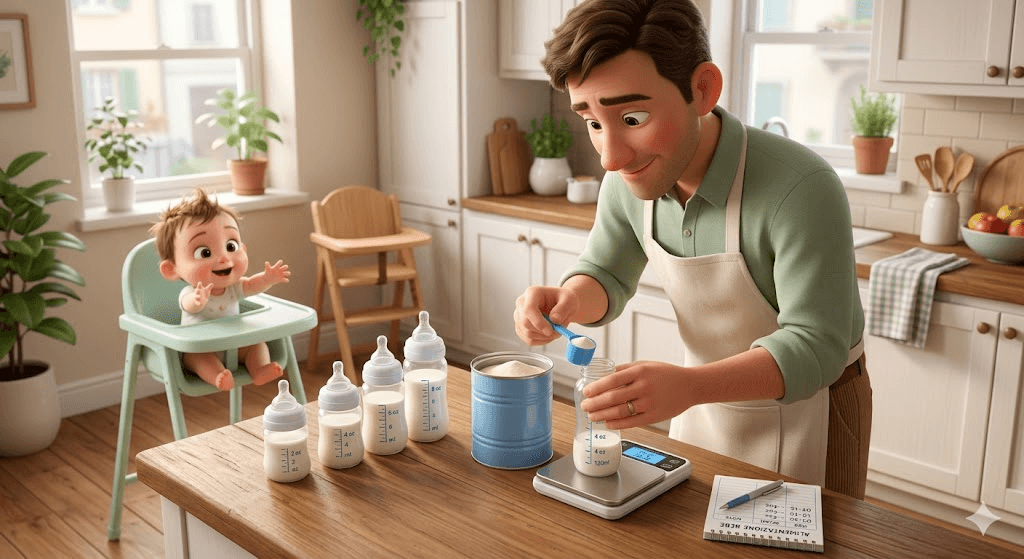
Preparing infant formula is repetitive, but it is not trivial. Safety depends on hygiene, correct measures, suitable water, timing and storage. A precise routine reduces mistakes when you are tired.
This guide focuses mainly on powdered formula. For storage and transport, also read storing infant formula.
Before you start
Prepare a clean area. Wash your hands with soap and water, dry them well and clear dirty items from the surface. Bottles, nipples and accessories should be clean and, in the first months or according to local guidance, sanitized or sterilized.
Check:
- use-by date;
- container condition;
- scoop dry and clean;
- product instructions;
- safe water;
- bottle condition, with no cracks.
Correct order: water first, powder second
Always follow the product label. In general, the critical step is to measure the water first and then add the correct number of level scoops.
Do not estimate by eye. More powder does not make the feed usefully more nutritious: it can make it too concentrated. More water does not make it safely lighter: it can reduce nutrients and salts.
Water temperature
Recommendations vary by country, product and baby. NHS and WHO guidance for powdered formula uses hot water around at least 70°C to reduce bacterial risk. CDC notes extra precautions for babies under 2 months, premature babies or babies with weakened immune systems.
In practice:
- follow product and pediatrician instructions;
- use water from a safe source;
- if boiling is needed, follow the timing given;
- cool the bottle before feeding;
- always test temperature on your wrist.
If your baby is premature, very young or medically fragile, ask for personalized instructions.
Mixing and cooling
Close the bottle with clean nipple and cap. Shake until the powder dissolves. Cool under cold running water or as instructed, keeping outside water away from the nipple opening.
Before feeding, drip a little on the inside of your wrist: it should feel warm, not hot.
Mistakes to avoid
Avoid:
- preparing many bottles ahead without need;
- leaving formula at room temperature for a long time;
- reusing leftovers from a feed;
- adding sugar, cereal or biscuits;
- switching formula often without advice;
- using hot tap water;
- cleaning the inside of the formula container with water.
If you need to plan for going out, prepare a strategy with water and powder separate or use ready-to-feed products according to the label.
If something seems wrong
Call the pediatrician if feeds are followed by recurrent vomiting, diarrhea, poor weight gain, persistent refusal, fewer wet diapers or signs of dehydration.
For amounts and rhythm, use the feeding calculator as support and compare it with growth and pediatric assessment.
Key takeaway
Safe preparation is made of simple steps done well: clean hands, correct dose, suitable water, checked temperature and leftovers thrown away. In the first months, precision is part of nutrition.
Useful links
Sources and further reading
- How to make up baby formula - NHS
- Infant Formula Preparation and Storage - Centers for Disease Control and Prevention
- Safe preparation, storage and handling of powdered infant formula: guidelines - World Health Organization
- Handling Infant Formula Safely: What You Need to Know - U.S. Food and Drug Administration
- Infant and young child feeding - World Health Organization
Sources are used to support general informational content and do not replace advice from a pediatrician or healthcare professional.