Vaccines in the first year: how to stay oriented
How to read the first-year vaccine schedule, where to verify official dates and which questions to ask the pediatrician.
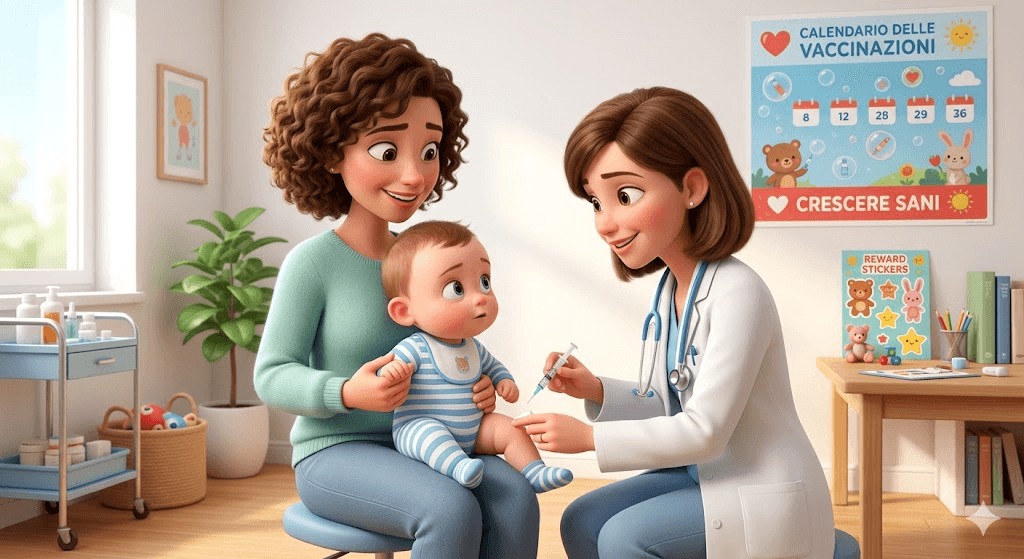
The first-year vaccine schedule protects against illnesses that can be serious in young babies. Dates and offerings vary by country, region, health status, prematurity, season and official updates.
That is why copying a random online table is not the right approach. Use official sources, your pediatrician and your local immunization service.
Where to verify
If you are in Italy, check:
- Ministry of Health;
- your Region or local health authority;
- vaccination service invitations;
- pediatrician;
- Electronic Health Record, if active.
You can also use our vaccination calendar as an operational reminder, always checking with official channels.
What to prepare
Before the appointment:
- check date, place and required documents;
- bring the health card;
- bring any vaccine record or health booklet;
- report fever, recent illness or medicines;
- note allergies or previous reactions;
- prepare questions for the pediatrician.
The first-year visits checklist also includes vaccines.
After vaccination
Ask staff:
- which reactions are common;
- when to call;
- how to manage fever or soreness;
- when the next appointment is expected;
- where to find the updated certificate.
Do not give preventive medicine unless advised. For medicine safety, read newborn medicines.
When to ask before proceeding
Do not decide alone to postpone. Ask if:
- your baby has fever;
- your baby was very ill recently;
- there was a significant reaction to a previous dose;
- your baby is premature or has specific conditions;
- you are unsure about the schedule.
Useful links
Sources and further reading
- Calendario vaccinale - Ministero della Salute
- Calendario vaccinale - Istituto Superiore di Sanita - Epicentro
- All About the AAP Recommended Immunization Schedule - HealthyChildren.org - American Academy of Pediatrics
- Vaccines by Age - Centers for Disease Control and Prevention
- Child growth standards - World Health Organization
Sources are used to support general informational content and do not replace advice from a pediatrician or healthcare professional.