Newborn weight: how to read it without obsessing over one number
How to interpret newborn weight in the first months: early weight loss, recovery, checkups, trends and when to talk with the pediatrician.
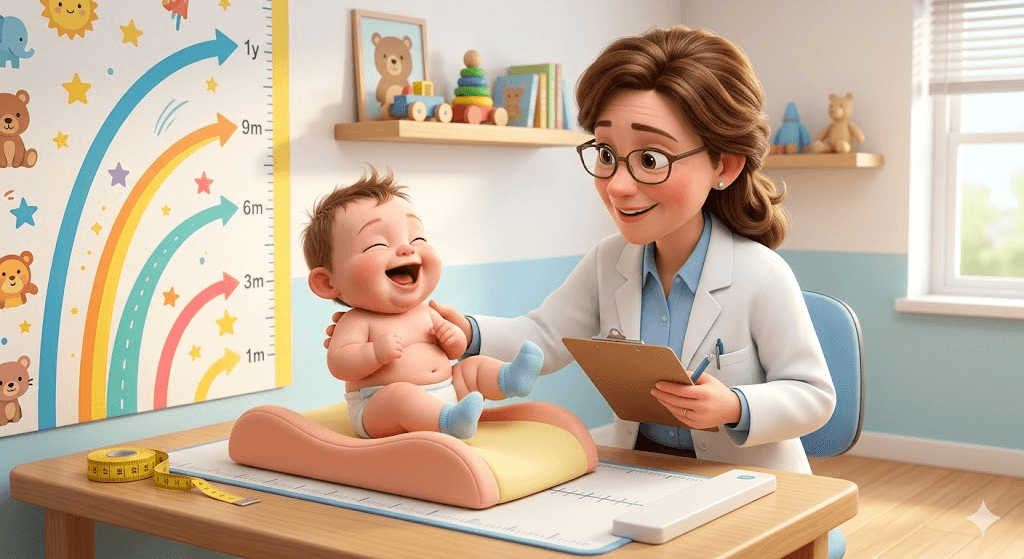
Newborn weight is one of the numbers parents watch most closely. It is useful, but it can become stressful when read alone, without age, length, feeding, diapers, birth history and the pattern over time.
The goal is not to have a baby in a "high" percentile. The goal is to understand whether growth is steady and whether the pediatrician sees a coherent pattern.
Early weight loss after birth
Many newborns lose weight in the first days. This is expected: they lose fluid, pass meconium and adapt to feeding outside the womb. The birth team and pediatrician assess how much weight is lost, how feeding is going and when weight begins to rise again.
Do not compare tiny differences from different scales. A hospital scale, pharmacy scale and home scale can give slightly different results. The series of measurements taken in a similar way matters most.
How much should a baby gain?
There is no single weekly gain that fits every baby. Growth depends on age, birth weight, feeding, health, family pattern and medical conditions. In the first months, the pediatrician looks at weight, length and head circumference together.
One weight that is lower than expected does not prove there is a problem. It may depend on timing, diaper, a recent feed or measurement error. A changing trend deserves more attention.
To turn numbers into a readable curve, you can use the growth percentile calculator, remembering that it does not replace pediatric assessment.
Weight and feeding
Weight is a signal, not a judgment of breastfeeding, bottle feeding or parenting. If your baby is breastfed, the pediatrician may assess latch, frequency, swallowing, diapers and behavior after feeds. If your baby takes formula, they may review preparation, amounts, rhythm and tolerance.
If you are unsure about intake, connect growth with practical details:
- number of feeds;
- wet diapers;
- stools;
- sleep and alertness;
- vomiting or diarrhea;
- medicines or recent illness.
The diaper tracker and feeding calculator can help you collect clear details before a visit.
Weighing at home: helpful or stressful?
A home scale can be useful when the pediatrician asks for close checks or gives specific instructions. Without a concern, daily weighing can increase anxiety and make the bigger picture harder to see.
If you need to weigh at home:
- use the same scale;
- weigh your baby naked or always in the same way;
- choose a similar time of day;
- write down date and time;
- do not interpret small changes alone.
When to discuss weight
Bring it up if:
- your baby does not regain weight as expected after discharge;
- your baby crosses down through several percentile curves over time;
- slow gain comes with fewer wet diapers;
- feeds are very long, painful or ineffective;
- your baby seems constantly tired or less responsive;
- there is recurrent vomiting, diarrhea or breathing difficulty.
To prepare the right details, use the growth checkups checklist and the guide to first-year pediatric visits.
Key takeaway
Newborn weight matters, but it does not stand alone. One number says little; a well-measured curve interpreted by the pediatrician says much more.
Useful links
Sources and further reading
- Understanding Growth Charts: A Parent's Guide to Percentiles & Z-Scores - HealthyChildren.org - American Academy of Pediatrics
- Using WHO Growth Standard Charts - Centers for Disease Control and Prevention
- The WHO Child Growth Standards - World Health Organization
- Child growth standards - World Health Organization
- Fever and Your Baby - HealthyChildren.org - American Academy of Pediatrics
Sources are used to support general informational content and do not replace advice from a pediatrician or healthcare professional.