When newborn growth is concerning
Warning signs in newborn growth: weight, length, head circumference, feeding, diapers and when to call the pediatrician.
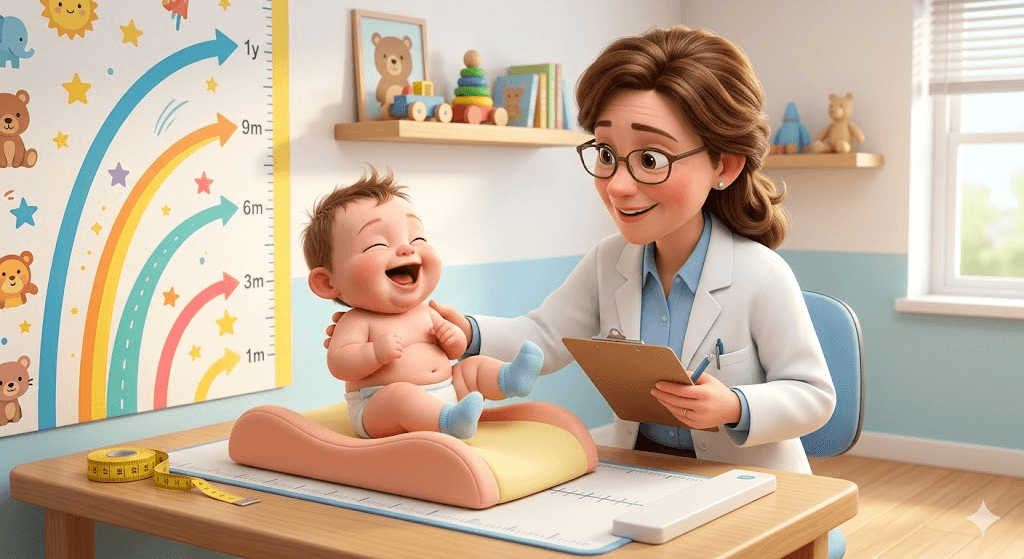
Newborn growth cannot be judged from a photo, a comparison with another baby or one weight check. It is assessed with accurate measurements, charts, feeding, diapers, clinical exam and behavior.
That said, some signs deserve a call to the pediatrician without waiting for the next routine visit.
Weight-related signs
Talk with the pediatrician if:
- your baby does not regain weight according to the discharge plan;
- weight stays flat or drops after the first days;
- your baby crosses down through several percentile curves over time;
- slow gain comes with fewer wet diapers;
- feeds seem ineffective or very tiring;
- your baby seems weak, sleepy or less responsive.
One data point is not enough, but weight plus feeding plus diapers can show that closer assessment is needed.
Feeding and hydration signs
Growth is connected to what your baby can take in and keep down. Call the pediatrician if you notice:
- repeated refusal of breast or bottle;
- feeds that are much shorter or much longer than usual;
- repeated or forceful vomiting;
- significant diarrhea;
- fewer wet diapers than usual;
- dry mouth, crying without tears or a sunken fontanelle.
For fluid warning signs, also read newborn dehydration.
Measurement signs
Percentiles become more meaningful when they change over time. Ask for clarification if:
- weight, length or head circumference changes trajectory sharply;
- weight does not seem proportionate to length;
- head circumference speeds up or slows down significantly;
- two consecutive measurements are very different without explanation;
- the pediatrician asks for close follow-up.
Do not change feeding or milk amounts by yourself based only on a calculator. Use the growth percentile calculator as a visual support, not a diagnosis.
What to prepare before calling
To help the pediatrician, have ready:
- your baby's exact age;
- birth weight, discharge weight and latest measurements;
- type of feeding;
- number of feeds in the last 24 hours;
- wet diapers and stools;
- fever, vomiting, diarrhea or medicines;
- behavior: alert, sleepy, irritable.
The growth checkups checklist is designed to collect these details clearly.
What not to do
Avoid:
- increasing or reducing milk amounts without advice;
- introducing water, teas or foods early to "help growth";
- weighing your baby several times a day;
- comparing curves from different tools;
- postponing a call if your baby seems different from usual.
If the concern is feeding amount or rhythm, also use feeding guides and tools, including the feeding calculator.
Key takeaway
Growth is concerning when a change appears together with other signs: difficult feeding, fewer diapers, symptoms, measurements that deviate or a baby who is less responsive. In these cases, calling the pediatrician is part of good care.
Useful links
Sources and further reading
- Understanding Growth Charts: A Parent's Guide to Percentiles & Z-Scores - HealthyChildren.org - American Academy of Pediatrics
- Using WHO Growth Standard Charts - Centers for Disease Control and Prevention
- CDC Growth Charts - Centers for Disease Control and Prevention
- Child growth standards - World Health Organization
- Fever and Your Baby - HealthyChildren.org - American Academy of Pediatrics
Sources are used to support general informational content and do not replace advice from a pediatrician or healthcare professional.