Common daycare illnesses: what to expect and when to stay home
Colds, fever, diarrhea, conjunctivitis and other common daycare infections: prevention, return and signs to discuss with the pediatrician.
Starting daycare increases close contact between young children. Colds and other mild infections may become more frequent, especially in the first months.
Not every illness is alarming, but some require temporary exclusion, pediatric assessment or extra care around vulnerable people at home. Exact return rules depend on the provider and local public health guidance.
Common infections
Daycare settings may see:
- colds, cough and sore throat;
- fever from respiratory viruses;
- gastroenteritis with vomiting or diarrhea;
- conjunctivitis;
- hand, foot and mouth disease;
- chickenpox or other vaccine-preventable illnesses;
- head lice in older children.
The pediatrician remains the reference if your child is very young, has chronic conditions, persistent fever or symptoms that do not follow an expected course.
When to keep your child home
In general, a child should stay home if:
- they have fever and feel unwell;
- they cannot participate in activities;
- vomiting is repeated;
- diarrhea cannot be managed or contains blood;
- breathing is difficult;
- they have a contagious illness for which the provider requires exclusion;
- they need care the setting cannot safely provide.
Avoid using fever medicine only to get through a daycare day. If your child needs medicine to seem well enough, they probably need rest and observation.
Realistic prevention
You cannot remove every virus, but you can reduce risk:
- wash or sanitize hands at arrival and return home;
- keep vaccinations up to date according to the local schedule;
- change towels, bibs and personal items often;
- communicate contagious diagnoses quickly;
- clean surfaces and toys according to provider procedures;
- keep sick adults home when possible.
Returning to daycare
Ask the provider for written criteria on fever, diarrhea, vomiting, conjunctivitis, rashes and medicines. Some criteria are clinical, others are practical: for example, whether the child can participate and how much individual care they need.
For specific contagious illnesses, follow your pediatrician and local public health instructions.
How to prepare at home
Keep ready:
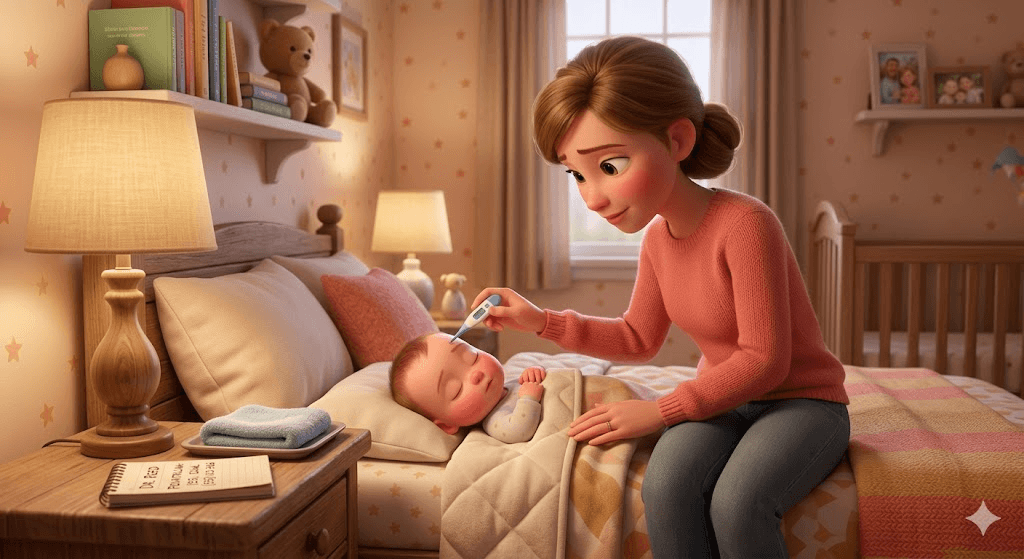
- thermometer;
- saline;
- pediatrician contacts;
- work backup plan;
- list of medicines authorized by the pediatrician;
- allergy and condition notes for daycare.
For respiratory symptoms, read newborn cold, newborn cough and newborn fever.
Useful links
Sources and further reading
- Preventing Infectious Diseases in Early Care and Education - Centers for Disease Control and Prevention
- Colds, coughs and ear infections in children - NHS
- Urgent Care, ER or Pediatrician? A Parent Guide - HealthyChildren.org - American Academy of Pediatrics
- Child growth standards - World Health Organization
- Fever and Your Baby - HealthyChildren.org - American Academy of Pediatrics
Sources are used to support general informational content and do not replace advice from a pediatrician or healthcare professional.