Baby fall: what to watch and when to get help
What to do after a baby or toddler fall: observation, warning signs, head injury and prevention at home.
A fall is always frightening, even when it looks minor. With babies and toddlers, the rule is simple: first check safety and behavior, then decide with a professional whether observation, the pediatrician or emergency care is needed.
This guide complements urgent care or pediatrician, choosing a changing table, when baby sits and home first aid.
First: make it safe
Right after the fall:
- move your child only if the place is unsafe;
- check breathing, color and responsiveness;
- notice where they hit;
- look for cuts, swelling, deformity or trouble moving a limb;
- stay close and try to calm them.
If your child is not breathing well, loses consciousness, has a seizure, bleeds heavily or seems seriously injured, call your local emergency number immediately.
Head bump
Many falls involve the head. Immediate crying followed by comfort and normal behavior may be less concerning than a child who is unusually sleepy, confused or different from usual.
Call the pediatrician or emergency care if you notice:
- loss of consciousness, even brief;
- repeated vomiting;
- unusual sleepiness or difficulty waking;
- inconsolable crying or very different behavior;
- seizure;
- blood or fluid from nose or ears;
- different pupil sizes;
- trouble moving arms or legs;
- fall from a significant height or a violent mechanism.
What to watch over the next hours
If the pediatrician recommends home observation, watch:
- alertness;
- cry pattern;
- feeds or appetite;
- vomiting;
- sleep that is very different from usual;
- use of arms and legs;
- swelling that increases;
- skin color and breathing.
Do not keep your child awake at all costs unless a clinician tells you to. The key is being able to check them and wake them if advised.
Fall from changing table, bed or sofa
Falls from raised surfaces are common because one sudden movement is enough. After the event, change the setup as well as checking your child:
- one hand always on the child;
- diapers and clothes ready first;
- no stepping away "for one second";
- floor changes during very mobile phases;
- rails and surfaces treated as support, not a guarantee.
For prevention, return to choosing a changing table.
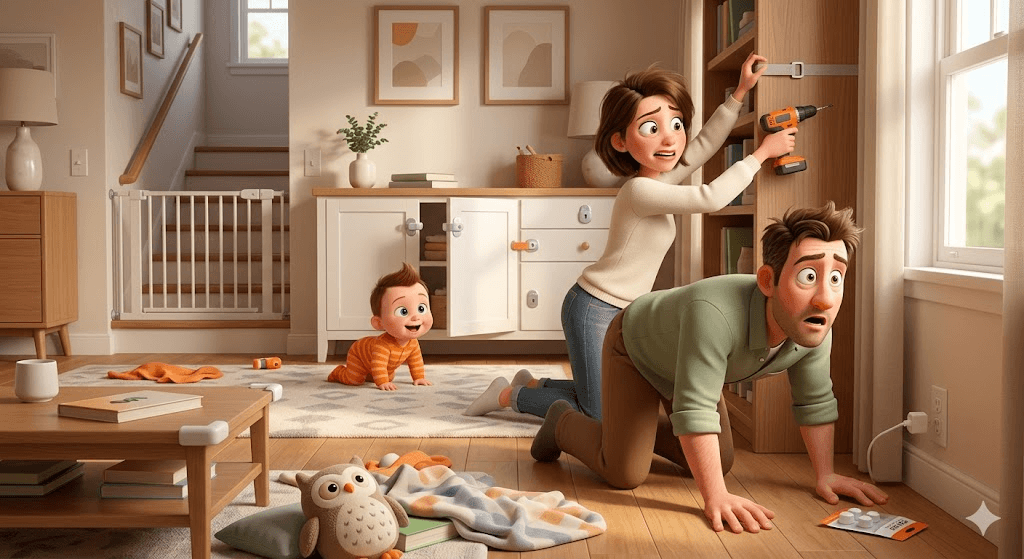
Preventing more falls
Check:
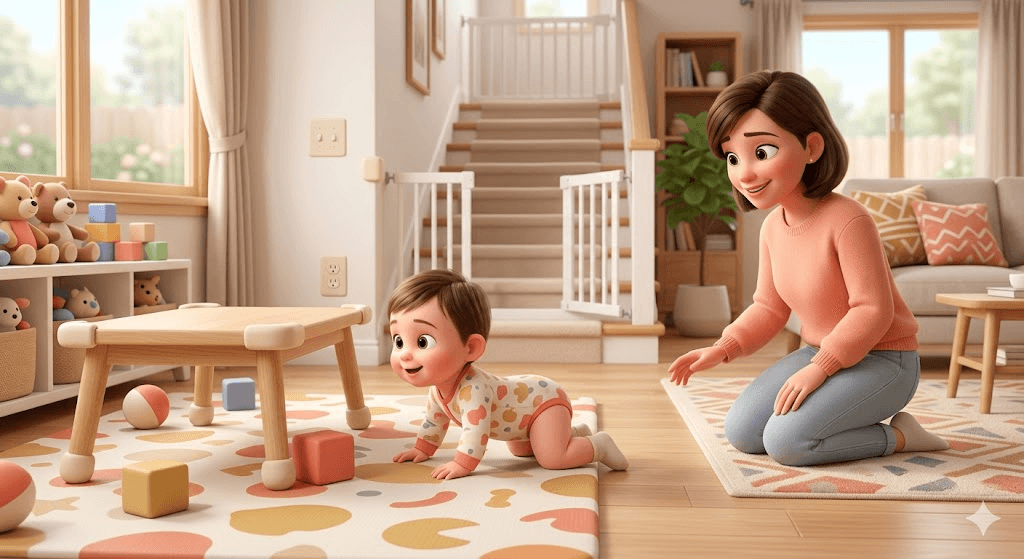
- stairs protected;
- windows and balconies not accessible;
- high chair harness used;
- stroller brakes locked;
- unstable rugs removed;
- furniture secured if it can tip;
- no baby walker.
Prevention needs updating with each new skill: rolling, sitting, crawling, pulling up.
When to get help
If you are unsure, call the pediatrician. If your child is in danger, call emergency care. Do not wait for every warning sign: a clear behavior change after trauma deserves assessment.
Key takeaway
After a fall, the whole picture matters: mechanism, age, behavior and symptoms. The best prevention is anticipating the next motor skill before it arrives.
Useful links
Sources and further reading
- Head Injury in Children: How to Know If It's Minor or Serious - HealthyChildren.org - American Academy of Pediatrics
- When Your Child Needs Emergency Medical Services - HealthyChildren.org - American Academy of Pediatrics
- Urgent Care, ER or Pediatrician? A Parent Guide - HealthyChildren.org - American Academy of Pediatrics
- Child growth standards - World Health Organization
- Fever and Your Baby - HealthyChildren.org - American Academy of Pediatrics
Sources are used to support general informational content and do not replace advice from a pediatrician or healthcare professional.