Choosing a changing table: safety, height and setup
How to choose and use a safe changing table for a baby: stability, rails, straps, placement, accessories and when to use the floor.
A changing table looks simple, but falls from high surfaces can be serious. A good changing table does not replace supervision: it makes it easier to avoid distractions, keep supplies close and change your baby in an organized way.
This guide complements newborn daily care, home safety, baby products to avoid and safe baby purchases.
What it should have
Choose a changing table that is:
- stable even when drawers or doors are opened;
- wide enough for the baby and pad;
- equipped with side rails or protective edges;
- fitted with a concave or non-slip pad if intended;
- fitted with an intact strap, used every time but never relied on alone;
- made of washable materials;
- supplied with clear assembly instructions.
AAP pediatric guidance mentions a rail of about 5 cm on all sides as a reference. If the model uses a different safety system, the manufacturer should explain it clearly.
Height and placement
The changing table should let you change your baby without bending too much, but also without losing control. If it is too high, narrow or unstable, sudden movements and falls become more likely.
Place it:
- against a stable wall;
- away from windows, curtains and cords;
- with enough light;
- on a level floor;
- away from heat sources;
- where you can keep one hand on the baby at all times.
Avoid improvised setups on washing machines, narrow tables, high beds or slippery surfaces if they are not designed for diaper changes.
Diaper-change setup
Changing table safety also depends on how you use it. Before placing your baby down, prepare:
- diaper;
- wipes or gauze;
- cream if needed;
- clean clothes;
- bag or container for the diaper;
- clothes already opened.
Keep everything within your reach, not your baby's. Do not leave containers, nail scissors, medicines, fragrances, powder or bags where the baby can grab them.
Accessories to avoid
Avoid accessories that reduce usable space, make the surface slippery or attract the baby's hands. Poorly attached organizers, toys with cords, lights, heavy containers or scented products near the face can add unnecessary risk.
If you use a separate changing pad, it should be compatible, stable and easy to clean. Do not add pillows or wedges to change your baby's position.
Secondhand and assembly
With a secondhand changing table, check:
- original screws and hardware;
- side-to-side stability;
- drawers that do not tip the furniture;
- intact pad;
- no splinters, cracks or sharp points;
- wall anchoring if intended.
If the furniture wobbles, a part is missing or it cannot be assembled according to instructions, do not use it.
When to use the floor
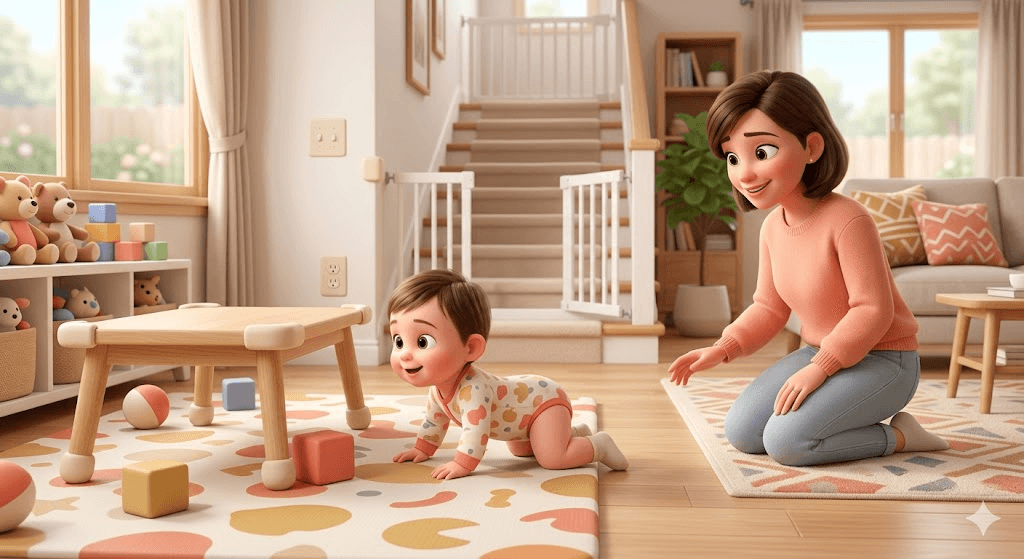
The floor with a clean mat may be the safer choice when your baby moves a lot, rolls, tries to turn, you are very tired or you need to manage several things at once.
Moving to the floor is not a step backward: it is a practical strategy when the motor stage changes.
Key takeaway
The best changing table reduces distractions: stable, simple, organized and always used with one hand on the baby. The strap helps, but it does not replace adult presence.
Useful links
Sources and further reading
- Changing Table Safety - HealthyChildren.org - American Academy of Pediatrics
- Safe Sleep - Cribs and Infant Products - U.S. Consumer Product Safety Commission
- How to Keep Your Sleeping Baby Safe - HealthyChildren.org - American Academy of Pediatrics
- How to dress a newborn - NHS
- Child growth standards - World Health Organization
Sources are used to support general informational content and do not replace advice from a pediatrician or healthcare professional.