Bath and water safety for babies and toddlers
How to reduce risk around tubs, buckets, bathrooms and shallow water: supervision, temperature, closed doors and when to call for help.

Water at home can feel manageable, but a few centimeters can be dangerous for babies and toddlers. Tubs, buckets, toilets, basins and inflatable pools need the same level of attention.
This guide complements first bath, home safety, home first aid and burns in children.
Main rule
Around water, supervision must be close enough to touch: an adult present, focused and near enough to act immediately. Listening from another room is not enough, and a sibling is not a safe substitute.
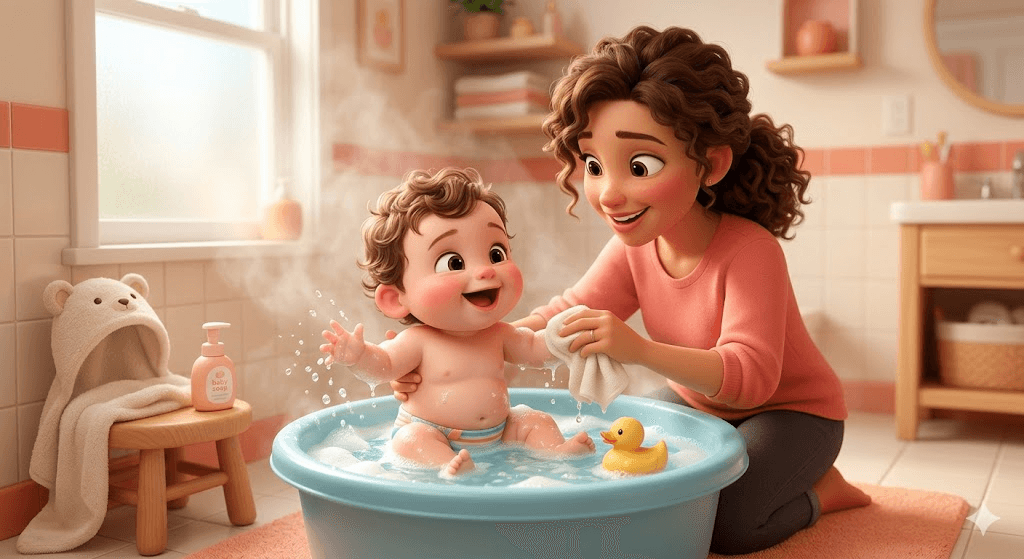
Before bath time, prepare:
- towel;
- diaper and clothes;
- cleanser, if needed;
- phone outside the water area but reachable;
- warm room and a ready surface for drying.
If you need to step away, even briefly, take your child with you.
Tub and bath time
For bath time:
- use a small amount of water;
- check the temperature before putting your child in;
- keep a hand or physical control at all times;
- do not leave a child sitting without support if they are not stable;
- do not treat bath seats or supports as safety devices;
- empty the tub immediately when finished.
Bath supports may help positioning, but they never replace an adult.
Bathroom and water containers
Reduce opportunities:
- keep the bathroom door closed;
- keep the toilet lid down and consider locks if your child walks;
- empty buckets and basins right after use;
- do not leave inflatable pools filled after play;
- keep cleaners and products out of reach;
- remove stools, chairs or mats that help climbing.
Safety improves when the setup does not rely only on "I am watching."
Hot water
Water that is too hot can burn. Before bath time, mix well, test with your elbow or a thermometer and keep your child from playing with taps.
For scalds or doubts, see burns in children. If your child seems distressed, has very red skin, blisters or burns in delicate areas, seek care.
After a water incident
Call your local emergency number immediately if your child has been underwater, has breathing trouble, persistent coughing, unusual sleepiness, confusion, pale or bluish color, or does not respond normally.
Do not wait to "see if it passes" after a submersion or near-drowning episode.
Key takeaway
Water does not need to be deep to be dangerous. The best prevention combines close supervision, emptied containers and a bathroom that is not accessible.
Useful links
Sources and further reading
- Infant Drowning Prevention & Water Safety: How to Protect Your Baby - HealthyChildren.org - American Academy of Pediatrics
- Preventing Drowning - Centers for Disease Control and Prevention
- Burn Treatment & Prevention Tips for Families - HealthyChildren.org - American Academy of Pediatrics
- When Your Child Needs Emergency Medical Services - HealthyChildren.org - American Academy of Pediatrics
- How to prevent choking, suffocation and strangulation - UNICEF Parenting
Sources are used to support general informational content and do not replace advice from a pediatrician or healthcare professional.