Burns in children: what to do first and what to avoid
Cautious first response for burns and scalds: cool water, clean covering, when to call emergency care and prevention at home.

Burns in children can come from hot water, drinks, food, ovens, stovetops, irons, sun, electricity or chemicals. Even a small amount of hot liquid can cause a significant scald.
This guide complements first bath, home safety, urgent care or pediatrician and home first aid.
What to do first
If your child is burned:
- move them away from the heat source;
- cool the area with cool running water;
- remove clothing or diaper only if not stuck to the skin;
- cover with sterile gauze or a clean dry cloth;
- seek medical advice if it is not clearly superficial.
Do not wait to "see how it goes" if the burn is large, deep or in a delicate area.
What to avoid
Avoid:
- direct ice;
- butter, oil, toothpaste or creams not recommended;
- rubbing the skin;
- breaking blisters;
- pulling off fabric stuck to the skin;
- home remedies.
These actions can worsen injury or increase infection risk.
Chemical burns
With chemicals:
- move your child away from the product;
- remove contaminated clothing if possible without rubbing;
- rinse with running water;
- call poison control or your local emergency number;
- keep the product container available for professionals.
Do not mix products and do not try do-it-yourself neutralizing.
Kitchen prevention
The kitchen is a critical area:
- pot handles turned inward;
- hot drinks away from edges;
- no child in arms while holding hot liquids;
- oven and stovetop not reachable;
- microwave used cautiously and food stirred well;
- kettle and appliance cords out of reach.
Bath and hot water
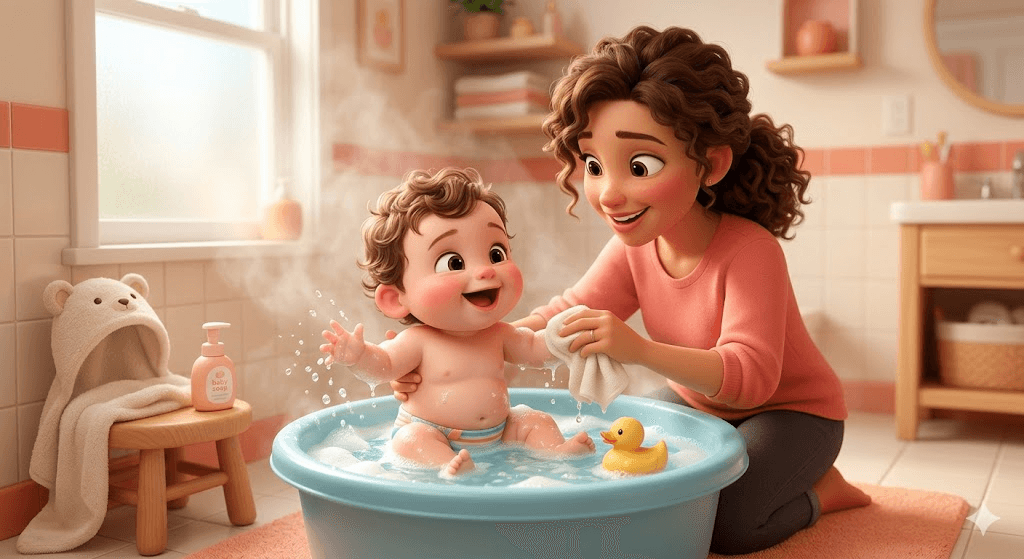
Before bath time:
- prepare everything first;
- test water with elbow or thermometer;
- add cold water first and then hot if mixing manually;
- never leave your child alone;
- avoid letting them play with taps.
For newborns, also see first bath.
When to ask for advice
Contact the pediatrician for burns that remain painful, red, swollen, blistered, draining, smell bad, come with fever or if you cannot judge depth and size. For emergencies, call your local emergency number immediately.
Key takeaway
Cool, cover, do not improvise. The best prevention is removing the hazard before your child can reach it.
Useful links
Sources and further reading
- Burn Treatment & Prevention Tips for Families - HealthyChildren.org - American Academy of Pediatrics
- When Your Child Needs Emergency Medical Services - HealthyChildren.org - American Academy of Pediatrics
- First Steps in a Poisoning Emergency - Poison Help - Health Resources and Services Administration
- Child growth standards - World Health Organization
- Fever and Your Baby - HealthyChildren.org - American Academy of Pediatrics
Sources are used to support general informational content and do not replace advice from a pediatrician or healthcare professional.