First outing with a newborn: how to keep it simple
How to plan a first outing with a newborn: timing, diaper bag, feeding, stroller, carrier, car travel and when to go home.
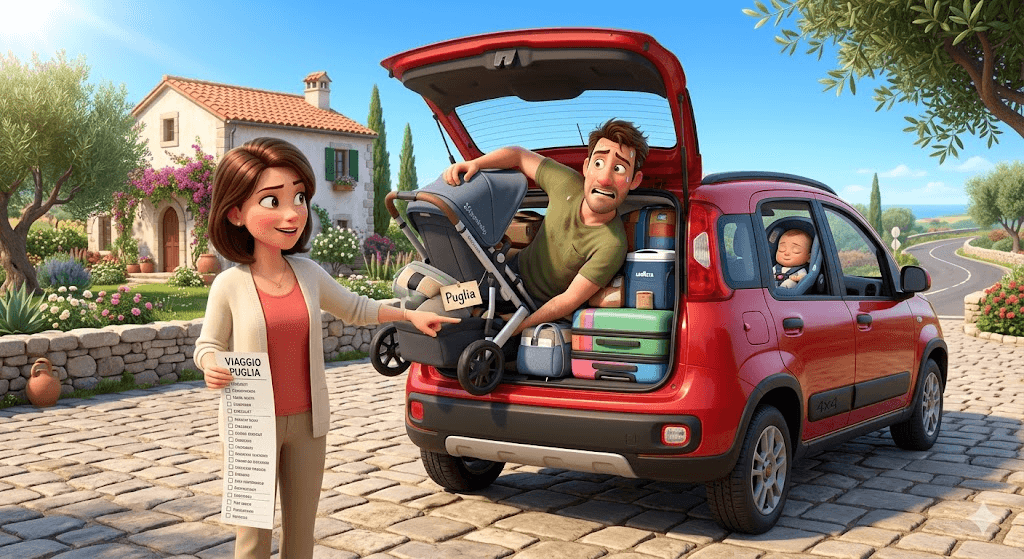
The first outing with a newborn does not need to be long or perfect. It is mainly a small practice run: packing the bag, choosing an easy route, learning how much margin you need and coming home before everyone is overtired.
For a ready list, use the newborn outing checklist. To choose the most practical support, read the guide to stroller or baby carrier.
When to go out
For a healthy newborn, a short walk outdoors in a calm place is usually possible. The key is not an exact age, but the situation: reasonable weather, an available adult, a fed baby, a packed bag and an easy way home.
Postpone or ask your pediatrician if your baby has fever, breathing difficulty, poor feeding, fewer wet diapers, unusual sleepiness or was born premature and you were given specific advice.
Choose an easy first outing
For the first try, avoid plans with too many constraints. Aim for:
- a walk close to home;
- a route with regular sidewalks or flooring;
- a place that is not crowded;
- a time of day when your baby is usually calmer;
- a short duration, even 20-30 minutes;
- a clear plan for going home.
The first outing is for learning what works for your family, not for doing everything.
Essential bag
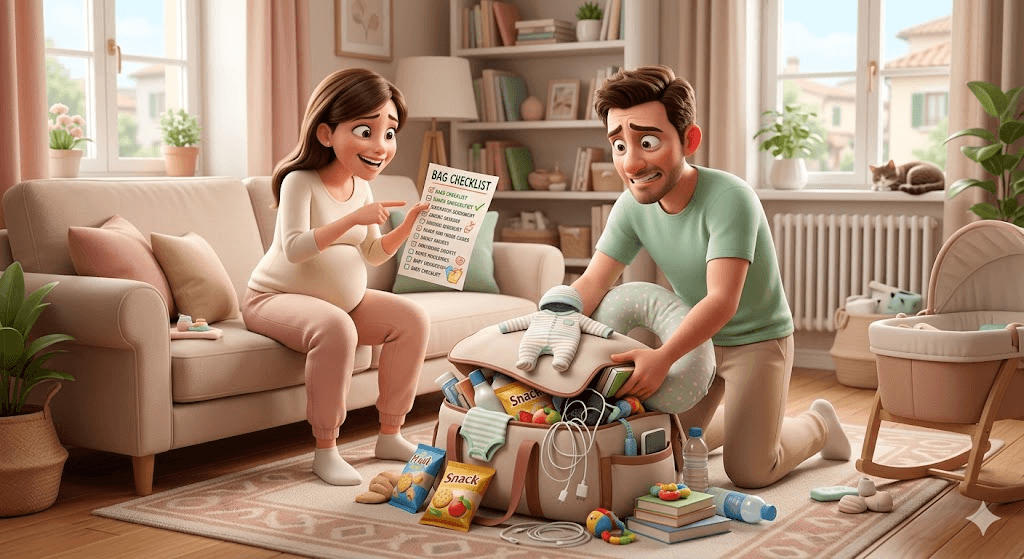
Bring only what you may realistically need, with a small buffer for delays:
- 3-4 diapers;
- wipes or damp gauze;
- diaper cream if used;
- foldable changing mat;
- bag for diapers or dirty clothes;
- one full outfit change;
- muslin or bib;
- breastfeeding or bottle-feeding supplies;
- pacifier, if used;
- water for the adult;
- documents and a charged phone.
For diaper changes away from home, go to the guide on changing outside the home.
Stroller, wrap or carrier
A stroller is useful on smooth routes, when you need somewhere to carry the bag or if you expect stops. It should be stable, with working brakes and harnesses used every time.
A wrap or carrier is practical for stairs, public transport and narrow sidewalks, but airway checks matter: face always visible, chin off chest, snug support and baby close to your body.
If you own both, do not overcomplicate the first outing. Choose the option you already use most confidently.
Feeding away from home
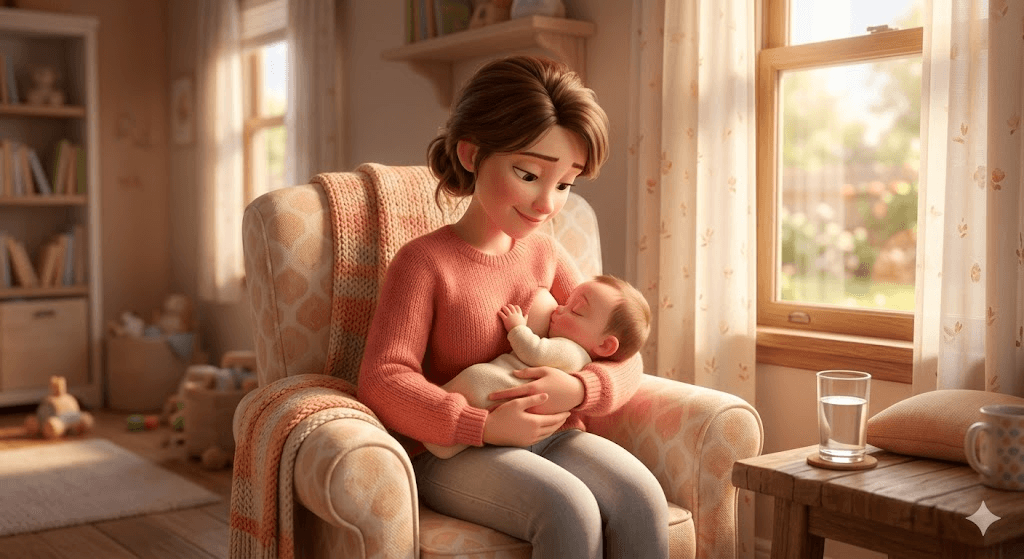
If you breastfeed, choose somewhere you can sit and position your baby well. To prepare in advance, read the guide to breastfeeding in public.
If you use bottles or formula, plan supplies ahead and follow safe hygiene and storage guidance. Bring one extra feed if the outing could run long.
Weather and temperature
Dress your baby in light layers that are easy to add or remove. Check the back of the neck, sweating, color and irritability, not only the hands.
In warm weather, avoid direct sun, the hottest hours and heavy covers over the stroller. In cold weather, avoid overdressing and check that your baby is not sweating once you enter a warm place.
Car and transfers
If the outing involves a car, always use a car seat suited to your baby's weight and height and installed according to the manual. The car seat is for transport: when you arrive, if your baby is asleep and the stop is long, move them to a safe, flat sleep surface.
For longer drives, plan breaks to check position, diaper, temperature and feeding.
When to go home
Go home without waiting if your baby seems too hot or too cold, cries inconsolably, refuses milk, vomits repeatedly, has breathing difficulty or seems different from usual.
A successful first outing is not the longest one. It is the one that gives you useful information for planning the next.
Useful links
Sources and further reading
- Tips for Safe & Stress-Free Family Travel - HealthyChildren.org - American Academy of Pediatrics
- Is it safe for my baby to travel in a car seat for hours at a time? - HealthyChildren.org - American Academy of Pediatrics
- How to Choose a Safe Baby Stroller - HealthyChildren.org - American Academy of Pediatrics
- Baby Carriers: Backpacks, Front Packs & Slings - HealthyChildren.org - American Academy of Pediatrics
Sources are used to support general informational content and do not replace advice from a pediatrician or healthcare professional.