Changing outside the home: diaper bag, hygiene and routine
How to change a newborn away from home: diaper bag, hand hygiene, surfaces, diapers, dirty clothes and signs to monitor.
Changing a newborn away from home is much easier when the bag is organized and you follow the same sequence each time. The goal is to reduce rushing, contamination and forgotten items, not to create a perfect changing station everywhere.
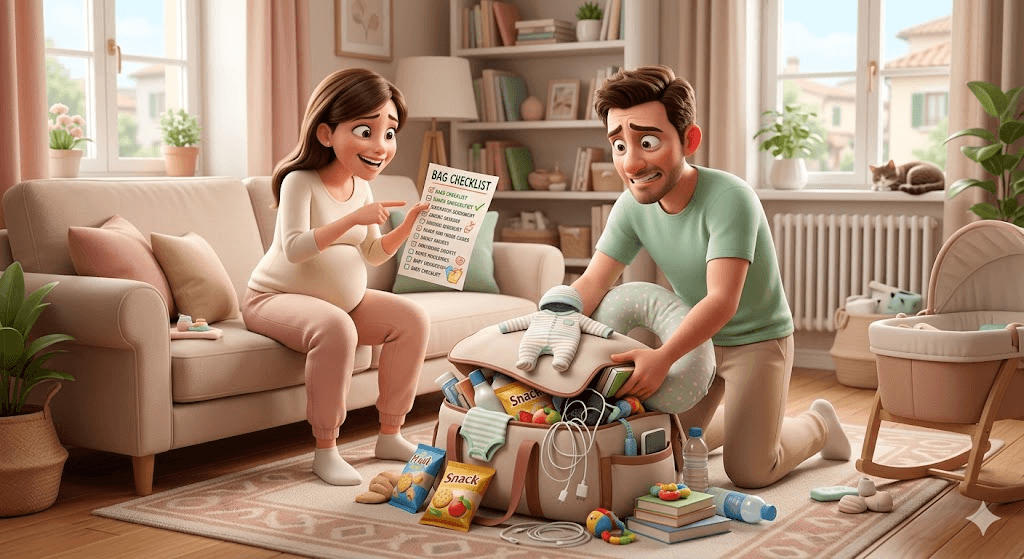
To prepare the whole outing, use the newborn outing checklist. If you are planning the first test run, also read first outing with a newborn.
What to pack in the changing kit
Keep everything in a dedicated pocket or pouch:
- more diapers than you expect to need;
- wipes or damp gauze;
- diaper cream, if used;
- foldable changing mat;
- bags for diapers or dirty clothes;
- one full outfit change;
- extra bodysuit or sleepsuit;
- small muslin;
- hand gel for the adult if there is no sink;
- tissues or paper.
For short outings, you only need a few pieces, but the kit should be complete. The most frustrating setup is carrying many unnecessary items while missing a bag or clean outfit.
Before you start
Choose a stable, clean and safe surface. If you use a public changing table, always place your own changing mat on it. If there is no changing table, consider the stroller, a safely parked car or a low stable surface, always keeping one hand on your baby.
Prepare the clean diaper, wipes and bag before opening the dirty diaper. Wash your hands when possible. If you cannot, use hand gel first and wash as soon as you find a sink.
During the change
Never leave your baby alone, even for a few seconds. Newborns can move suddenly, and a high surface is still risky even if they seem small and still.
Clean gently and dry skin folds well. For girls, wipe from front to back. For boys, check the direction of the penis before closing the diaper to reduce leaks.
Dirty diapers and wet clothes
Close the dirty diaper and dispose of it where allowed. If there is no suitable bin, seal it in a bag and take it with you.
For dirty or wet clothes, separate wet from clean right away. A waterproof bag prevents the whole diaper bag from becoming contaminated.
What to monitor
A diaper change is also a useful time to check:
- number of wet diapers compared with usual;
- stools that are very different from normal;
- rash or red skin;
- blood in stool or urine;
- unusual smell or obvious pain;
- signs of dehydration, such as fewer wet diapers.
If something worries you, note the time and appearance of the diaper and contact your pediatrician, especially in the first months.
Changing in the car or stroller
In the car, change your baby only when the vehicle is parked safely. Do not change during travel. In the stroller, change only if the structure is stable and your baby remains supervised.
In hot or cold weather, be quick but not rushed. Prepare everything first so your baby is uncovered for as little time as possible.
After the change
Sanitize or fold the changing mat with the dirty side inside. Wash or sanitize your hands. When you get home, refill diapers, bags and spare clothes immediately. It is the simplest way to avoid finding out next time that something is missing.
Useful links
Sources and further reading
- Changing a nappy - NHS
- Changing Table Safety - HealthyChildren.org - American Academy of Pediatrics
- How to treat diaper rash - American Academy of Dermatology
Sources are used to support general informational content and do not replace advice from a pediatrician or healthcare professional.