NoiBimbo
  • Growth Guide
  • Tools
  • Checklists
Vai al contenuto
NoiBimbo

© 2026 NoiBimbo. All rights reserved.

Privacy PolicyTerms of ServiceAbout UsEditorial method

NoiBimbo content is for informational purposes only and does not replace professional medical advice.

  1. Home
  2. /
  3. Growth Guide
  4. /
  5. Baby massage: contact, calm and safety
Health0-3 months

Baby massage: contact, calm and safety

How to do a simple baby massage: when to try it, environment, pressure, products, stop signals and what to avoid.
6 min readPublished on July 4, 2026
Baby massage: contact, calm and safety

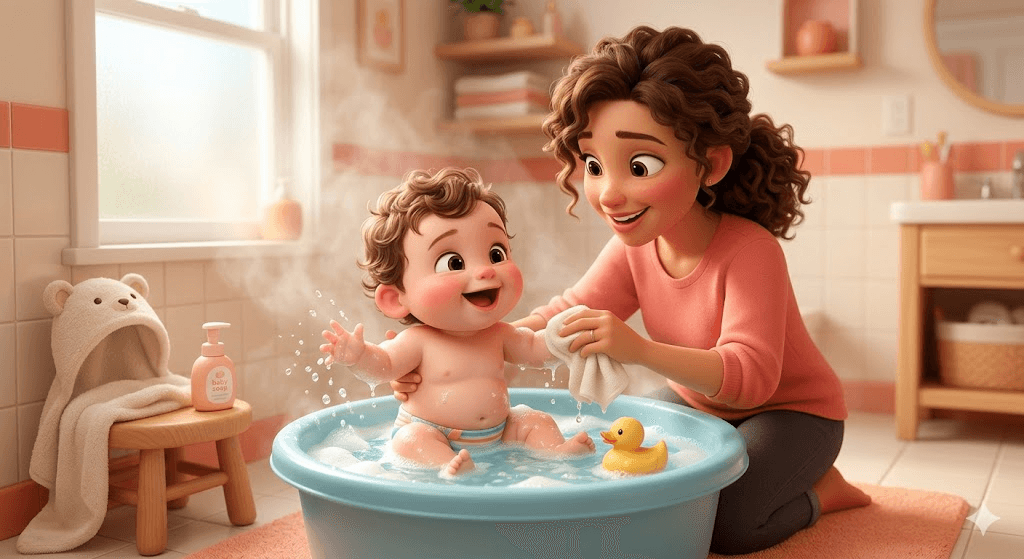
Baby massage is not a therapy to improvise, but a gentle contact moment. It can become part of the routine if your baby likes it and it is done calmly, with clean hands and light pressure.

This guide connects with the night routine checklist, bath frequency and the newborn skin checklist.

When to try it

Choose a time when your baby is awake, calm and not just fed. The room should be warm and the surface safe. Always keep a hand near your baby and never leave them alone.

How to begin

Try a few minutes:

  • warm clean hands;
  • slow movements;
  • very light pressure;
  • legs and feet before the chest if you prefer;
  • stop if your baby stiffens, cries or turns away.

Baby cues

Massage is useful only if your baby accepts it. If they show discomfort, stop: respecting no is part of contact too.

Products

Products are not required. If you use an oil, choose a simple baby-suitable product and test it first on a small area. Avoid essential oils and fragrances.

When to avoid it

Avoid massage if your baby has fever, is very irritable, has skin lesions, significant redness, breathing difficulty or if the pediatrician has advised differently.

Key takeaway

Baby massage is calm contact, not a performance. A few minutes, light pressure, warm room and attention to cues are enough.

Useful links

  • First bath
  • Bath products
  • Baby sleep
  • Baby crying
  • Baby bath checklist

Sources and further reading

  • Skin-to-skin contact with your newborn - NHS
  • Early childhood development - UNICEF
  • Bathing Your Newborn - HealthyChildren.org - American Academy of Pediatrics
  • Child growth standards - World Health Organization
  • Fever and Your Baby - HealthyChildren.org - American Academy of Pediatrics

Sources are used to support general informational content and do not replace advice from a pediatrician or healthcare professional.

Back to Guide

Useful tools

  • Diaper Tracker

    Daily diaper change log to monitor your newborn's hydration.

  • Cry Analyzer

    Record your baby's cry and find out what they might need through AI-powered audio analysis.

  • Vaccination Calendar

    Generate a personalized Italian vaccination calendar based on birth date.

Related checklists

  • Safe Baby Purchases

    Checklist for buying baby products more safely: recalls, crib, changing table, high chair, secondhand gear and red flags.

  • Newborn Home Environment

    Checklist for temperature, humidity, clean air, smoke, air conditioning, alarms and signs to monitor at home with a newborn.

Related Articles

  • Newborn acne: tiny bumps on your baby's face
    Health

    Newborn acne: tiny bumps on your baby's face

    How to recognize newborn acne, what not to do on facial skin and when a rash should be assessed.

    0-3 months
  • zzz
    Getting a baby to sleep: calm routine and safe sleep
    Sleep

    Getting a baby to sleep: calm routine and safe sleep

    How to help a baby fall asleep: tired signs, short routine, environment, safety and realistic expectations.

    0-3 months
  • Feeding twins: breastfeeding, bottles and support
    Health

    Feeding twins: breastfeeding, bottles and support

    How to organize feeding twins in the first months: positions, tandem feeds, pumping, formula and signs to monitor.

    0-3 months