Baby monitor safety: privacy and practical use
Practical guide to using a baby monitor while reducing fall, cord, privacy, app and false-security risks.
A baby monitor can help you hear or see your baby from another room, but it does not replace adult checks, safe sleep or direct care.
This guide complements home safety, newborn home environment and safe baby sleep.
Where to place it
The priority is avoiding cords, falls and objects in the crib:
- keep the monitor and cords out of reach;
- do not attach devices or wires to crib rails;
- avoid unstable shelves above the sleep space;
- check that the mount cannot fall;
- keep the crib free from unnecessary objects.
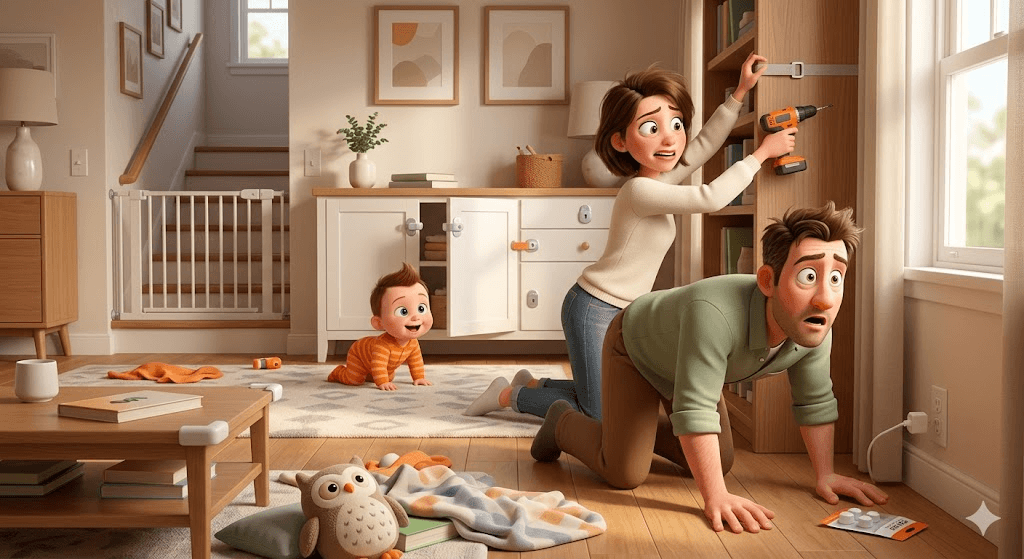
When your baby starts rolling, crawling or pulling up, reassess the setup. What was out of reach yesterday may not be out of reach today.
Privacy and apps
For internet-connected monitors:
- change the default password;
- use a unique strong password;
- turn on two-factor authentication if available;
- update firmware and the app;
- limit authorized users;
- turn off or cover the camera when not needed;
- avoid public or unprotected Wi-Fi networks.
Before buying, check whether the manufacturer provides security updates and how audio, video and accounts are handled.
What it cannot do
A baby monitor cannot prevent accidents, suffocation, fever or breathing problems by itself. Consumer devices that promise vital-sign monitoring should not replace medical advice.
For sleep, the basics still matter: baby on the back, firm surface, clear sleep space, no smoke and no overheating.
Audio, video and alerts
Set the monitor so it helps without increasing anxiety:
- enough volume, not excessive;
- only useful alerts;
- calibrated sound sensitivity;
- screen not always on if it keeps you awake;
- direct checks when needed.
The monitor should support the routine, not turn every normal noise into an alarm.
Key takeaway
Choose a device you can update, place it away from the crib and protect the account and network. A monitor observes; real safety comes from the environment, routine and adult response.
Useful links
Sources and further reading
- Monitoring the Situation - HealthyChildren.org - American Academy of Pediatrics
- Baby Monitor Cords Have Strangled Children - U.S. Consumer Product Safety Commission
- Home Apnea Monitors for SIDs - HealthyChildren.org - American Academy of Pediatrics
- How to prevent choking, suffocation and strangulation - UNICEF Parenting
- How to Keep Your Sleeping Baby Safe - HealthyChildren.org - American Academy of Pediatrics
Sources are used to support general informational content and do not replace advice from a pediatrician or healthcare professional.