Train Travel with a Newborn: Seats, Bags and Routine
How to plan train travel with a newborn: tickets, stroller, luggage, feeding, diaper changes, sleep, delays and safety.
Train travel can be convenient with a newborn because you can move, feed and change diapers without driving. It works best when tickets, luggage and timing are planned early. Commercial rules vary by carrier and route, so always check current conditions before buying.
As of July 4, 2026, Trenitalia states that on many national services children under 4 can travel free when accompanied and without their own seat; offers and regional rules can differ. If you need more space, consider a paid seat or family options when available.
Before Booking
Choose times that fit sleep and feeds, and avoid tight connections. When possible, prefer direct trains, carriages with nearby luggage space and seats that are not too far from the doors. Check whether the stroller folds easily and where you will keep it.
For long journeys, a slightly slower direct train may be easier than a faster trip with changes.
Essential Bag
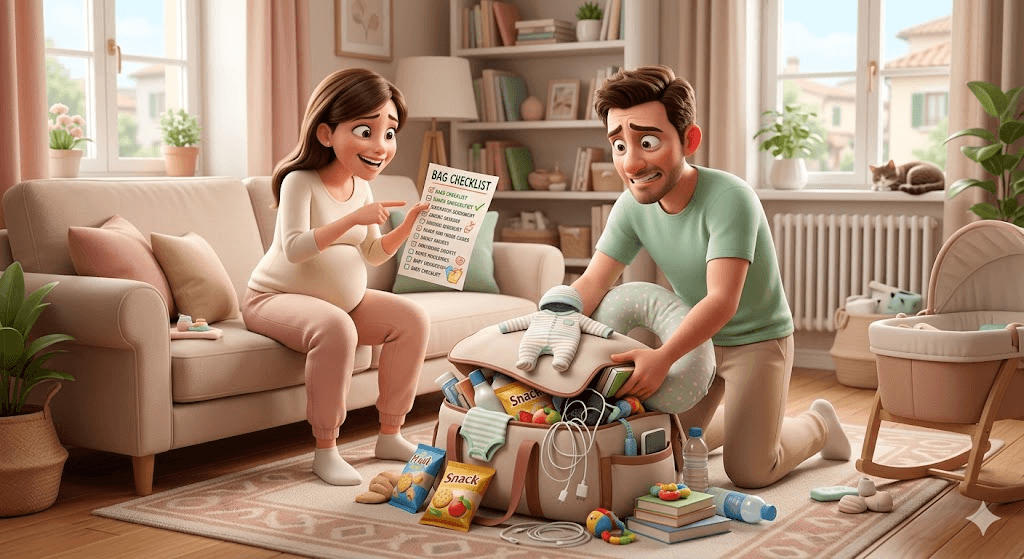
The bag at your seat should include diapers, wipes, a change of clothes, muslin cloths, milk or breastfeeding supplies, a waterproof bag, documents, agreed medicines and a spare top for the adult. The large suitcase should be able to stay closed during the journey.
Keep heavy items and the stroller stable, without blocking aisles, doors or exits.
Feeding and Diaper Changes
Plan feeds and changes with margin, especially before boarding and before connections. Not every train has an easy changing space; a disposable or washable changing mat helps.
If you use formula, plan safe water, powder, bottles and cleaning. Avoid preparing feeds on dirty or unstable surfaces.
Sleep on the Train
Movement may help sleep, but your baby still needs supervision and a safe position. If your baby sleeps in arms, the adult needs to stay alert. If you use a bassinet or stroller, follow carrier rules and do not block passageways.
Bring one familiar cue, such as a muslin or sleep sack already used at home, without adding unsafe soft objects.
Delays and Stations
The hardest part is often the station: lifts, platform changes, stairs, crowds and announcements. Arrive early, keep one hand free when possible and prepare documents before inspection.
If you travel alone with your baby, reduce luggage and consider a wrap or carrier for boarding and leaving the train.
When to Choose Another Option
Postpone or simplify the trip if your baby has fever, vomiting, significant diarrhea, breathing difficulty or refuses feeds. The train is practical, but it should not keep you away from needed care.
Sources and further reading
- Traveling with Children - Centers for Disease Control and Prevention
- Tips for Safe & Stress-Free Family Travel - HealthyChildren.org - American Academy of Pediatrics
- Sconto Ragazzi - Trenitalia
Sources are used to support general informational content and do not replace advice from a pediatrician or healthcare professional.