Flying with a newborn: rules, carry-on and practical tips
How to prepare for a flight with a newborn: documents, airline rules, carry-on bag, milk, car seat, takeoff, landing and health.
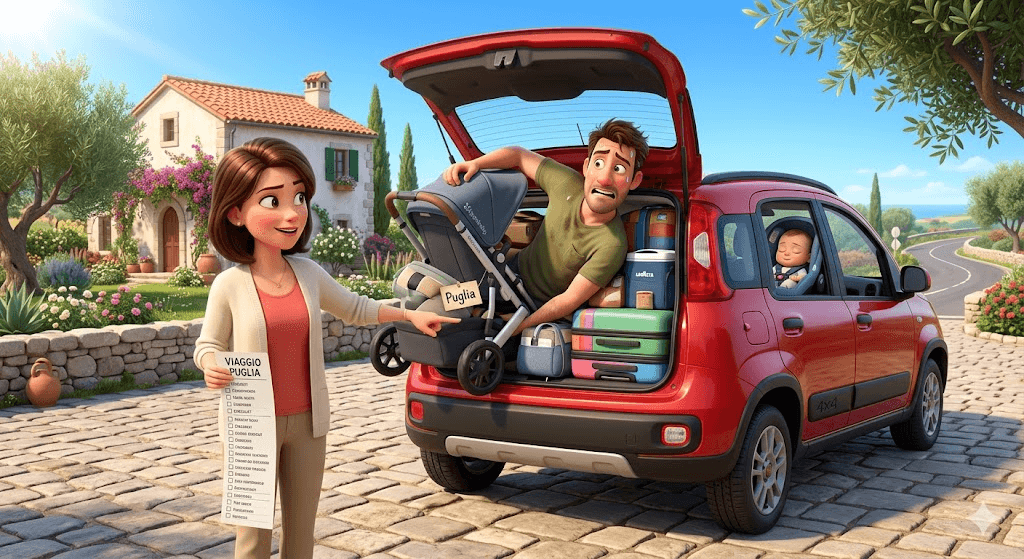
Flying with a newborn requires more checks before booking, because minimum age, baggage, stroller, car seat, milk and documents depend on the airline, airport and destination. The most useful rule is to verify everything before buying or confirming tickets.
For overall planning, start from the hub guide on traveling with a newborn. To pack the cabin bag, use the newborn travel checklist.
Before booking
Check with the airline:
- minimum age to fly and any required medical certificates;
- infant fare and whether you can buy a separate seat;
- rules for stroller, infant carrier, car seat and onboard bassinet;
- infant baggage allowance;
- procedures for breast milk, formula, water, baby food and cooler bags;
- documents required for domestic, international or extra-regional travel.
Rules vary by airline and route. If in doubt, save or print the airline confirmation, especially for the car seat, stroller, formula and baggage.
Ask your pediatrician before flying if your baby is under 3 months old, was born premature, has had breathing problems, heart disease, significant anemia, recent fever or feeding difficulties. For international travel, also check vaccines and timing: the vaccination calendar is a useful reminder, but it does not replace medical advice for the destination.
Documents
Keep in the cabin:
- your baby's identity document;
- health insurance card or equivalent;
- passport or travel document, if required;
- consent, authorization or minor travel documentation if required by the route;
- medical certificates or prescriptions if your baby has known conditions;
- health or travel insurance;
- your pediatrician's contacts and a healthcare address at destination.
Do not leave documents in checked baggage. Keep digital copies, but bring originals where you can reach them during check-in, screening and boarding.
Newborn carry-on bag
The cabin bag should cover more hours than expected. Delays, distant gates, checked bags and changed plans are common.
Pack in the cabin:
- diapers for twice the estimated time;
- wipes, diaper cream and a waterproof bag;
- two full outfit changes for the baby;
- one spare top for the adult;
- muslins or bibs;
- milk, bottles or breastfeeding essentials;
- formula, water or thermos if needed and allowed by security rules;
- pacifier, if used;
- medicines agreed with your pediatrician and a thermometer;
- a light blanket or layer suitable for cabin temperature.
Check the rules for liquids, breast milk, formula, baby food and cooler bags before you travel. Many airports have specific screening processes, but methods and allowed quantities can vary: separate these items from the rest of the bag and declare them at screening if required.
Stroller, carrier and car seat
You can often bring a stroller to the gate, but this is not universal. Check size, weight, labels, gate delivery and collection on arrival.
A baby carrier or wrap can be useful in the airport because it keeps your hands free, but during takeoff, landing and turbulence you must follow crew instructions.
If you want to use a car seat on board, check in advance that it is approved for aircraft use, compatible with the aircraft seat and accepted by the airline on your route. If your baby travels on your lap, ask the airline which devices and procedures apply.
Takeoff, landing and ears
During takeoff and landing, sucking may help with pressure changes. You can offer breast, bottle or pacifier if they are already part of your baby's routine.
There is no need to force a newborn who is sleeping calmly. If your baby has a significant cold, ear infection, fever or breathing difficulty, ask your pediatrician whether flying should be postponed.
Keep a muslin within reach for spit-up and keep the outfit change in the most accessible part of the bag, not at the bottom.
Sleep and managing the flight
In the cabin, sleep can be disrupted by lights, noise, announcements and pressure changes. A few familiar cues can help:
- a short routine before rest;
- a light blanket or sleep sack only if suitable and safe;
- diaper change before boarding when possible;
- feeding planned with extra margin;
- realistic expectations about crying.
An onboard bassinet, when available, may have weight, age and availability limits. It is not always guaranteed and is usually not used during takeoff, landing or turbulence. At destination, put your baby to sleep in a safe space according to the rules of safe sleep for newborns.
Feeding and hygiene
If you breastfeed, consider comfortable clothing and avoid tight timing between security, boarding and takeoff. If you use formula, plan water, portions, hand hygiene, preparation and storage.
For babies already eating solids, choose simple foods they already tolerate. Avoid introducing new foods during travel, especially far from your pediatrician or in a destination with a different healthcare system.
Bring wipes, sanitizer or water for hand hygiene, but do not rely only on the aircraft to wash bottles or accessories. If the flight is long, make a realistic plan for using clean supplies.
When to postpone the flight
Consider postponing or ask for medical advice if your baby has:
- fever, especially under 3 months;
- breathing difficulty, wheezing or recent bronchiolitis;
- ear infection or significant ear pain;
- repeated vomiting or significant diarrhea;
- persistent refusal to feed;
- unusual sleepiness or difficulty waking;
- chronic conditions that are not yet stable.
The flight is only one part of the trip. If arrival includes jet lag, heat, long transfers or healthcare that is difficult to reach, consider the whole picture before leaving.
Sources and further reading
- Flying with Children - Federal Aviation Administration
- Breast Milk, Formula and Baby/Toddler Food - Transportation Security Administration
- Flying With Baby - HealthyChildren.org - American Academy of Pediatrics
- Traveling Safely with Infants and Children - CDC Yellow Book
- Traveling with Children - Centers for Disease Control and Prevention
Sources are used to support general informational content and do not replace advice from a pediatrician or healthcare professional.